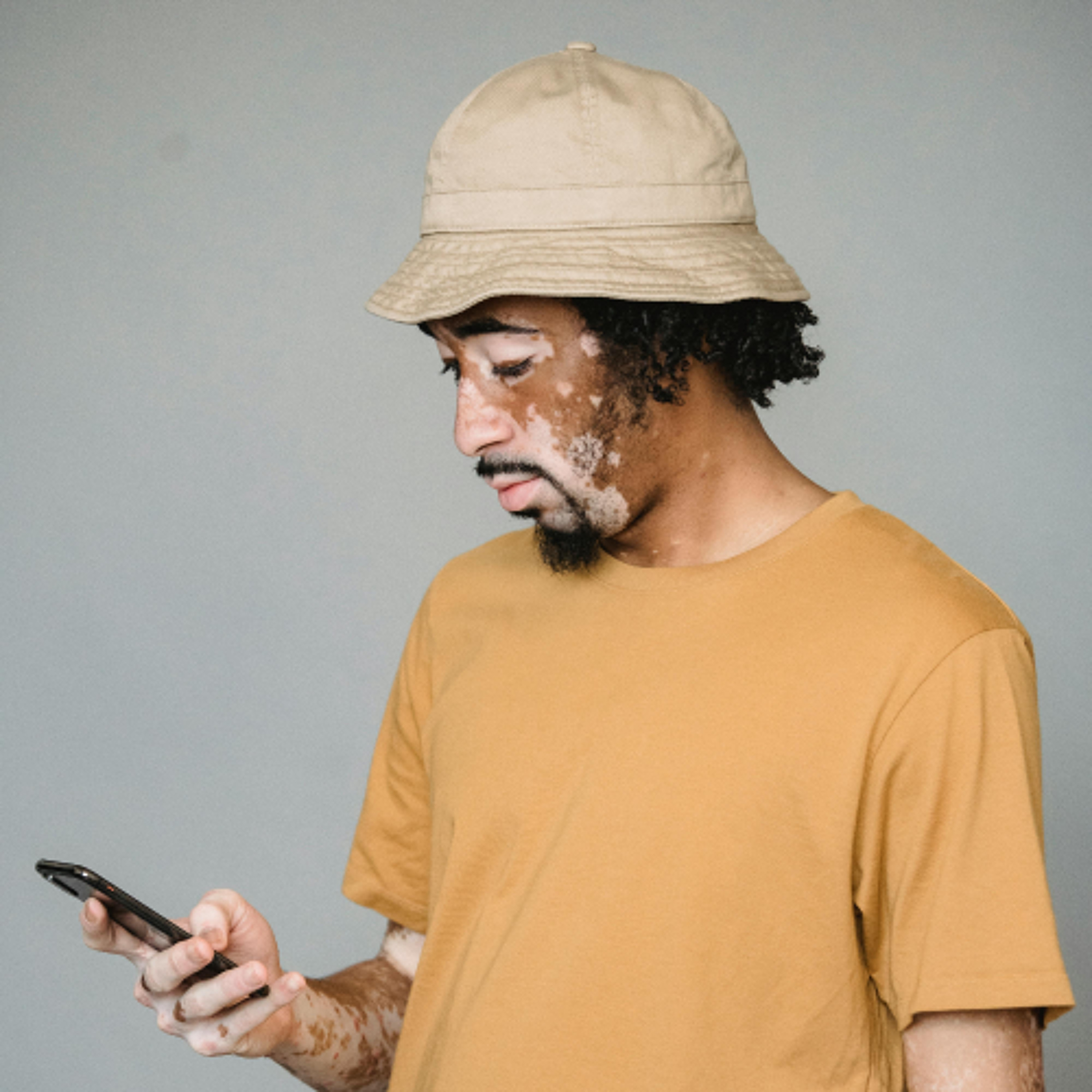
Episode 107: Social Media & Visible Difference
About this episode
Interactive timestamps
Jump to segmentGet every episode summarized
Each time Appearance Matters: The Podcast! publishes, we email you a written briefing from the transcript — the topics, who appeared, and any specific claims, with the ad reads skipped.
Email me new episodesFree for 3 shows. No card needed.
Hosts & guests
Transcript ready
540 searchable segments. Every word is indexed and playable.
Full transcript
Appearance Matters: The Podcast! — Episode 107: Social Media & Visible Difference. Machine-transcribed; use the interactive transcript above to jump the player to any line.
0:00Welcome to Appearance Matters, the podcast. The Appearance Psychology podcast brought to you by the Centre for Appearance Research, a world-leading research centre based at the University of the West of England in Bristol, investigating everything related to the psychology of how we look. I'm Ella, and I'm Cat. On today's episode we're going to be exploring work going on both in the UK and in Belgium into social media and visible differences. We are indeed, so social media continues to become more and more central to our lives. Did you know that there were 5.4 billion active social media users in 2025, which equates to around 70% of the global population? So that's even higher actually for young people, almost 95% of 13 to 24-year-olds use social media every single day. And we often use social media to stay connected with other people, to share information,
1:01and to learn new things, and also for things like entertainment and news. And increasingly we're following influencers or content creators who are well-known people who have big followings on social media and share their lives and hobbies. More than we follow people that we actually know in person. We've had a couple of episodes relating to social media and appearance in the past, but today we're focusing specifically on social media and visible difference. So as a reminder, people with visible differences are playing with conditions or injuries that affect how they look in some way. And of course they use social media in all the ways you've just mentioned, Ella, but they might also use it in relation to their visible difference, such as getting advice and support from others, raising awareness, advocating for support, etc. And so because social media is so appearance-focused, they might also face additional challenges that other social media users don't have. That's true, thanks, Cat. So in today's episode, I discuss social media and visible difference work that I've been carrying out with my colleagues,
2:03Dr Emma Wait, who is a research fellow at CAR, and Dr Amy Slater, who is a visiting professor at CAR. We've been carrying out this work as part of the VTCT Foundation team in a big program of research that we've been working on for a few years now. We've been doing qualitative work with adults, young people, and influencers to understand their experiences of using social media in relation to visible difference. And we were also lucky enough to be joined by Laura Dedecker, who is a PhD student at the Media Psychology Lab at KU Louvin in Belgium, and her research explores the role of social media in body image development among young individuals with a visible difference. Very cool. I know you've been heavily involved in this work for a number of years, and this is work that's completely different from what I've been doing, so I'm super interested to hear about what you've been up to. And I know this is a very full episode with lots of great people on, so let's get into it. Hi everybody, thank you for joining me on the podcast today.
3:08Emma and Amy, you've been on different episodes before, but Laura, I think this is your first time, so welcome. And to start off, obviously we're talking about social media visible difference today, but maybe Emma, we can start with you. There's lots of research isn't there in the field into the impact of social media on appearance and specifically body image, but obviously with this episode, we're focusing on visible difference in social media. So why is it important that we carry out this separate work looking specifically at visible difference in social media? Great question. So I think, yeah, as you say, there's already some things that we know about body image and appearance in general with relation to social media, but I think it's really important to kind of highlight that people with visible differences are a unique kind of user group of social media. So they use it in unique ways. So for example, they might be connecting with other people that have the same condition or the same injury as them.
4:08And also I think when we're thinking about the kind of appearance ideals and things that are very prevalent on social media, I think that can also impact them in a different way because they have conditions and injuries that change the way they look. It can be really hard for them to meet some of those culturally constructed beauty ideals that are very, very pervasive on those sites. I think also because of their appearance, they are unfortunately more susceptible to negative reactions from other people. So they might be more likely to experience trolling and things like that or we know that there have been people that have created content that's kind of making fun of people with visible differences and things like that. Although they have some of the shared experiences with other users, they do also have kind of unique experiences that we need to think about and understand a bit more about. Yeah, definitely. Especially with things like TikTok, like you mentioned Emma, there's unfortunately been lots of trends that are around sort of mocking
5:11or making fun of appearance difference. So people obviously have similar experiences that we all have when we use social media. But then I think there's definitely these extra things that are important to think about, which can be challenges, but there can be unique positives as well. So Amy, we've been working together for quite a few years now looking at research on social media visible difference in relations specifically to how they use social media. And we carried out three different qualitative studies, didn't we? Looking at the experiences of adults with visible differences, young people with visible differences and social media influences with visible differences. So we'll go into all of those in a bit of detail. But our first study that we did was looking at the experiences of adults. And I was just wondering, could you tell the listeners a bit about what we did and what some of the key things that we found were? Thanks Ella. Yes, as you said, we have been working now for a number of years in this area and really building a whole stream of research around understanding the experiences of people with visible difference with regard to their social media use.
6:13I guess this really started because we didn't have much of a baseline to build any of our knowledge on any research that existed was really just perhaps describing how people might use social media. But there was very little understanding of their personal experiences. And just like Emma was just talking about, we really wanted to understand the unique experiences of this group. So in this first study, we spoke to 17 adults with a wide range of visible differences about their experiences of using social media. It was a qualitative interview study where we also used photo-illicitation to stimulate the discussion. So each participant brought along a number of social media posts that they chose. And these were used as prompts for discussion during the online interview. And then we did a reflexive genetic analysis to look for things.
7:13And what we really found here with this group of adults with a range of visible differences is a little bit like what Emma was just talking about is that there are certainly some shared experiences with the general population knowing that social media and the appearance pressures that Emma was just talking about. These affect everyone and this is no difference for people with visible differences. However, they do have a unique set of challenges and they can find these pressures even more difficult. So the pressure to feel perfect or present a perfect appearance online can be felt even more strongly by this group. Often our participants talked about worrying about judgment or negativity in trying to get their online presence or what they're presenting online to fit in with the narrow beauty standards. So yeah, first finding was really yes, very similar experiences perhaps with the general population but high. And our participants also spoke about how difficult it can be to be authentic online.
8:14So our participants sometimes spoke about how they felt unable to be able to show their true self and their perhaps be able to actually show their difference online because of this fear of rejection or criticism. And so there was this real constant tension or balance between wanting to be real or authentic and present their true self but also wanting to be accepted. We all want to be accepted online and receive positive engagement with their posts. So that was a bit of a source of tension that we heard from our participants. But finally, we also heard about how social media could potentially help our participants build confidence and self acceptance. So for some participants sharing their stories online did lead to fit receiving some positive feedback which help people feel more confident both online and some participants talked about how this could also spread to their offline life. So some participants talked about feeling empowered to be able to be seen and heard.
9:20And the support that they might receive from this online environment was also like a made reported as a major benefit. So some participants talked about finding comfort, advice and understanding from others with similar conditions. And this was a real real positive that we heard there. So overall, I guess we heard that it could be a really powerful space for both community and advocacy, but it certainly wasn't without conflict. You know, it wasn't perfect for these participants. They were also feeling conflicted at times wanting to be able to normalise visible difference, raise awareness, but we definitely heard some conflict about not wanting this to be their sole source of their online identity and still not wanting their condition to define them online. So some really rich and valuable findings that we heard from our participants there. Definitely. Thanks, Amy. That was a really good overview. And it was making me think how obviously the people that wanted to take part in this
10:22study, they potentially had a bit of a vested interest in supporting others or using social media in a positive way, but it was really interesting. The finding you were just talking about with them sort of feeling if they used their social media to raise awareness or portray this would have been in a positive life. They kind of felt like that took over their whole identity online. It was interesting, isn't it, because in our daily lives we can have lots of different aspects of our identity and they can kind of always exist. Whereas online, it seemed like that was really polarised and I suppose you were kind of marketing yourself in a certain way, self-presenting, aren't you? And so sometimes if they were doing that online, that really came to the fore and they felt like it sort of defined them online. Yeah, I think that was a really interesting finding and not being able to perhaps compartmentalise parts of our identity that perhaps people without visible differences might be in a stronger position to be able to do. Perhaps it's our participants, you're telling us that it was really hard to take that back, I guess, in some way or to remove themselves from that part of their
11:26identity once they've put it out there online. Yeah, definitely. And I suppose the whole way social media is set up is for kind of gratification, isn't it? Like we get likes, we get comments, we get shares. So then if you're doing something because you feel like it's important for society but actually it's kind of at odds with the stuff that we know works best. Unfortunately on social media that gets the most traction, it's, yeah. It's a bit of a difficult balance, isn't it, for people when they're using it? Yeah, and we definitely heard that from the voices of our participants in this study that the fine line walking between, you know, trying to find the positives of social media and this sort of inescapable negative parts of social media. It's really difficult for people to be able to find that balance. Yeah, definitely. I guess we've talked a bit about this, the challenges there, but it is really interesting that we found that adults in that study could actually use social media to become more positive, more confident and accepting of their visible difference online.
12:29And then that actually translated into making them feel more confident offline. And I guess with a lot of the research we do in social media and body image, we often find that looking at appearance-focused content online can make people feel worse about themselves, it can impact our mood, it can impact our body image, it can impact our self-esteem and various other things. But obviously in this study, viewing others with visible differences actually was something that was really beneficial. And I just wondered why you think that might be when it's at odds with some of the research that we have in the field. It's a great question. And I guess something that we've been thinking about for many, many years now, I guess because the basis of all our knowledge on social media and consequences with regards to appearance and body image was very much focused on the negative consequences at first. And rightly so, there's lots of those that have been well documented. But as I just said before, I've been really interested in trying to understand whether there is sort of potential positive outcomes of using social media
13:33so that we can understand them and harness them more. I think we all recognise that social media is probably not going to go away. So we might as well very much try to understand where the positives are and trying to harness that and promote it more. I guess again, with all the research around social media use, we know it's very much dependent perhaps on how one is using social media and the motivations that we have for using social media. So some uses and motivations are more likely to be linked with negative outcomes for users while some uses and motivations might be more linked with positive outcomes. And here in this, this first study, some of our participants reported using social media to find others with similar differences. And this was really powerful for some of our users finding that sense of community reducing isolation, sharing information, and yet building that shared community.
14:37We also heard from some of our participants that it was a place where perhaps they could experiment with showing or revealing their visible difference online. We've known, I guess, that people, this is a really important thing for people in the offline environment is how they might choose to reveal or show their visible difference when that is controllable for people. But here we heard some of our participants sort of talking about it in a way that might be more similar to sort of the graded exposure or they can play with how exactly they choose to reveal their visible difference and how much they choose and when they choose. So again, it's putting the power back into the hands of the individual with visible difference. And I guess this relates to the positive body image literature that we've now got many, many years of understanding here about acknowledging and celebrating uniqueness and diversity
15:37and respecting that and valuing that all bodies and appearances are unique and valuable, including those that have visible differences. So I guess it's really nice to sort of hear that in our participants' account. Yeah, absolutely. And it's always nice to have a kind of positive, promising, finding like that, isn't it? We as a team carried out a very similar study, so it's photo-licitation interviews, but with young people with visible differences, rather than obviously kind of grouping everybody together, we looked at them separately. And I know that we did find some fairly similar things in that study, but I think there were also some quite interesting and important differences. So I wondered if you could tell the listeners a bit about what we found in that study and in what ways were the experiences different to adults as well? Yeah, sure. Yeah, firstly, as you say, it's really interesting listening to Amy kind of go back over those adult study findings as well
16:41because there definitely were some really noticeable similarities. So I think, as Amy was saying, a lot of the young people also had some of the same struggles that we would maybe expect other users to have on social media as well who don't have visible differences. So yeah, challenges with some of those appearance standards and feeling like they engaged in social comparison and then felt bad about themselves, but in addition, they also had more negative reactions from other people towards their visible differences. They felt like that was really challenging to be seeing this idealized imagery all over the apps and not feel like they could meet those standards, but also just to highlight as well similar to what Amy said that came up in the adult study. There was a lot of positive ways that the young people were using social media. So they really talked about being able to find other people with maybe the same condition as them
17:44or a different type of visible difference and realizing that those people were out in the world and there was some young people that talked about feeling like they were the only person in the world with their condition before they found those people and it was like a real light bulb moment for them. And in some cases, they kind of talked about maybe just following those people and watching their content and they talked about that, so it was really positive. But they also talked about actually making connections with those people and some people had made friendships through this real kind of two-way communication that was sort of occurring or maybe they were joining groups or things like that and they'd really found community. And so a lot of them were kind of engaging with quite diverse content, I suppose. I think also just to caveat similar to what you were saying Ella about the people that took part in the adult study. I think the people that took part in the young person study were possibly those that were quite well adjusted to their visible difference.
18:46They were obviously confident enough to take part in a photoolicitation interview. So maybe they were using social media in ways that were quite positive and maybe they're not representative of everybody. But what was really striking in particular about the young people was that they were really quite media literate. And I think that there was some differences, I guess not only with the adult person study, but when we were doing the analysis, I know we had quite a few conversations about how different their experiences were, then maybe ours when we were younger, because they're really that generation where social media has been part of their life for pretty much their whole life, I would imagine. And certainly the ways that they even talked about using it with their friends and things like that. It's just a whole new world I think now that technology has kind of advanced in that way. But they had quite a lot of awareness about the impact of it on them.
19:47And they'd clearly done quite a lot of reflecting. And sometimes that was on their own. And sometimes they'd had support from a parent to sort of think about that and think about the ways that they wanted to use social media. And some strategies for kind of having boundaries with it and things like that. So some of them talked about having limits, for example, and others talked about ways that they had found that were really helpful if they did get a negative comment or a negative reaction. They knew how to block the person. Sometimes they would use things like humor to respond to the person's comment and kind of take their power away from the other person. And they could use that to control the narrative themselves. And I think they were also quite good at making it work for them in a way that was kind of some of them would talk about using it as though it was a digital scrapbook. And they would post things that they wanted to look back on and feel the happy memory that was associated with that photo.
20:48So maybe they would post something where they had a nice day with their friends or it was like a birthday celebration. And they talked about how when they would look back on all the photos on their feed, yeah, it would help them kind of feel good and remember all those good times that they'd had. So I think there was a lot of intentional use, I guess, that was quite striking and quite interesting from that younger age group as well, because they were only 13 to 17 years old. And maybe to begin a bit because we also conducted some qualitative interviews with young people with visible differences. And there we also had some, yeah, not so well adjusted participants. And when we asked about reactions to content portraying visible differences, yeah, the reactions were a bit mixed in our study because some reported some negative responses saying that it triggered thinking about their own visible difference with also some anxiety responses. In case the visible difference was like portraying a more, for example, if it would be alopecia and that's a condition that could aggravate over time.
21:57Yeah, when the condition is more serious, then their condition, then they responded with anxious responses. So yeah, I don't know if that's something that you also found, but we also indeed found a positive responses for some that they felt more confident and getting tips and tricks from following those with visible differences. So yeah, that's just something I wanted to share as well. Yeah, it's interesting you say that actually Laura, because the young people in our study, they talked about instead of viewing negative reactions to other people's posts, they were talking about viewing positive reactions. And feeling like, for example, with your kind of alopecia example, if they had seen an influencer or something with alopecia, and they noticed that people were responding really positively in the comments, they then felt better about their condition because they felt like people might be accepting of me. And maybe it is actually going to be okay if I show my visible difference more on social media, but yeah, I know in other studies we've done outside of this stream.
23:05Sometimes I have spoken with participants who will talk about content that they've seen of someone with the same condition who has maybe it more severe than they do. And feeling like that worries them because they're worried about their condition progressing and becoming that severe. So yeah, definitely still some crossover, maybe with some other projects that we've done. Interesting. I think in the adult study as well, we did have a few cases of that where people would say, like other examples might be things like vitilide or skin conditions, I guess, and they can come and go over time. I think we did have participants who said, oh, sometimes I find it a bit jarring or worrying when I do other accounts because it makes me worry about what might happen to me, or I suppose if you have to have any treatment relating to a visible difference as well. It might not always be helpful to see that all the possibilities of an experience that you might have, and I suppose it's natural that we compare ourselves to other people's experiences online, isn't it, as well.
24:05And so in some cases, perhaps that might not always be really healthy and it might make us kind of get a bit preoccupied and worried about what might be an experience for us. I think that's a really interesting point about sort of the balance between the empowerment of more information and seeing more and the flip side of when sort of too much comparison can actually be negative for us. And if I guess that's at the heart of it all, isn't that where, where is the sweet spot between seeing lots of other positive portrayals before it tips you over into too much and when the content is received negatively or has negative outcomes, it's really I think about every individual finding the place on social media that works for them and identifying when it's not working for them. And that's really great that Emma is talking about the young people already having such good strong resilience and resources to try to manage the potential negative side of it.
25:13But yeah, I think that's what we want to get to is in that everybody finding that sweet spot for themselves. Yeah, I still wonder about the ratio between the empowering content and like the content we all see that is pushing those appearance pressures. Yeah, we buy the algorithms like a lot of the content is not intentionally shown on social media. So we got all like an algorithm for us and yeah, it's so algorithmically created our feet. So I also wonder if we just look at the ratio between helpful content and more negative body image content. Yeah, for some, I think it might not be 50 50 or even, yeah, I think it could be interesting to see how, yeah, how much content is actually empowering on the feet of those young individuals, but also individuals in general, yeah. Absolutely. I think that's what we've been generally for a long time telling people in sort of social media literacies and it to get people themselves considering within their own feed how much of this is making you feel good.
26:16And if people, I mean, recognizing that is obviously the first step and then if people are feeling like, hey, there's actually a lot of content here that's not making me feel good, then, you know, what can I do about it and teaching people that they have the power, even though, of course, we often feel like we don't have the power when our algorithms are serving us with the type of content, but, you know, recognizing what part of control that we do have and what we can do about it. Yeah, I think that's really tricky because especially the algorithms, we might have a certain amount of control, but, you know, one of the participants, for example, in the young person study who had alopecia was talking about how the algorithm was essentially feeding them advertisements for products to help their algorithms. So it is that balance between what do you have control over and what can you do, but also, I guess, important, yeah, to recognize that the algorithms are not necessarily just the same algorithms as other users, but they actually could be doing, you know, even more harm.
27:24And again, as Laura mentioned, it's like that balance, isn't it? I also wonder with, like, I don't know, in Europe, but you have the DSA, like the Digital Services Act now in place, and it has a particular regulation for young people that social media should be safe, and that you have more power over your own feet and how to create them that, like, the algorithms should be personalizable or even turned off. There are some lawsuits, for example, now currently running against some of the major social media companies, but I also wonder if it would be actually helpful for also persons with visible differences to turn off the algorithm and have more control over their social media feeds in, like, some couple of years, I think that could be very helpful indeed, like, and then with some social media interventions and literacy campaigns on how to do that. And how to effectively see which content is maybe more positive for you and living out the negative content. I think that could be very helpful indeed with, like, all the different levels working together like the individual, but also societal and platform governance, like, yeah, I think that's probably the key and not only the individual level that has to be educated.
28:43Definitely, I think that's really important isn't it? And we can do so much as to search for things that are relevant to us, but we can kind of accidentally click on one thing and go down this sort of rabbit hole and then people on board of the things that aren't always helpful for us, which is not good. And people just really like to, they like to be portrayed in different ways online, it's making me think that in the, I think, definitely in the adult study, some people were like, I want to see visible difference presented in a positive light. Other people were like, you know, I don't like all of this kind of over positivity. It's not realistic. So it's all very individual, isn't it? But yeah, we should definitely have control over the content that we see and be able to think what's helping us and what isn't. If we have any young people with visible differences listening or maybe their parents, what practical tips might you be able to give young people about how they might make social media work for them? I think Laura's already mentioned some really good, more maybe systemic level changes that need to happen. But while we wait for those, I think there are a couple of things that, yeah, it might help young people.
29:49We touched on already thinking about how, who they're following, how visible differences portrayed. I think something that came from our research was that most young people did talk about the benefit of having diverse range of appearances in their social media. So I think if young people can kind of follow people with different appearances, that can be really helpful. I think the other thing that they kind of highlighted was that it's also helpful when appearances kind of completely de-centred. So actually you might be following someone with a visible difference, but their content is not all about their visible difference. They might be doing other everyday tasks or they might be posting about the hobbies that they have and things like that. And I think that that can tie maybe into what Amy was talking about before about people and the way that they feel about their own visible difference. If they see someone with the same condition as them and that person's content, maybe is all about having that condition and it's all about their appearance.
30:54Maybe that doesn't feel so great because that person doesn't want their whole identity to be about their visible difference. But if they're posting about all these other facets of themselves and their other aspects of identity and their interests and their activities or hobbies, it can maybe remind the person who's viewing that that actually they also are a multifaceted person with lots of different elements to themselves. And their visible difference is not the most interesting thing about them. So I think that trying to have some of that content in any young person's feed could be really helpful for them and also maybe following less of the type of content that doesn't align with that. So some of that idealized imagery, which could be maybe things from certain celebrities or things like that where they're using maybe a lot of filters or they're just really in line with some of those idealized appearances that are very prevalent on social media. I think it can also be helpful to do some reflection about how they want to use social media, what role they want it to have in their life.
32:01And also how they are feeling after they do use it and that could be using it in general or how they feel after viewing certain content that can be really helpful in in figuring out what does healthy social media use look like for them. And I think it can be really helpful to involve a responsible adult in some of those discussions, some of the young people in our research spoke about how helpful it was to talk things through with their parent and their parent. Their parent was kind of supporting them to use it in a healthy way, but it was very much something that they had had a discussion about it wasn't about the parent kind of dictating to the child. This is how you should use it. And I also think unfortunately because we do know that people are trolled and they do experience negative comments and negative reactions. Obviously we want to reduce those and think about lots of different ways that we can stop that from happening, but it can be useful for young people to think about how they might cope if they do get any of those reactions.
33:06So they might think about making a plan, whether they are thinking about preventative things. So maybe they want to have a private account and they want to think about who's following them and what kind of content they're sharing and how they want to portray themselves on social media and how private they want to be. And then also having a couple of strategies if they do encounter negative comments, so maybe it's useful for them to learn how to block someone or how to delete comments and also how they might respond if they if they do encounter that. So again, that could be something that can involve a responsible adult. And I think there's that practical side of booking and deleting and things like that, but also maybe coping with some of those emotional impacts of that as well. So maybe they want to shut off the app for a moment and go and do something else offline or how they're going to get that support, which I think will be personalized to them as an individual. So many helpful tips, which is really useful. It just when you were talking it just made me think about a paper that I read recently an experiment looking at different strategies to make you feel better when you're using social media.
34:17They did look at not using it and then having time caps and then curating your feed. And I think often it might be natural to think particularly for young people that you know not using social media is probably the answer. But actually, I think in that study, they found that even cutting down a little bit and also which completely makes sense from what we've all been talking about, but curating your feed and following accounts and make you feel good is actually really effective too. I suppose it's quite relevant, isn't it? Because in Australia, there's now a span on social media for under 16s, isn't it? And other countries are contemplating that as well. So it's a it's a really interesting area of debates at the moment. I think it's not probably a whole other episode for the podcast. Yeah, and I think it's it's one of those things where it's a complex phenomenon. So, you know, there's not going to be a simple solution. We have to recognize that, yeah, it's probably not as simple as just not using it and not having it in your life. And as you mentioned earlier, it's something that's probably around and it's not going to go anywhere. So, yeah, I don't think personally that the answer is just saying that young people shouldn't use it at all.
35:25And especially, you know, for people with visible differences when we have seen in our own work that there are lots of positives that can come from it. So, yeah, just requires requires thought. Yeah, exactly. And you also discussed a lot of like those strategies on how to feel better, but you have to be able to use social media in order to learn them because you're not learning them just by getting told about it from a teacher, for example, it's really about with practical experiences. So, yeah, I also wonder if you're just blocking that 16, 15, I don't know. And then, yeah, if you're 16 and then you go into the wild west because it is quite quite a wild west out there. So, yeah, how will you then cope with it if you've never been educated towards it because people just assume that you're not going to use it because it's not allowed. So, it's a whole discussion indeed, but yeah, just some thoughts I have about that.
36:25Amy, do you have any thoughts next? I guess you actually are living that at the moment? Yeah, just as both Emma and Laura have already mentioned, it's very complex and we're only at the very, very early stages here. Yes, I think the jury is certainly out and there's certainly much debate about whether, you know, complete restriction is the way or indeed as we've just been talking about whether education, better control from social media companies about removing harmful content and teaching young people how to be safe and positive within this potentially harmful environment will in the long run as Laura was sort of alluding to obviously be what we're what we're aiming for. But, you know, early days and overall it's great that we are trying some strategies to see how they'll go. Yeah, so that one is to be continued, I think, on the podcast at some point.
37:28I think so and to be continued around the world, as you said, I think a lot of people are probably watching and waiting for the evidence about the potential outcome of such a move. And indeed, whether it can even be successful at getting people off obviously a lot anecdotally. There's a lot of young people here saying that they haven't been kicked off or it was a very easy to get back on and so, you know, got even got questions about how effective this strategy might be interesting. Oh no, be great if you could tell us a bit about some of your work. So I know your whole PhD is focusing on social media in young people with visible differences, which is great that that's being looked at in such detail. And we've talked a bit about carrying out qualitative research, but I know you've been using some really interesting quantitative methods for some of your work as well. So I was wondering, could you tell us a little bit about some of those studies and what you found?
38:28Yeah, definitely. So indeed, my PhD research mostly focuses on social media using body image and mainly applies quantitative methods like cross sectional surveys, but also daily diary methods. So I will first maybe go over some of the results of the cross sectional survey. So yeah, we apply the relatively new analytical strategy called latent class analysis. I will maybe first explain what that is. It's an analysis that aims to identify hidden subgroups or classes within a population based on patterns of observed variables. So it's really about clustering certain patterns of answers in surveys. And we used it to identify usage patterns. So social media usage patterns among young individuals with visible differences. And for identifying these classes, we looked at time spent on social media exposure to visible differences and engagement in what we labeled safety behaviors on public and private social media platforms.
39:37So with safety behaviors, we operationalize them as hiding or concealing the visible difference when posting on social media or really avoiding posting because you don't want a visible difference to be shown on social media. So we actually found two classes, which we labeled high safety behavior, engages and limited safety behavior, engages, maybe interesting and most young individuals are actually in the limited safety behavior, engages with around 70% that actually more openly displayed their visible difference on social media. We also looked at some relationships between those classes and some personality traits and body image components. We saw that those who more openly displayed their visible difference, they were more likely to have visible differences on both the face and body instead of the face only or the body only. The limited safety behavior, engages had a more positive body image components and they had lower norms for sticking visible difference presentation.
40:44So they thought more people show their visible difference on social media and they also thought more people approved of showing visible differences on those platforms. So we also looked at eight and gender, but the classes didn't differ on the basis of age and gender. It's really interesting and it's great that you've used this sort of really new analysis type and it sounds positive to me that 70% of the young people were confident in showing their visible difference online and weren't feeling like they needed to conceal it or use safety behaviors. And I think you also said that people were more confident if they had more visible visible difference is that right? I think we find that generally in the literature that often if you have a condition that's more noticeable hard to conceal people sometimes adjust and accept their condition more than if it's something that can be hidden. So it's interesting that that your findings obviously do they're in line with what we found in other research in the past.
41:48Exactly. And also, yeah, something I like about a new technique is about that most research looks at one particular type of social media use, but in this type of analysis you look more broadly about the whole pattern like you can include more patterns, but we also had limited sample size because it's really hard to find participants for this kind of research as you might know. So yeah, I think it's a real cool technique. Yeah, so that you can really identify separate classes and then link it to certain kind of components that you're interested in. And I think it's also yeah, it's always a bit of both that the body image will predict certain kind of usage patterns, but also the usage patterns will eventually also influence body image. I think we have discussed a lot about how social media relates to body image, but it's also always the other way around and it's also good to keep that in mind that how body image predicts certain kind of usage among young individuals, but also in broader samples and in all population.
42:58And I think you also carried out a diary study as well, do you want to tell us a little bit about that one as well. So we conducted a 14 day daily diary study among 119 young individuals with visible differences and each day they actually filled in short survey questions about their exposure to different types of appearance content and certain body image variables. And we found that on days that young individuals with visible differences are more beauty ideals, coming from persons without visible differences. They reported less appearance satisfaction and more body surveillance and visible difference surveillance. One very interesting finding and it relates to what Emma just said is that protective filtering acted as a buffer in this relationship. So that people or young individuals with more protective filtering strategies actually experienced less deep decreases in their appearance satisfaction. And the questions were really about blocking and personalizing your feet in a way that it becomes more positive.
44:01So if people really knew how to block idealized content or unfollow it or really took their emotions into account when seeing that content that could really decrease this negative relationship between exposure to idealized content and body image. We also tested for body positivity content coming from both those with visible differences and those without visible differences, but there we didn't find any significant relationship. It's also interesting that yeah, actually if we follow them for 14 days like the exposure levels are really low. We see that actually not much of content is body positivity in those young individuals feeds. So yeah, that might be some way on how interventions could maybe increase their exposure levels. That's really interesting. And people I'm hearing from a lot of the stuff we've been talking about today is that it's how you use social media. And if you use it consciously and you reflect on how it might be helpful, then that does seem to be the best way to use it in a way that might benefit you and is positive.
45:10Laura, before we move on to talking about I think social media influences a little bit before we finish, you've given us lots of really interesting studies and using novel methods. What do you think we should do next then in the field of physical difference research with children and young people? Yeah, it's also difficult because in general there is already so little research out there. So it's already already applying what we know among general populations and then towards this population. So that is already a first research direction that maybe too broadly. But I think it might be also interesting to conduct more comparative research because now a lot of our research assumes that they may be more vulnerable or that they have unique challenges. But as we said before, they also report some similar challenges as other users if we do that. So I think yeah, it might be interesting to really compare those both groups both qualitatively and quantitatively.
46:12So we're looking at the relationships if they differ between those with and without visible differences and for the rest I also have some research directions on AI tools because they are becoming increasingly popular. I know we're talking today on social media, but yeah, those data sets are trained on non-representative data as we all know. So I think it could also be very interesting to see how those biases and how visible differences are represented by those tools and yeah, in general, I think more quantitative designs could be, for example, with data donation studies. It's really upcoming in the field of communication research. In Europe, you can ask for your user data under the DSA. So then participants can download their entire data of the platform. So what they see and what they liked from who that content was. So you can do a lot with that and really go in depth on a certain amount of users and participants.
47:15I think that could be very interesting to really have like a more objective look at what they are seeing and maybe then complementing it with qualitative interviews on how they respond to those kind of social media usage. I really like that idea because I think often we're very much trying to do experiments and recreate the environment where somebody uses social media, but it doesn't account for all of the different factors or what they say. I like that idea of being able to kind of donate almost your usage data and being able to look at it in that way. I think that's really cool. Just one quick thing that I think would be really useful, I guess, for future research is to know whether some of these strategies that we're talking about work and are effective and maybe understanding a bit more about the different young people and who uses it in a positive way. And who doesn't and how kind of unpicking some of those intricacies and yeah, I guess wanting to do that maybe with participant groups that are a bit more diverse as well.
48:22I think would be really important and yeah, people who maybe have intersectional identities and things. I also have some kind of new research line in which they really test person specific relationship so that you can really see for so much of the population so much percentage. The relationship is actually non significant for so much of this positive and for others it's negative so it's really unraveling those really individual relationships really individual experiences. I think that's indeed a good future research direction and indeed having more unbiased and the more representative samples is really a way to go. Yeah, gender diversity and yeah, other intersectionalities as it's often. Definitely, I think so also if we can work out if there might be particular groups of people who might be less likely to use these positive strategies and also we can target interventions to support them. And know what the risk factors might be for that.
49:23So I just wanted to make sure we also talk about social media influencers because we know that increasingly if you use social media yourself, you've probably noticed that rather than seeing people that we know our acquaintances, our friends, our family. A lot of the time now when you go online, you don't actually see people that you know personally, you might see content creators or influencers who have very large followings and have gained popularity online for sort of sharing their lives or it might be a particular hobby or experience or you know they might have a visible difference for example. And these people are incredibly popular, they have lots of influence, they can influence things that we buy, we often feel that we really trust them because they seem so relatable and authentic and that's obviously a major part of social media use nowadays. So we've also all started to do research into influencers as well to start with Laura, I know that you recently published a content analysis in body image looking at this would difference influencers.
50:24So I think it might be useful to start if you gave us a bit of an idea of what you found in that content analysis. So yeah, it's a new content analysis on influencers with visible differences and we specifically looked at Instagram and Instagram posts. So we actually see in this content analysis that yeah, they hold some potential for positive but also some potential for negative body image reinforcement among their followers. So regarding positive reinforcement, we actually found that most of them depicted their visible differences in their posts. So yeah, oftentimes they also build their whole identity on this visible differences because they are influencers with visible differences. So it's yeah, you can expect that they really show their visible difference as well, but it can be really good for representative and positive body image reinforcement among followers. We also found that they depicted diverse body sizes and they also sometimes included non idealized body treats like cellulite or stretch marks in their posts.
51:33We also found that they often depict like positive body image themes with inner positivity and body self appreciation being the most prevalent. So really making the narrative about how it is important to self appreciate your unique appearance that was quite common in this influencers posts. We also explored the relationships between these different content characteristics and likes and found a little bit worrying, but that increased body size. I received less likes on the post so that might be more negative body image reinforcement. We also found that they still conform to traditional beauty ideals except for their visible difference. They really have, yeah, they conform to facial beauty ideals and bodily beauty ideals as most influencers do. And sometimes they even portrayed themselves in sexually objectifying way. So yeah, it's yeah, typical cues are, for example, and revealing clothing or like sexually suggestive body poses.
52:38So that might induce some more negative body image components among followers. Thanks, really interesting just to get this initial picture of what the content is out there in terms of visible difference influences. Yes, it's not probably that surprising, maybe that a lot of the posts still really reflect beauty ideals or might be slightly objectifying because I suppose that's a lot of platforms like Instagram, great image based platforms. That's how those platforms unfortunately often work and those posts tend to get a lot of traction, don't they? And are probably preferred by the algorithms as well. We also did an R team, Emma, Amy and I, a study looking at influences with visible differences. But again, we did a qualitative study because not a lot is known about this area. And we wanted to understand their experiences of using social media in this way when they have visible difference, Amy. Could you tell us a little bit about some of the key findings?
53:40Yes, sure. As you said, this was sort of the third of our trio of studies of trying to understand the social media experiences of people with visible differences. So in this last study looking at content creators or influences, we interviewed 14 influences with again a range of visible differences and also a range of following sizes about their experiences. And a couple of the main themes that we really heard, perhaps the first one was really about how influences were using social media to take control of how visible differences are portrayed and represented. So that influences told us about perhaps unlike traditional media, which has often portrayed visible differences negatively. They felt that social media was a platform that was allowing them to share their own stories in their own way, to raise awareness and for them to really be able to focus on showing more realistic and positive experiences of having a visible difference.
54:48So again, this was a really sort of empowering theme that we were hearing here about people feeling like, yeah, they have the power to be able to present their difference in a way that was perhaps against the stereotypical narratives that previously we have really seen portrayed in the media about having a visible difference. So that's a really positive side. However, of course, they also told us some real negatives around their experiences of being a content creator or an influence, particularly they felt a real sort of endless pressure to influence. Our participants told us about this sort of ongoing pressure to stay active on social media. We know that platforms reward frequent posting and but in this situation, the influences also talked about how their followers often relied on them for information and support and that many sort of felt expected to be available for their following at all times.
55:51And they talked about the pressure of being able to respond to direct messages and respond to requests for information. This could be quite stressful and negative for their own individual wellbeing. So yeah, we had a real sort of tension point there between the positive of wanting to be able to present visible differences in a, in a empowering and positive way for their users, but also the negative of feeling this endless pressure to have to. Be a positive representative and also a source of information for their followers. And I guess finally, I've sort of final theme or reflection was around the fact that there was many challenges that arose from the relatively new and ever evolving nature of being an influencer. Many of our participants talked about they didn't really get into this with the purpose of becoming an influencer. It made of evolved more naturalistically for them when their perhaps were experimenting with how they were going to present themselves online or they found a community that was supportive to them and then they found themselves in a position of being able to be that positive representative for others and sort of gradually built an audience.
57:09And many of our participants talked about the fact that they didn't have clear guidance, you know, nobody has the guidebook of how to be a content creator or an influencer. And so we heard some of the struggles of our influencers in terms of either the ethics of how they might want to present themselves or what information they would or wouldn't be willing to share in terms of not only their own personal things, but in terms of perhaps what treatments were available. And so they were very much learning as they went along and having to adapt to changing platform expectations or audience expectations. And so just I guess back to that sort of wild west that Clara spoke about for influencers, this was also, you know, a new frontier that they were trying to navigate themselves. It's pretty much like everybody else I guess trying to navigate social media in a way that they found to be positive for them and perhaps now with that extra layer of the potential burden for doing a good job for their followers.
58:26So some really interesting findings from the voices of content creators with visible differences that we're hoping to have published out there soon. And hopefully it provides some points of discussion and of how we might be able to actually use such content to help people. Thank you. The sense of a lot of the influencers that we spoke to, they didn't set out to be influencers. They set out just to kind of share their experiences and support people and then it sort of blew up and became this massive thing and they got so unbelievably popular and there really isn't that you know you're figuring out on your own. How do I navigate this? How do I make sure that I'm sharing my experiences, but I'm not giving people advice and particularly not medical advice. How do I protect myself, you know, the I think when people went from having say a couple of thousand followers to hundreds of thousands, they have this ability where they've got this power and this reach and they can influence people out. You know, they could potentially influence the opinions and perspectives of people who don't have visible differences, which can obviously be great in terms of increasing acceptance of visible differences and appearance diversity.
59:38But then also that just puts you about into the world where you're much more likely to get negative comments and things like that. And there's really as Amy just said there's really no protection at the moment online is there. Yeah. You really heard that struggle from a lot of the participants didn't we about the real potential for for doing good in terms of representation and helping people and helping those people find community. And also the huge potential for you changing perceptions of visible differences is so powerful. But yeah, it wasn't an easy place for them all to be in and really we probably need some more guidance and support for how best to do that in a way that helps the majority of people including those that are putting themselves out there in that space. And positively from all this research that we've been doing we're going to develop some guidelines on way to put on the visible different support hub.
1:00:44So hopefully that will go some way to helping with this. But as I think we will discuss this is very much a kind of untapped research area in lots of ways. And we're really at the beginning of exploring these things, lots of scope to do more in future those in there. Thank you so much for coming on to the podcast today. We have something called car coffee, which is coffee and cake every Thursday morning at car. And people take intends to bring along something to share could be baked by you or you could buy it from a shop. And I was just wondering if you were coming to car coffee, what would you bring us? I'm going to say an Aussie classic, a lamineton. Is it something typically you gave because I don't know it? No, it's Australian. It's a like sponge cake with usually it's got some kind of jam in the middle and it's got icing on the outside and oh, Amy's shaking her head. She doesn't like the jam. And disputing your jam in the lens bits on the outside. I'm disputing your jam in the lamineton Emma.
1:01:46Oh my goodness, it's been several years now since I've been at car coffee and that just made me sad that I've been not getting not getting the cake anymore. But if I was to come next week, I would bring you a cake that I've been making lately, which is an upside down blueberry and ginger cake, which sounds unusual, but it's really really good. Sounds delicious. I'm having homemade chocolate chip cookies because I recently baked them for my birthday, which was on Saturday and everyone at the office loved them. So I think I would bring those. Yeah, I got a lot of good compliments. So I think I'm saved there because I'm not such a great cook. So I think if I would bake them again, yeah, I think, yeah, people would like it. I'm sure they would be very well received Lara. It actually reminds me that it's my birthday on Wednesday and Ella is supposed to be bringing the cake to the car coffee on Thursday.
1:02:47So what would you bring Ella? Do you want me to give away what I'm going to make? Yes, please. Okay. Well, it's a good way for me to check that you'll actually like it. I think I'm going to potentially make some baked well blondies. Would you like that? I mean, yeah, I'll look forward to that. So it'll be like, Oh, indeed, jam, but then blondies for Christmas. I'll post some to you, Amy and you Lara to enjoy. Thank you. I'll look out for them. Thanks so much for coming on. It's been such an interesting discussion. I feel like we could definitely do more so maybe we'll have to do another episode in a few years and talk about where we're at with all of the exciting research ideas that we have. But thanks for coming on. Thanks for having us. Thanks for having us. Wow. That was an action fact episode. It seems like so much is happening in a social media visible difference research space at the moment. Yeah, definitely a few years ago. There was hardly any research at all into social media and visible difference.
1:03:48But now we have quite a lot. Although obviously there's still more to be done. And as someone who's been working on this with Amy and Emma for almost five years at car. I'm really pleased that we now are able to turn our findings into some practical resources that can support people. Absolutely. And if anybody wants to find their resources, they will be on the visible difference support hub in the next few months and we'll put a link to that in the show notes. Yes. And just a reminder that our conference appears matters 11 will be held in Bristol from the 9th to the 11th of June, 2026. The early bird registration has now finished, but you can still sign up to come and join us via the website. And we have an awesome conference dinner being held at We the Curious, which is a leading UK science center in central Bristol. And it'll be an informal buffet style meal with plenty of opportunities to explore the exhibits as well. So that's all the time we've got for this week.
1:04:48But as always, don't forget to subscribe, like and share this episode to help us reach more people. Until next time. Bye! you
More episodes
More from Appearance Matters: The Podcast!

106: In Conversation with Zali Yager – AM11 Keynote Speaker
Appearance Matters: The Podcast!

105. In Conversation with Phyllida Swift - AM11 Keynote Speaker
Appearance Matters: The Podcast!

Episode 104: Family planning when you have a heritable visible difference
Appearance Matters: The Podcast!

103: Weight-Inclusive Physical Activity
Appearance Matters: The Podcast!