About this episode
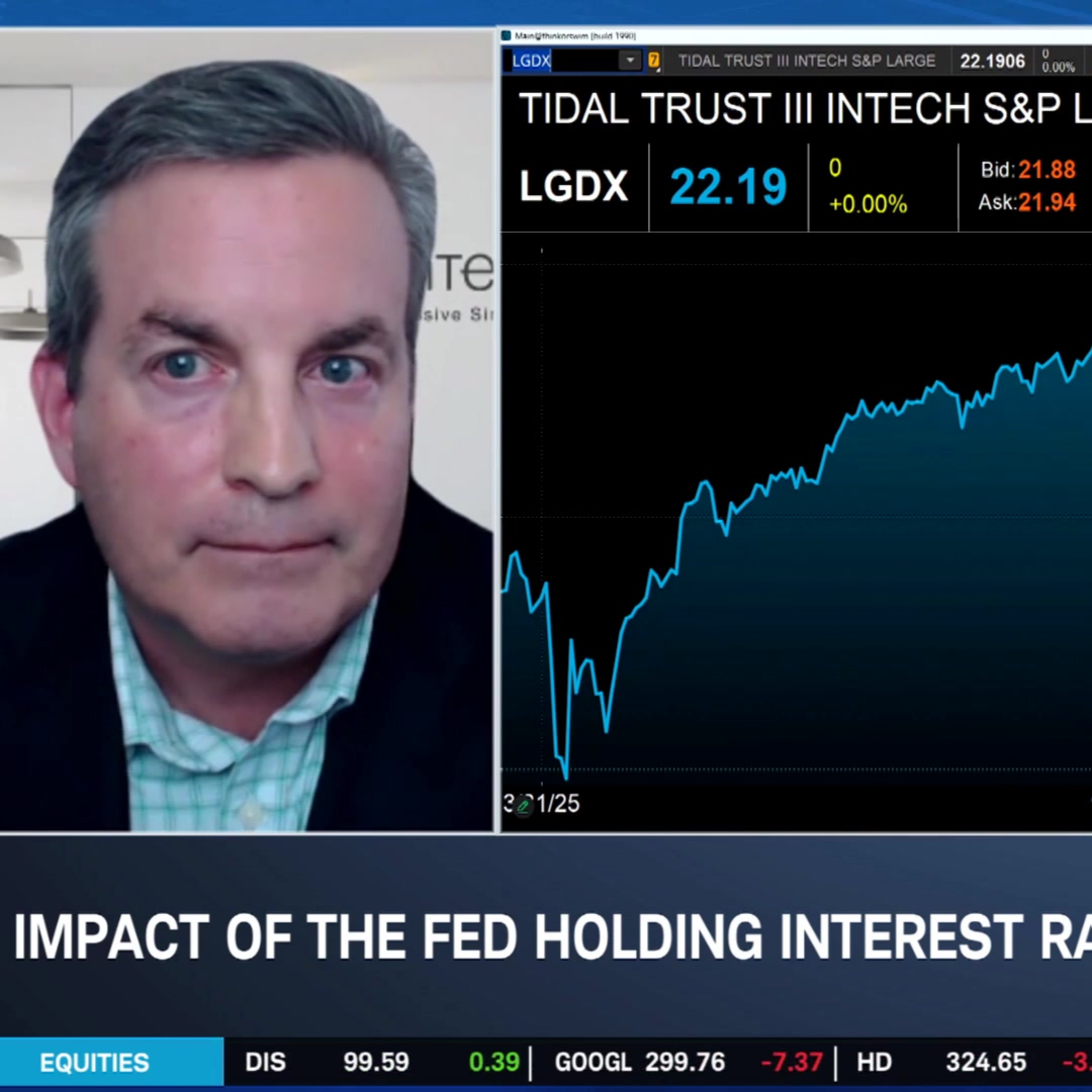
“Oil up, markets down” is the straightforward narrative, says Richard Yasenchak. The concern is how long it will last, and he argues for diversifying against “macro drivers” rather than sectors as we wait to see. He shares how his firm is strategizing within the funds that it offers, and highlights holdings like Lockheed Martin (LMT) and Palantir (PLTR). He also thinks Microsoft (MSFT) has become “more attractive” on its recent pullback.
======== Schwab Network ========
Empowering every investor and trader, every market day.
Options involve risks and are not suitable for all investors. Before trading, read the Options Disclosure Document. http://bit.ly/2v9tH6D
Subscribe to the Market Minute newsletter - https://schwabnetwork.com/subscribe
Download the iOS app - https://apps.apple.com/us/app/schwab-network/id1460719185
Download the Amazon Fire Tv App - https://www.amazon.com/TD-Ameritrade-Network/dp/B07KRD76C7
Watch on Sling - https://watch.sling.com/1/asset/191928615bd8d47686f94682aefaa007/watch
Watch on Vizio - https://www.vizio.com/en/watchfreeplus-explore
Watch on DistroTV - https://www.distro.tv/live/schwab-network/
Follow us on X – https://twitter.com/schwabnetwork
Follow us on Facebook – https://www.facebook.com/schwabnetwork
Follow us on LinkedIn - https://www.linkedin.com/company/schwab-network/
About Schwab Network - https://schwabnetwork.com/about
Get every episode summarized
Each time Schwab Network publishes, we email you a written briefing from the transcript — the topics, who appeared, and any specific claims, with the ad reads skipped.
Email me new episodesFree for 3 shows. No card needed.
Hosts & guests
Transcript ready
143 searchable segments. Every word is indexed and playable.
Full transcript
Schwab Network — Diversifying by ‘Macro Drivers’ as Oil Pressures Markets. Machine-transcribed; use the interactive transcript above to jump the player to any line.
Now let's take a look at the bigger picture. I want to protect your portfolio. Let's speak with Richard. Yes, and check chief investment officer at Intek. I'm so glad you're with us. Tell us a little bit about the market action. We're seeing and how you see leadership going forward for this market. Yeah, and thanks for having me here today, Nicole. What I would say it's it's really a simple story right now. Oil up markets down. The geopolitical story matters because it feeds directly into oil and inflation expectations as well as risk sentiment. So the market is really trying to figure out whether this is a temporary or something more persistent. And I know that the prior guests spoke to 2022, which is actually a short-term spike. What is it more like 1990? Where we saw oil prices more than double. And I think that's the concern will be higher for longer. So what it really highlights is the market may look diversified, but there's still, but there's still being driven by a handful of factors.
Factors being tied to energy, defense, rates and geopolitics. And if we say oil goes up another say $20 or higher, that feeds quickly into inflation expectations and pressures equities through sentiment. So really it argues for diversifying across macro drivers, not just sectors, because one shock and ripple across everything. At the same time, there are areas benefiting from the backdrop, like defense. We generally are positioned in stocks like Lockheed Martin. They screen well in our quantitative lens as well as Palantir, which sits at the intersection of AI and national security. Yeah, I saw in your large cap fund. You have a large cap fund. You have the Smith Cap fund and Lockheed Martin, Palantir, Microsoft, and Micron. Some big ways, big names that we know. When you think about earning season and fundamentals, a lot of folks that have come on said the companies have been doing particularly well, and that that in fact could help to keep the S&P alive and do well for 2026
just because their earnings have been so good. Yes, what I would say is fundamentals alone aren't enough for this market currently. So over the long term, we remain very positive, but short term very cautious. But you're seeing strong results, not always getting rewarded, which tells you positioning and expectations matter just as much as the numbers. And as an example, companies can beat earnings and still trade lower because expectations were already high. I kind of point to Micron is a good illustration of that dynamic. We kind of know what happened yesterday after earnings. It still screens well on valuation and other growth aspects, but the market sold it off. So again, it ties back to focusing on areas where expectations are more reasonable, typically outside the most crowded mega cap trades, and being more deliberate about how the portfolio is positioned. And that's why we kind of like stocks down in capitalization
as tied to our smith strategy, which has a ticker of SMDX. All right, so at this point now, the Fed seems to be on hold. They made it very clear this week that they are waiting. I mean, they are concerned about inflation at the same time. You haven't seen much growth. Said there has been much change in the labor market. So they stuck to the 4.4% on unemployment. But we know there's been some slowing in the labor market and could this inflation? By the way, Fitch saying now, Fitch rating saying oil prices could average $120 a barrel of hormones is closed for six months. That in turn could pressure the environment, the economy, jobs. What do you think the Fed should or should not be doing in the next few meetings? Yeah, well, I think right now the Fed, you know, the hold itself wasn't a surprise, but the message was for the prior meeting. And the message is that the Fed isn't confident that inflation is fully under control, especially with energy moving higher. And I think you touched on a very valid point. If we tied back to 1990 and the kind of move we saw in oil,
using those same that growth into current oil prices, that puts us up to about 170. So we're thinking to get really, really crazy if things don't improve. And so what I want to really say is that, you know, we're kind of in a stuck-in-and-wait-and-see kind of mode overall. And we just kind of wait this out. If oil stays elevated, while growth softens, the Fed is effectively then stuck. And that kind of cross-current creates volatility across both equities and bonds. And that's why portfolio construction matters more here. You want balance, exposure to both cyclicals and defensives, because the Fed isn't giving you a clear directional signal. So with that, let's go back to some of the names that you have in your funds here. A Lockheed Martin and a Palantir. What kind of upside potential do these kinds of names have? And why are they included? Yeah, so we like both stocks.
Certainly Lockheed Martin screens well. We're a quantitative investor. And we look at many different fundamental characteristics, tied to valuation, sentiment, momentum, and so on, and financial strength. Lockheed Martin scores well on almost all of those criteria, all of those type of screens or models. And that's a really nice fit in the current environment. It is acting more or less as a hedge. But still, even if things improve, there may potentially be a better entry point. But fundamentally, it is a sound company going forward. And Palantir, as noted, really is sitting at the intersection of AI and national security. It's kind of like the operating level for operating system level for all of AI. So another stock that screens well, not necessarily on valuations, which still look very expensive, but in other elements, tied to sentiment and macro type of trends.
So we like that stock as well. Okay, understood. For the smaller group, SMDX, and you look at smidcap, small and midcaps, you know, is there a tech story here too? Because I know you've been looking at these names, for example, or not, I mean, Microsoft was very tacky. But, you know, where does the tech story fit in? Is it in your large cap, small caps, what? Yeah, I think it's throughout. You know, when we look at the current environment, I guess, you know, I would say we are in a productivity driven environment. And AI is clearly a real earnings and cap story. But it's also a concentration story. So a meaningful share of index performance is tied to a relatively small group of names. And investors need to understand how exposed they are to that theme. And I think this year, year to date, we've been seeing that. To kind of give you an example, we came into the year where the top 10 stocks in the S&P 500 were about 40% of the index,
and closer to 50% of the total risk. So, portfolios can look diversified, but still are highly concentrated. We've seen now that drop. The example that you use is Microsoft, a stock that we do like. Microsoft has been has now down about 20% year to date. So it's become more attractive given the recent pullback. But the bigger point is to diversify more intentionally, you have to really start looking at other names down in capitalization. That's looking to smid as well as small cap stocks, where earnings revisions continue to improve. And even though there's been a lot of chaos and noise going on in equity markets, we continue to see earnings improve down in capitalization. So there's a diversification opportunity there to benefit from smaller stocks along with the larger names. All right, Richard, it's great to see you. Thank you so much, Richard.
I appreciate it. Richard, the asset shock, the chief investment strategist said in tech.
More episodes
More from Schwab Network

JNJ Balances Growth, Patent Transitions, and Legal Overhangs
Schwab Network

nCino (NCNO) CEO on Earnings, AI in Banking & Overcoming "SaaS-pocalypse"
Schwab Network

The Big 3: NET, TWLO, ASTS
Schwab Network

Tie Lasater on Inflation Floors, Energy Risk, and Private Credit Stress
Schwab Network