Devastating Strikes_ Iran's $2 Billion Blow to U.S. Assets
About this episode
The most significant blow came at the Al Udeid Air Base in Qatar, where an advanced AN/FPS-132 early warning radar system — worth a staggering $1.1 billion — was completely destroyed. This sophisticated system played a critical role in detecting incoming threats and maintaining the strategic military advantage of U.S. forces in the region. Losing such an asset raises serious concerns about military readiness and operational security for American troops.
Become a supporter of this podcast: https://www.spreaker.com/podcast/conspiracy-theories-exploring-the-unseen--5194379/support.
Get every episode summarized
Each time Conspiracy Theories Exploring The Unseen publishes, we email you a written briefing from the transcript — the topics, who appeared, and any specific claims, with the ad reads skipped.
Email me new episodesFree for 3 shows. No card needed.
Hosts & guests
Transcript ready
66 searchable segments. Every word is indexed and playable.
Full transcript
Conspiracy Theories Exploring The Unseen — Devastating Strikes_ Iran's $2 Billion Blow to U.S. Assets. Machine-transcribed; use the interactive transcript above to jump the player to any line.
Craving the coffee flavor you love, but without the caffeine, kachavas got you covered with their newest coffee flavor. This all-in-one nutrition shake delivers bold, authentic flavor, crafted from premium, decaffeinated Brazilian beans. Quality nutrition shouldn't be complicated. Just two scoops of kachavas all-in-one nutrition shake, and you've got 25 grams of protein, 6 grams of fiber, greens, and so much more. Whether you're craving that coffee taste to kick start your morning ritual, or as a nutrient-packed reward to round out your afternoon, kachava keeps you fueled and satisfied wherever your day takes you. Plus, it actually tastes delicious. No fillers, no nonsense. Just the good stuff, your body craves. And for the times you feel like switching it up, you've got seven flavors to choose from, all with the highest quality ingredients. Treat yourself to the flavor and nutrition your body craves. Go to kachava.com and use code fitness. New customers get 15% off their first order. That's K-A-C-H-A-V-A.com code fitness.
Access to affordable credit helps me pay my employees, but I don't really need it. Infliction is killing me. What do you care? Big retailers and making record profits. That's why we support the German Marshall Credit Card Bill. See, banks and credit unions help small businesses make payroll. This bill would cut the vital resources they need. While increasing Megastore profits, they deserve it. Don't they? Tell Congress, stop the German Marshall Money Grab for corporate megastores, paid for by the Electronic Payments Coalition. In recent weeks, we've witnessed a striking shift in the dynamics of military engagements in the Middle East. Between February 28th and March 4th, 2026, Iranian forces executed a series of targeted strikes that resulted in the destruction of approximately $2 billion worth of U.S. military assets. Let's unpack what happened and why it matters in a broader context. The most significant blow came at the Al Udaid airbase in Qatar, where an advanced
ANFPS-132 early warning radar system, where the staggering $1.1 billion was completely destroyed. This sophisticated system played a critical role in detecting incoming threats and maintaining the strategic military advantage of U.S. forces in the region. Losing such an asset raises serious concerns about military readiness and operational security for American troops. But that wasn't the only hit. In a somewhat ironic twist of fate, three F-15E strike-eagle fighter jets, which were supposed to provide air superiority, fell victim to friendly fire from Kuwaiti air defense systems. The replacement cost for these jets alone is estimated at $282 million. This instance highlights the chaotic nature of modern warfare, where a misstep can result in millions lost. Additionally, the strikes extended to the U.S. Navy's fifth fleet headquarters in Bahrain, where two AN, GSC-52B satellite communication terminals, valued at $20 million each, were
destroyed. These terminals were crucial for secure communications, making their loss another setback in maintaining situational awareness in a region that's infamous for its volatility. Another essential target was a component of the THAAD anti-ballistic missile system, deployed in the United Arab Emirates, which Iran claims to have destroyed as well. Valued at around $500 million, this component was part of a broader defense strategy aimed at countering missile threats, further complicating U.S. defensive capabilities in the region. Taking a step back, when we look at the total estimated losses from these incidents, we see that they amount to approximately $1.902 billion. And if we consider the financial dimensions of the ongoing military operations against Iran, U.S. forces have reportedly accrued over $10 billion in costs within the initial 10 days of engagement. That's more than $1 billion each day, an eye-watering sum that underscores the rising
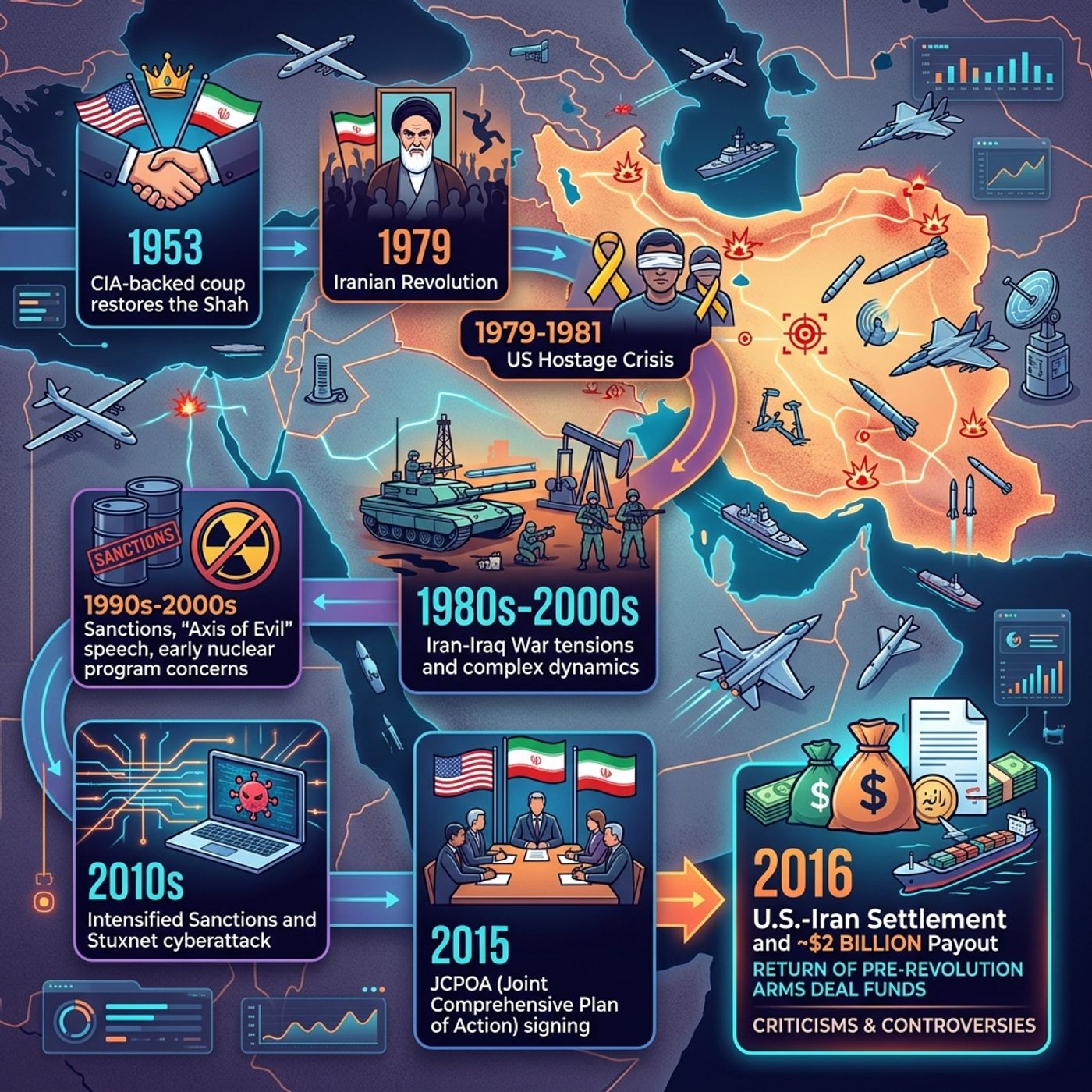
stakes in this conflict. So what's driving these escalations? From Iran's perspective, the Islamic Revolutionary Guard Corps states that their military actions were retaliatory measures in response to perceived unprovoked aggression from the U.S. and Israel. This narrative of retaliation feeds into the long-standing history of tension and animosity between the two nations. Conversely, from the U.S. standpoint, while there's been no official commentary on the specifics of the asset losses, there's been a clear emphasis on the essential nature of maintaining a strong military presence in the region to safeguard strategic interests. The complexities of these positions are not just about military might. They are also rooted deeply in a tangled web of historical events. To understand the current landscape, one must consider milestones, like the 1979 U.S. presidential order, that froze Iranian assets in the U.S. and the subsequent Algiers Accords that
aim to resolve the fallout of the Iran hostage crisis. Moreover, Iran took its case to the International Court of Justice in 2016, seeking the return of nearly $2 billion in assets. These historical contexts continue to feed into the present-day narrative, complicating the relationship further. In conclusion, the recent destruction of U.S. military assets by Iran represents more than just immediate tactical losses. It reflects the shifting geopolitical landscape and the potential for escalated tensions in the Middle East. Understanding these events helps us grasp the larger implications for both nations and the international community at large. As we look ahead, it's clear that the stakes are high and the consequences are far-reaching. Thanks for joining.
More episodes
More from Conspiracy Theories Exploring The Unseen

The Digital Mirage_ AI and the Death of Authentic Romance
Conspiracy Theories Exploring The Unseen

The Trust Trap_ AI and the Future of Romance
Conspiracy Theories Exploring The Unseen

The Ghost in the Machine_ Navigating AI Romance
Conspiracy Theories Exploring The Unseen

The Love Recession_ Why Digital Romance is Offline for Good
Conspiracy Theories Exploring The Unseen