About this episode
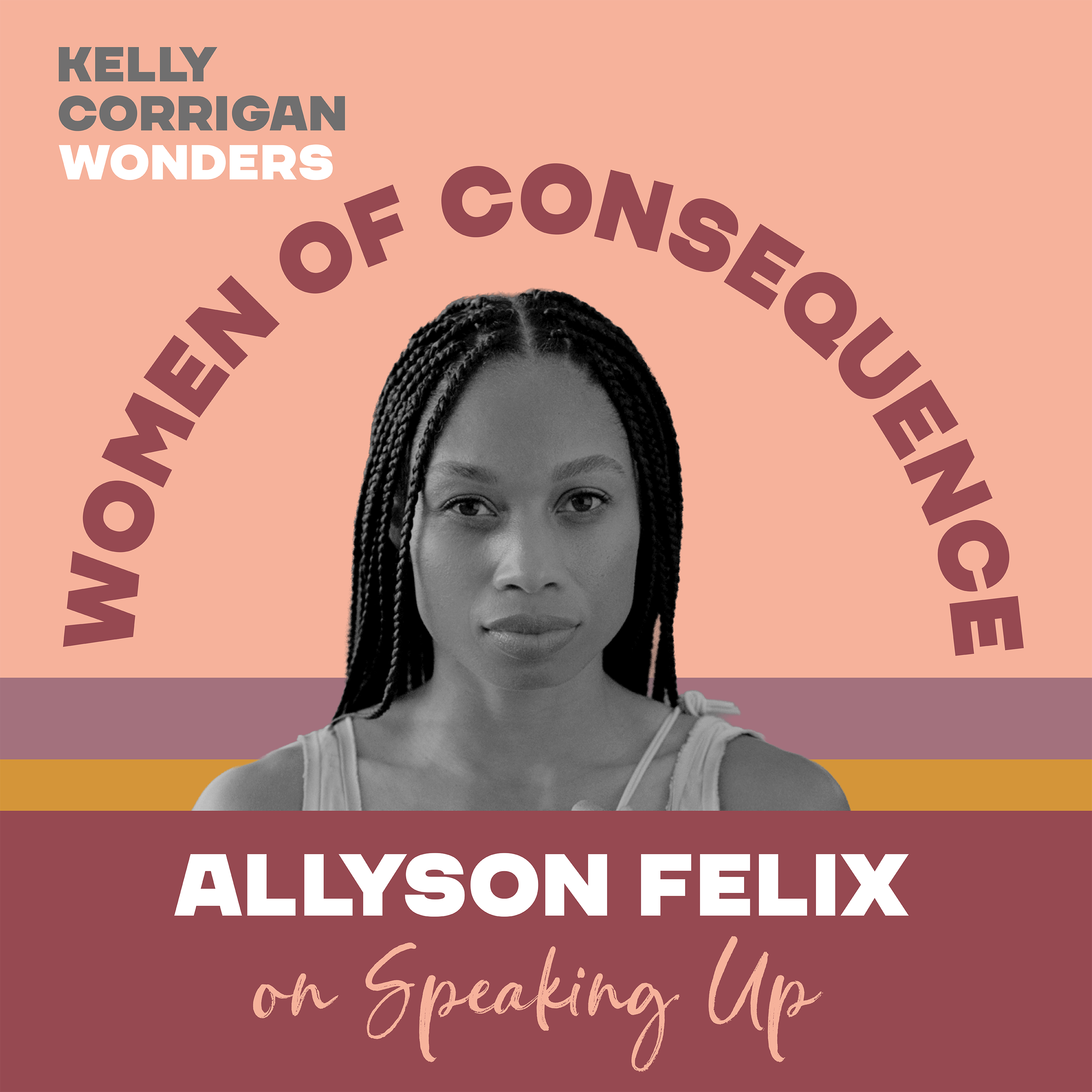
Allyson Felix has 11 Olympic medals, which makes her the most decorated American track and field athlete in history. But here's the thing—most people know her name because of what happened when she got pregnant. After nearly a decade with her sponsor Nike, they offered her a new contract at 70% less than her previous salary. And when she asked for one thing—protected time to recover from childbirth without performance penalties—they said they wouldn't set that precedent for all female athletes. So, Allyson sat in her daughter's NICU room, watched her tiny baby fighting to come home, and decided to risk everything by going public. In this second episode of our Women of Consequence series, Kelly talks with Allyson about integrity, knowing your worth, and understanding that sometimes you speak up not for yourself but so the next woman doesn't have to fight the same battle.
This episode has been made possible by a grant from Ingeborg Initiatives, a social impact platform dedicated to improving maternal health and making it easier to raise a family. To learn more, please visit: https://www.ingeborginitiatives.com
Link to Allyson's New York Times article.
https://www.nytimes.com/2019/05/22/opinion/allyson-felix-pregnancy-nike.html
Check out our episode with Linda Villarosa which Kelly mentions in this podcast.
https://podcasts.apple.com/us/podcast/going-deep-with-linda-villarosa-on-being-seen/id1532951390?i=1000633982048
Get every episode summarized
Each time Kelly Corrigan Wonders publishes, we email you a written briefing from the transcript — the topics, who appeared, and any specific claims, with the ad reads skipped.
Email me new episodesFree for 3 shows. No card needed.
Hosts & guests

Transcript ready
564 searchable segments. Every word is indexed and playable.
Full transcript
Kelly Corrigan Wonders — Deep Dive with Allyson Felix on Speaking Up. Machine-transcribed; use the interactive transcript above to jump the player to any line.
I'm really picky about what I keep in my closet these days. If a piece is inversible or high quality, if I can't wear it seven days in a row to pretty much everything I do, it just doesn't make the cut. That's why quince is my staple. Their fabrics feel elevated, their cuts are smart and classic. The pricing actually makes sense. Their seasonal colors and prints for spring are just the right touch too. Every piece is designed to be worn again and again. Quince works directly with ethical factories cutting out middlemen. You are getting thoughtful, high quality pieces without paying for retail markup. My cotton cashmere swinders from Quince, it's like they are my go-to. I just rotate through them. They're light and lux and exactly what I want. Right now go to quince.com slash wonders for free shipping and 365 day returns. That's a full year to wear it and love it. And you will. Now available in Canada too. Don't keep settling for clothes that don't last. Go to quince.com slash wonders for free shipping and 365 day returns.
Quince.com slash wonders. It's funny. Sheets don't usually fail all at once. It's the little things. The corners that won't stay put fabric that somehow feels thinner and scratchier than you remember or waking up warmer and more uncomfortable than you should. You don't always realize how bad your sheets have gotten until you finally replace them. And that's how I ended up switching to bowl and branch. If your sheets are peeling, thinning, slipping or overheating, that's your sign it's time for an upgrade. Their signature sheets are made from 100% organic cotton and you can feel the quality immediately. They hold their shape, stay breathable and feel luxuriously soft. The second you get into bed, I genuinely sleep better and somehow they get even softer after every wash. I am a happy sleeper. Sleep sound with bowl and branch get 15% off your first order plus free shipping at bowl and branch.com slash wonders with code wonders. That's bowl and branch
B-O-L-L-A-N-D branch dot com slash wonders code wonders to unlock 15% off exclusions apply. Welcome to Kelly Corrigan Wonders. I'm Kelly Corrigan and today I'm wondering what it takes to speak up when everything is on the line. This is the second episode in our March series called Women of Consequence made possible by a grant from Ingeborg initiatives. We're looking at the ways women navigate and reshape the world. Today I'm talking with Alison Felix about breaking records, severing ties and what it means to build a business on the principle of community over competition. Which is interesting because Alison Felix is the most decorated American track and field Olympian in history. She has 11 medals. She's also the founder of Sage, a footwear and lifestyle brand, which includes running shoes built specifically for women's feet, which I learned is surprisingly rare.
Many people know Alison's name, not just for her athletic achievements, but for what happened when she got pregnant while sponsored by Nike. After nearly a decade with the company, Nike offered her a new contract at 70% less than her previous salary. When she disclosed her pregnancy, it became clear that she'd faced further reductions if she didn't perform at the same level upon her return. Alison asked for one thing, protected time to recover from childbirth without penalties. Nike refused to set that precedent for all female athletes. So Alison went public with a New York Times op ed risking everything. And three months later, Nike changed its maternity policy. Here is my conversation with Olympian Alison Felix. So, little Alison Felix in South L.A. is watching the Olympics on television in 1996. And you see some gymnast take us to that moment.
Yes, I see Dominique Dawes. And she just fascinates me, just blows me away. I see her competing. And you know, she looks like me. And I just relate to her. I don't know. I was just drawn to to what she was doing. I had no idea that I would be an athlete or anything of that nature. I just thought she was incredible. And she was very inspiring. And it's a moment that I never forgot watching her compete. And consequently, you started pricing out balance beams. I mean, that's insane. That is so phenomenal. Like your parents must have been like, yes, what she's doing now. Yeah, they were confused. That's for sure. And also, I didn't have that much money in my piggy bank to put a balance beam in our backyard or any lessons. But I was very ambitious, I guess. Do you still kind of thrill at the side of gymnasts? I do. I do. It's always, you know, just so much fun. This past Olympics, I got to see take my daughter to see Simone
vials compete. And I don't know who was having more fun. Oh, how old is Cammy now? She's seven years old. Wow. She's just like mouth hanging open. Yeah. I mean, I don't even think she could fully appreciate, you know, I was trying to break it down and explain. But that's one of those memories that you know, we'll get to come back to. Yeah, for sure. I took my kids to see Taylor Swift when they were pretty young. And now that they are 22 and 24, we talk about it a lot. But at the time, it was just like, there are so many people here. This is so loud. It was the first time I'd ever been around that many people. So you were not like a kid who as a five-year-old was running laps at the track and dreaming of Olympic gold. You're kind of warm up. The number of days, the amount of time on task before your first Olympic games was how long? A little over four years. Yeah. It all came very quickly. Yeah, I was at a very normal childhood. You know, I
grew up in my neighborhood. I grew up really playing whatever my brother was. He's two years older than me. And so I was literally like his shadow. And so if he was doing basketball, that's what we were doing. And that's also track. He started running. And you know, I wasn't too far behind him. And it was kind of remarkable from the jump. Yeah, it was clear from the beginning that, you know, I was athletic and I was fast. There were things that needed to be refined. But the talent was definitely there. And then you became the most decorated track and field Olympian in history. I mean, yeah, unbelievable. So tell us about your worst Olympics and tell us about your best Olympics. Oh, I like that question. My worst Olympics was definitely my second Olympics. It was I had high expectations because, you know, it was my second one now. And I was supposed to win. And it was much more a felt like, you know, a business trip. The first one was everything was new.
It was exciting. I was happy to be there. And this one was I am here, you know, to win. That's really the only outcome that's, you know, acceptable. And it didn't happen. And I was just crushed. I, yeah, I felt like I had let people down. I was embarrassed. I remember it taking me to a really dark place and not sure if I wanted to continue. And just really challenging dealing with not the outcome that I that I had wanted or that I had worked for. What does it look like when you are really down? Like are you alone in your room? Are you irritable and snapping at people? Are you crying? And how long did it take you to sort of find your resolve again? I'm really quiet. I don't want to be around people. I think because I felt embarrassed, you know, I didn't want to have to talk about it. I didn't want to have to
explain. And so it was really just wanting to be to myself. And it lasts for me. It felt like a really long time when I looked back. It was probably a couple months where I was really, you know, just out of it. And it was my coach. It was my family. Everyone who really kind of pulled me out of that. But I felt like that feeling stayed with me, you know, until the next Olympics, till four years later, to have another opportunity. It was remembering of, you know, you were the favorite. You didn't deliver like all of those things. Even though I was able to get out of that kind of darkness, it still was very front of mind as I continued, yeah, moving forward. What do you think the difference was between Alison Felix as a silver medal winner and Alison Felix taking the gold like, was it your headspace? Was it the training program? Was it this kind of ineffable determination for revenge? Like why were you able to finally get it?
I think I really needed to go through that failure. I think I needed to understand what that felt like. I think I think it was really necessary. And I think it made me better, you know, going through that. I think maybe I wasn't ready at that time, but having to go back and analyze every single thing that I did, creating a new plan with my coach, you know, really exhausting every possibility. It made it just so much different. I remember, you know, going to the line and when it all did work out and what I would say would probably be my most successful Olympics, it was an understanding that I've done everything. You know, there's nothing more I could have done to prepare. And if this moment is for me, it's going to be for me. And so it's funny. I don't think there was really much different about me, but it was really understanding having gratitude, competing with the same, you know, heart. But I think that experience really pushed me
there. Yeah. It's such a good feeling when you're certain that you left it all on the track. Whatever your track is, I myself have never been on a track, Allison. But I try lots of things still. And yeah, the idea of like, I'm going to take this opportunity seriously. You know, I'm not going to be casual about it in any way. That's such a, that's such a like clean emotional state to start at the line with. It's like, yeah, if it's for me, it's for me. Like, there's, I'll never regret doing the cardio, doing the stretching, watching the videos, doing the meditation, whatever the, you know, 10,000 things you did in those four years to be ready. So a reason that people know your name other than you're in the Olympic solafame is because of what happened with Nike. So before we get there, will you talk a little bit about how the business
of being a track and field athlete works? Like how do you pay for your coaches and your travel and your physical therapy and whatever else that life costs? Where does that money come from? And how do you take care of your, your health for the long term as an athlete at that level? Track and field is pretty similar to maybe tennis or golf, like a circuit-based sport where we have sponsors and that is how you, you know, make your, your livelihood and track and field. Your big sponsors are primarily your shoe companies and that's kind of your anchor sponsor. And then you have, you know, all kind of other sponsors as well, but typically, historically, that's what it has been and then you'll go compete and you'll get an appearance fee and you'll get prize money. And so that's kind of the structure of how it works. And our contracts, you know,
are typically their performance base. And so when you compete and you go to the Olympics, a lot of them, you have to be ranked in the world, a certain number. You have to metal at an Olympics, you know, everything is based on performance. And so you do well, usually you're rewarded with a bonus. And if you don't, it's a, it's actually a reduction. And so you don't metal at the Olympics, you, you might get a 30% reduction of your salary. And so that's how it's structured. And you taking care of your body is extremely important because it allows you to be able to, to stay, to compete, to have longevity. And for me, that always looks like chiropractor and massage therapist and, you know, all the stretching and physical therapy and things of that nature. And I think even more today, you know, than in my prime, but I would say your mental health is just as important to be able to take care of as well. And I don't think it was something that was
talked about when I was competing. But I'm, I'm really happy that it's at the forefront of the conversation today because it is, it is just as important. Where does the average track and field Olympian get their health care? It's through the, the United States Olympic and Paralympic Committee. And that's where, you know, it comes from, but you have to be within a certain ranking to be able to have health care. Wow. Yeah. Yeah. Okay. So you start talking to Nike. Were you thrilled with that as a, as a sponsor initially? Yeah. Initially, I was. Prior to that, I had been with Adidas for six years and I was, I was ready for a change and, um, yeah, very excited. They've had the best athletes in the world. And so as a young athlete, that's what you want. Yeah. It's very, you want to be among the best. Yeah. And when you're in those meetings, are you the only woman? When I got to Nike and in my group of representatives, yes, it was
an, an all male team that I was dealing with. What do you think? Do you have a sense of how you being in the room changed the conversation? I, I became aware, you know, as we got down the line with things, um, just how different it is to be a woman at that table. And especially, you know, when we're talking about maternity and we're talking about, you know, coming back from pregnancy and all these things. And, you know, you're talking to a group of men about it. And they're trying to explain the timeline to you of coming back. And it just becomes laughable. It's like, really, what are we doing here? Why don't I explain the timeline to you? Exactly. Why doesn't the person with a uterus lay out some of the beat for the story? It became glaring that there wasn't, you know, that really became problematic that I was at that place. And there was not someone
across the table who had had, you know, an experience or empathy or anything like that. Yeah. And you always wanted to be a mom. I did. It's something from a very young age. I always knew I wanted. I didn't know, you know, when, but I always had that desire, um, to be a mother, for sure. And what happened when you got pregnant? Like, what, how did the conversation with Nike evolve? Well, when I first got pregnant, you know, my renegotiations with them, I had been with them for almost a decade and really thought I would in my career there. I had no reason to, to leave or to want to leave. And, um, before I even got pregnant or disclosed anything, I was going through renegotiations and they started off at a very bad place, uh, 70% less than my previous salary. And that is really what amplified everything for me, but amplified the fear that I had because I had seen women really struggle through motherhood, through pregnancy in our sport. That was something
that was very clear. It wasn't really talked about, but I had seen it. And also that's why I had waited. I thought, you know, well, if I accomplish enough, you know, maybe I wouldn't fall in that category. And sadly, I found myself in a very similar situation to all my teammates. And so when I did disclose my pregnancy, I think all the right things were said, you know, the congratulations and we're happy for you. And in all of that, you know, all those boxes were checked and it felt happy. But when it came down to the business of it, that's when it, it was not, um, what I felt was right, you know, it was being faced with the same reductions. It was facing these, these strong penalties. I felt because I was becoming a mother. And in the course of our negotiations, I made the choice to change the conversation away from the financials. I felt like, okay, you know, that disrespect I can handle. But what I can't handle is women to continue
to further be penalized if they have children. And so because our contracts are performance-based, if you have a child and you come back and you are not at the same level immediately, you would face a further reduction. And so what I asked was for time to be able to recover from pregnancy, from childbirth. And initially, I was told that I could have the time. And I was like, great, you know, that's where, you know, I'm not happy with the money, but that would be a big win. But when the contract came back, there was no mention of pregnancy, there was no legal terms of maternity of anything like that in the contract. And what I was being told is that I could have the time, but they were not willing to set the precedent for all female athletes. And to me, that was the problem because it would just be the next person's fight to have to endure as well. And yeah, it just didn't feel, it didn't feel right to me. Yeah, it's interesting to me, if I had been working at Nike at the time and we're across the
table, I might think to myself, we're going to treat our female athletes like gold in front of everyone. And we're going to show every mom out there that's deciding what kind of shoe to put on her kid that we are mom supporters. Like it's so short-sighted to me because we are the ones that are taking the kids to buy the shoes. So we're deciding what brand will be the next big brand for the next generation. And I'm not deciding based on who won the gold medal. You reached me. As somebody who doesn't know that much about track and field, your name came to me first around the Nike story, not as an athlete. And I bet that audience for you is bigger than the audience that knew you are ready from all these phenomenal feats and achievements at all these Olympics. Absolutely. And that was really one of the big arguments that we went back and forth around
was that, you know, that women have value and female athletes have value outside of the field of play. And we really challenged them to say that they would if I had no value when I was pregnant to not use me in campaigns because you can't really have it both ways. And I absolutely agree. And what I found is that at the time they really wanted to celebrate the stories once they were done, once women had come back from childbirth and once it was really beautiful and they had done the thing, they missed the whole story along the way. And so many of my teammates really struggled through that part. They may have gotten there, they may have not at the end of the day, but they're missing that support, you know, between. Coming up next, Allison talks about integrity as a core value, starting a company with her brother Wes and what she learned from watching Serena Williams break barriers. We'll be right back
with Kelly Corrigan Wonders. This episode of Kelly Corrigan Wonders is brought to you by Wildgrain. I have been loving having a little slice of artisan bakery magic delivered right to my door. I received their sourdough breads and a few of their pastries like their chocolate chip cookies. And honestly, everything was delicious. Wildgrain is the first bake from frozen subscription box for sourdough breads, artisanal pastries and fresh pastas. What I love is that everything is made with simple ingredients you can actually pronounce with a slow fermentation process that's easier on your stomach and richer in nutrients and antioxidants. There's nothing like having an artisan bakery in your freezer to chase away the winter chill. Now is the best time to stay in and enjoy comforting homemade meals with Wildgrain. I highly recommend giving Wildgrain a try. Right now, Wildgrain is offering our listeners $30 off your first box plus free croissants for life. When you go to
wildgrain.com slash wonders to start your subscription today. That's $30 off your first box and free croissants for life. When you visit wildgrain.com slash wonders or you can use the promo code wonders at checkout. It is not hard to destroy a college. Last season, the podcast Campus Files brought you stories of fraternity drug rings, stolen body parts, campus colts, and more. And now Campus Files is back for another season. There's a guy screaming into his phone. He's like, I just saw Charlie Kirk assassinate it right in front of me. Every week is a new episode and a new story. It was so chaotic. It's almost like a university on a siege. Listen to and follow Campus Files, available now wherever you get your podcasts. I'm sort of obsessed with teeth and smiles. Ask my daughters, ask my husband. It's like a thing for me. So I am totally okay putting time and money into keeping my teeth healthy. And I believe everyone should. My dentist recently said
that I was starting to show signs of grinding, which meant that I would probably need to pay some huge bill for a traditional night guard. But then I discovered Remy. Remy night guards are clinically tested and FDA cleared to prevent teeth damage from grinding, reduce jaw tension and facial muscle strain and improve sleep quality. You get the same professional quality and comfort as a dentist made guard for 80% less. And you do it all from home. So I ordered an impression kit. If I like it came the next day, I followed these simple step-by-step instructions. I sent it back and now Remy is crafting me a very special custom fit night guard. Something that will be snug and comfortable and help me sleep better. Protect your teeth with Remy using code Kelly to get 50% off your new night guard. That's 50% off at shop REMI dot com slash Kelly with code Kelly. Thank
you, Remy for sponsoring this episode. This episode was made possible by a grant from Ingeborg Initiatives, a social impact platform dedicated to improving maternal health and making it easier to raise a family. Welcome back to Kelly Corrigan Wonders. I'm Kelly Corrigan and I'm talking with Olympic athlete and entrepreneur Allison Felix. I want to mention in this brief pause that we communicate with listeners every week. You can talk to us as much as you like. Questions, feedback, suggestions for future guests. An uplifting news story we should share. Whatever you want us to know, we want to hear it. Our email is hello at Kelly Corrigan dot com. I also want to mention we have a resources page which you can find at Kelly Corrigan dot com. It's a place where we share needs and solutions by and for our listeners. Check back often to see how you can help or find what you need.
It's all about building a community of care. If you have something to share or an ask, email us and we'll add it to the list. Also, every Wednesday we send out our list of takeaways from the week. If you'd like to receive that note, just send an email to the same address. Hello at Kelly Corrigan dot com and ask to be added to our list. All right, let's get back to my conversation with Allison Felix. So it's clear that you care about the other people who are in your situation that you're not just fighting for Allison Felix, but rather for a standard that would go across the industry for female athletes. So I guess that's one of your values. I wondered if I asked your teammates and your coaches and people who have collaborated with you in other parts of your life, what is classic Allison? What is a belief or a value of yours that is so that's so Allison? Yeah, I think that's integrity. I think that's something that I feel is just
non-negotiable. I just really believe that. It's how I try to raise my kids. When I think about doing things, it's always having the intention of doing them the right way. Of course, no one is perfect. In life is hard and there will be hurdles and things along the way, but really having that at the center and that's how I've tried to live my life. I think also work ethic is really important. You're not always going to have the perfect outcome, but going after it, going after the thing that's scary to you, going after the big ambitious goal that you're scared to tell somebody about. I think there's something in just trying. There's something in just putting yourself out there and attempting. I think that's super brave and courageous to try. What's something brave and courageous that you've done since you left Nike and became a mom? I definitely think starting my company, Sage, has been that scary kind of thing to put yourself
out there and to be vulnerable. For those of you who haven't heard of it yet, give us the elevator pitch. When I left Nike, I still wanted to compete, but I wasn't finding support anywhere. I think I had so heavily been branded a Nike athlete that I couldn't find another sponsor, and so in talks with my brother, who's my business partner, he suggested that we do it ourselves. I thought he was absolutely crazy. I was like, what does that even mean? But when we did a deep dive, we started to learn that tennis shoe sneakers, they are not being made for women. What that means is a shoe is made off of a mold of a foot and it's the mold of a man's foot to make women sneakers. And when I learned that, it was just like, no, how can we be an afterthought? And so, yeah, Sage, we get to make our shoes specifically to fit the form of the female foot, and there are a lot of differences between men's and women's feet. And we get to address those, so you don't
have issues later in life. But it's also just about showing up and celebrating women in a holistic way. And I love that I get to do that, but also very scary to start something. Totally. What's the way that a woman's foot is different than a man's foot teach me something? Yeah, so we have a more narrow heel. And when we also wear heels, our Achilles begins to shorten. And so those things are addressed. Our forefoot is a bit wider. And all the cushioning that is used to make shoes, they are based off of the man's average weight. And so a lot of times we cannot even take into account that for our feet. And our feet are the foundation of our body. Our bodies are shaped differently. And our shoes address that as well. I think this discovery that you made that we were just sort of a derivative of a man's shoe. Yeah. Is that there's so much in medicine that comes up that's like that, where the treatment for something for women is just sort of a derivative of a formula based off of starting with,
like everything starts with a man. And it just creates less effective products, treatment solutions. I mean, like one of the biggest ways that women have consequences in the world is to say, why don't you do your shoe for y'all? And we're going to do it for us. And why don't you do your medical protocol? And we're going to figure out what a woman's body needs. And like, let's keep remembering to go back to square one rather than starting with whatever's been discovered for a man and then working from there. Yes. Yeah. And I think a lot of times the reason that that doesn't move forward, I know in footwear, it's a cost. Like if women don't know that they're wearing men's shoes, and we can save, you know, we don't have to make two entirely different patterns and two entirely different shoes. If they don't know, let's ride this out as long as we can before we double our
costs for what they feel is no reason. And as we start to uncover, you know, these things across all the different industries, we will not accept that. So we've got to change things. Yes. And knowing that if you let women at the table, they might ask for things that cost money and take time, might make people not really want women at the table. You know, you could imagine that there would be this like subconscious resistance to like, oh God, I'm telling you, if you let Kelly and Alson in here in the middle of this meeting, like I just stuff is going to go, they're going to cost us in time and in money and in production structures and systems and and it's like that's what's happened. Yeah. Sure. You really have loved and and relied on your relationship with West, your brother. Tell us a little bit about him. Give me three adjectives to describe, West. West is deeply caring, loyal and he is determined. He's my big brother, two years
older than me. We've just had a special relationship since the beginning. He's always been the classic big brother in my life, like taking care of me and I, you know, I had to be so annoying being his like tag along but he never made me feel that way. I just always has included me and as you know, we've worked together and spent so much time building businesses. He's been a true ally. I feel like all the hardship that I've been through, you know, he's been a partner in it and he's pushed for me as a business partner but as a brother, you know, when times got really difficult, he saw and took care of me as a little sister and so it's such a joy to get to build together and to get to go through life doing hard things with someone that you love and yeah, he's the partner and crime in all of it. Yeah, my sort of go to mantra in life is make yourself useful doing something hard with good people and that's what you're doing. It made yourself extraordinarily
useful doing something very hard with what it sounds like or is a really good person. I know another person that's had a huge influence over you which is part of what women have consequences do is Serena Williams. Can you talk about what you saw her go through and how it affected the way you show up in the world? Yeah, I mean, I think Serena has inspired me at all different points of her career, you know, I think early on, I really saw how critical people were of her. I saw, you know, she was someone who didn't fit in the mold of maybe a female athlete of the time and she looked different and you know, she was in a sport that wasn't as accepting and I saw her just constantly break barriers, you know, and fight for different things and as that moved into motherhood, you know, I got to see her do both, you know, be an athlete, be a mom, I've seen her,
you know, be so successful in business and so yeah, at all these various points, she's provided a lot of inspiration. Yeah, and she's done great corporate work as well as great personal work as well as great professional time on the court. Tell us about having Cameron. Having Cameron completely changed my life. It was a traumatic entrance to the world. I had pre-eclampsia and I gave birth to Kami two months early and I was also going through the whole night he ordeal and so it was just a really, just a really hard time, really challenging time. She's been a month in the NICU and I think I learned a lot about my strength from watching her strength and watching her fight and it just completely changed me. As a person, it changed me as I looked at the healthcare system as I looked at the maternal crisis that women of color face, all of those things were affected but then as we
came out of the other side of it, you know, it gave me a new motivation in a whole different way to continue to do what I love to be so fulfilled in being a mother and she just gave me a new perspective really on life. Have you noticed that policies like NICUs have changed over time and are you seeing is NICU influencing the policies of other big time, like kind of corner tenant sponsors? Did it work? Yes, it's my question. Did it work? Did it work? Yeah, when myself and some other teammates of mine when we wrote our New York Times op-ed, they changed their policy and it wasn't just them. There was other companies as well to come out and change their maternal policies for female athletes and so I think that was a huge step forward, you know, to say that that was different and now I think there are other ways that we can support, you know, women who are having
children and still competing and even just in the working world. Childcare has been an issue that I've really kind of poured into and saying how can we show up better for mothers as they are competing at the top level? How can we take away some of the burden of that? So I think there's ways that we can continue to step up but I do feel like the culture has shifted. I think there are a lot more examples now to be able to look to to say that we're we're not choosing, you know, we are going to do the work that we love and be mothers and we've got to support through that. Can you say why it's so much better for everybody, men and women, for women to have the support they need as they're having children and becoming mothers? Like why is that a better world for everyone to live in? Oh, I mean, it's absolutely a better world because you are better when you are
supported and fulfilled in those ways and you can come back to work, you come back to work better, you come back to work, when you're supported, when you are ready, when you have been able to do the things that you need to do at home and it's not just women, you know, men need the time as well, we need to be clear about family leave because it's not just the work of a woman to to do those things and our families look all different ways now and so it's better for your children to be able to be cared for, you know, completely in that way and not feeling like we have to rush before we are ready, postpartum looks so different for so many people and there are all kind of challenges that can arise and so we have to be thoughtful with all of these things and in the end, you know, everybody will have a better outcome when we're able to do it that way. Yeah, I really believe we've interviewed Melinda Gates a few times on the pod and I really believe
that a great society knows this. Great society is set up to accommodate strong families and it's interesting because you hear that a lot in campaigns on the right and the left that there is this foundational element of all great societies which is that families can thrive and then it kind of breaks down when you get to policy where you have to actually like put a budget against it then it's like I don't really mean this is what I meant by strong families and supportive families and this is what I meant by it. But there's no question that the fabric of society is kind of hanging on the strength of families and the strength of families is hanging on these early days where it's either tremendously difficult and the odds are very long that you are going to be able to be a great caretaker or there's a way there's a way to participate in the world to
add to the tax base to add to the talent pool to keep a variety of voices at the table to enrich corporations and shareholders like all of that is downstream I think of a society that says let's get these moments right. Let's make sure that this is set up. I know you spoke in front of Congress you testified in front of Congress. How did you find that experience? Did you find it sort of performative or did it feel like oh this is going to work this is going to matter? I felt like it did matter you know I wasn't sure going into it it felt I felt outside of my comfort zone and I felt like I had to be very vulnerable but I also felt like so many other women had been through something similar could relate to what I was feeling and I felt like they needed to hear the story you know I was able to detail my child birth experience and that it wasn't rare you know that my case was not uncommon and so many women
lose their life during childbirth so many women of color and it's still such a huge issue one that has not improved and the one stat that always just baffles my mind is I think the last I heard it was around 80% of the complications and deaths from women and color and childbirth are preventable and that's just I mean when you know that we can do better it's we just we have to we simply have not done enough in the past and so I do think that it was heard but you know it's not something that is just solved that easily. Yeah I mean anytime there's money attached there's going to be a lot of deliberation right. Yep. What conversations about race and gender are we still not really having when it comes to sports and when it comes to maternal care? I think you know as it comes to maternal care I don't know if we're having the conversations
enough publicly you know if we are really talking about the realities that women are dying. I believe it was maybe two weeks ago we lost another woman to this and it's I don't know you know if we have really really gotten into the complexities of all of that on the mainstream level I think we've come a long way with it but I don't know if we're quite there. In sport I think you know we're seeing it more up close I think for women I think in the past I think in the WNBA I think there have been a number of examples of just the differences I feel like for women and the way that we are critiqued and the things that we are you know judged on that go outside of just
the field of play and those conversations you know I think I mean there's so many examples of like drop dead beautiful women getting a really high sponsorship versus a less attractive woman who is a much better athlete and perhaps it's true that the same could be said of men. I mean maybe that's not as much a gender thing as I think it is be interesting to find out. I was interesting to me I feel like for women for female athletes you have to be extraordinary obviously with what you do but I think there is this other level of beauty there's this beauty component that you are expected you know to have and I think you are more successful when there is that as well when I look at men and you see you know in all star I don't know if you really care I know what they look like it almost feels like they're success they're
greatness in what they do is enough and I know many women who have felt the pressure of that in sport and so I think those are real issues that we're you know coming up against. Yeah for sure we'll definitely put a link to your op-ed in the notes for this episode and also we'll put a link to a conversation we had on the show with a woman named Linda Villarosa who was a finalist for the Pulitzer Prize for a book called Under the Skin and it was about healthcare disparities for women of color and she just details the stats I mean it's it is it is so grounded in facts and figures and she's a medical educator and she's still in like 2026 having to teach people things that you would think we would have solved by now like there are people in medical medical school right now who think that a black person needs less anesthesia than a white person
wow that's not lay people off the street that's not like interviewing people in the subway that's people in medical school that's absurd yeah yeah so we'll put that conversation and then notes it's really interesting coming up next to Allison takes us inside the moments she decided to speak out and what it felt like to put her New York Times op-ed out into the world we'll be right back with Kelly Corrigan wonders every so often I hit that point in the year where I realized okay if I really want my business to grow I cannot keep running it like I'm still in startup scramble mode and for me one of the best upgrades we did was finally getting serious about payroll and HR with gusto gusto is online payroll and benefits software built for small businesses it's all in one remote friendly and incredibly easy to use so you can pay higher on board and support your team from anywhere what I love is that it handles automatic payroll tax filing simple direct
deposits health benefits commuter benefits worker comp 401k you name it gusto makes it simple and has options for nearly every budget if you're still piecing this together on your own this is your sign to upgrade try gusto today at gusto dot com slash Kelly and get three months free when you run your first payroll that's three months of free payroll at gusto dot com slash Kelly one more time gusto dot com slash Kelly the pressure around weight loss can feel overwhelming between confusing advice quick fixes and plans that don't stick it's hard to know where to start if you're ready for progress you can actually count on weight loss by hers might be worth a look through hers you're connected with a licensed medical provider who determines if treatment is right for you if prescribed your plan is personalized to support your goals hers offers ongoing care dosage adjustments nutrition and lifestyle tips plus 24 seven support feel like your best self
again visit for hers dot com slash wonders to get a personalized affordable plan that gets you that's f-o-r-h-e-r-s dot com slash wonders for hers dot com slash wonders weight loss by hers is not available everywhere prescription required see website for full details important safety information and restrictions welcome back to Kelly Corrigan wonders I'm Kelly Corrigan I'm continuing my conversation with Olympian Allison Felix about the courage it takes to speak out the consequences that follow and why sometimes you do it anyway especially when you have just brought your daughter home from the neglect you so it takes a ton of courage to publicly end your relationship with Nike and I wonder if you could tell us about the conversations that led to that
like how quickly did you know that you were going to end it did you need to sort of socialize it within your team were you terrified when you were actually speaking the words because I think there are a lot of people listening who would like to say something about something that is unfair in their workplace let's say yeah but it just you just such a mark as soon as you do it you're like a problem so can you talk like in sort of granular detail about coming to that decision than what it felt like to actually spit it out yeah and I completely understand and relate to that feeling of if you're the one who speaks out what happens on the other side of that and for me it I felt like I didn't want to get involved at the beginning you know as far as speaking out like I was going through this internal battle and I was fine with it being behind closed doors you know
it was like okay but for me everything shifted once my daughter was born once I had been through you know that hardship I felt this deep pulling that I needed to to speak on it and there was one turning moment I remember I was literally sitting in my daughter's nursery and I was asked while I'm going through this you know these negotiations and as we're going back and forth on the the maternal protections and all of those things I was asked to be a part of the women's world cup campaign that Nike was having and it was just really you know they do the best campaigns you know it was pulling on your hard strings and it was essentially telling women and girls that they could do anything and it was just such a disconnect with what was happening in this internal battle and that was the single thing that for me felt like okay I don't know what the consequences are
I don't know what's going to come because of this but I have to say something like I'm looking at my daughter who just came home from the NICU like I there's just no way but also there was never a moment where I felt like I wasn't scared there was never a moment where I was like okay I'm ready now I'm going to do this it was just I was terrified scared at every moment but I'm going to write the op-ed and I'm going to put it out there and I'm not sure what's going to happen and I think when I think about you know other people I do think that it's not something that's for everyone it's something that there are real consequences and you know when you are a provider for your family you have to take into account all of those things and so I don't think it's I don't think you know at all costs at every moment do you need to be you know shouting from the mountain tops about every single thing I think that there are allies that can help I think that there there's power
in the collective I think that there are other ways to go about it in my situation I deeply felt like I needed to do this and I also came to terms with if I lose everything I'm willing to walk through that and yeah there was never a moment though that it felt good I guess what was the first hours worth of feedback from the op-ed I remember pushing the send button saying like you know with them it's like it's out in the world and it's like oh my goodness like was that the right thing you know and I just kind of tried to disconnect from my phone and just you know just have a moment and then the pouring in started and it was women from all over just connecting and I never thought about that part you know it was just all I thought about was like the fear and I never thought like oh well maybe people will understand or maybe they will get it you know and and so many women were encouraging and it was so incredible but then it was heartbreaking as well because everyone had a story everyone you know there were
women across all industries who had hidden pregnancies who had suffered consequences and it just felt like how are we here today in this place you know it just felt so wrong that so many people were having a difficult time the same way that I had and so I felt like yes I was encouraged but also wow that we have a lot of work to do yeah this is a very broad situation that's affecting millions of people did you hear from many men like surely there's tons of men who are brothers and husbands and fathers of daughters who are extremely sensitive to the situation. I did yeah I did hear from a number of men for a lot of men I heard you know more shock like more oh I didn't I didn't know I didn't know this was happening which was interesting and then there were some men who you know had walked along this road with a partner or you know understood
deeply and I had allies male allies which you know were really great I wish that there were more public kind of allies out there who really could have I think changed things but I think you know it's it's still a process but I did feel supported. Yeah did anyone from Nike reach out? No I found out you know I eventually you know left because of this and I found out the policy had changed through friends who had sent an email that was sent to all of their athletes about the change and so that's how I was made aware yeah so yeah it worked it actually worked a terrible terrible risk you took yeah actually worked and like maybe it all goes back to staring at a kid in the NICU I mean there there is something so potent about the image of like your little girl mm-hmm and that little body just like fighting to to grow and develop enough
to go home with you and I mean that's just a very inspiring sight to be filling your eyes with every 24 hours I mean I used to hold babies in the NICU and I swear to God I had more courage on the days that I did my volunteer session. Oh I love that yeah it's yeah it's not about you you know it's about it's you know you're not going to be the one to benefit from the thing but when you see you know when I see now when I see you know athletes like Naomi Osaka and I see in the prime of their career you know choosing motherhood in the sport that they love it's really rewarding. Yeah can you talk about some up and coming athletes that sort of thrill your soul you've told young female athletes to know your worth and add tax which is a great line yeah who who has reached out to you who are you trying to support sort of as a mentor
in their careers who should we enjoy watching yeah um oh I mean we have no shortage of amazing athletes to watch right now um and tennis cocoa is doing incredible Naomi as well and those are both to you know incredibly strong athletes on the women's basketball front um oh my gosh it's just exciting all over I mean obviously Caitlyn Clark is everywhere Angel Reese and so they're just I think they've brought in a whole new audience to women's basketball and have been exciting to watch track and field has so many incredible athletes who are up and coming as well some of the relay teams have been so exciting to watch um so yeah there's just a lot of to say nothing of soccer I mean there's just so much happening in soccer and that's such a um has been such a great place for writing wrongs in terms of compensation etc absolutely they've been at the forefront and have been
really exciting to watch as well and just the teams you know just really coming alongside of some of these incredible teams as well I think has transformed the whole generation who gets to support them yeah have you seen cocoa playing person I'm a cocoa fanatic can we go see cocoa together can we sit next to each other and go bananas watching cocoa yeah and and also just like these women that I get to show my daughter I love it you know um just such strong examples all over the place what sports does Camille like she's doing a little bit of everything um she does swimming she's then she's still baseball at this level so baseball soccer antenna so yeah we're doing all the things my last question for you is understanding this emphasis you have at your company of community over competition and you talk about your sort of guiding philosophies when it comes to your business yeah I mean community over competition is huge especially
coming from a sport where in the early days it felt like there could only be one and then I think learning that you know there's room for success and and when another woman has a win you know that's a win for us all and that's really at the core of what we get to do because we show up and we celebrate women and we think that they deserve better at every single turn and so it's something that drives it and motivates me to continue to work hard um to to be able to see women in their full capacity there's such loneliness and feeling like you're the only one and there's such power as soon as you're not the only one hmm when I come into a room and I can make eye contact with another woman it's just a different meeting for me yeah I don't I don't feel this incredible pressure to represent my entire gender I'm just another individual at the table rather than like the you know
the standard bearer for women everywhere which is just too big of a mantle to carry and then if you're a person of color it's like twice over now you're representing an entire race and an entire gender yeah I've definitely lived that experience for a really long time and I think it's so important that when we when we do get that seat that we're not the last that we you know help that next person up that we help open doors that we pour back in mentor all of those things so that we can change the landscape how much energy do you have for this work will you be doing it in 20 years it depends on the day hi that's such an honest answer I feel the exact same way myself like my ambition totally waxes when I'm talking to somebody like you and then it run to a clock after I've been working since 7 a.m. it totally wanes and yeah there's no cup of coffee strong enough in the world to get me to take the hill after 2 p.m. passion of my heart so I'm sure I'm sure I will yeah
thank you so much for all of your just totally riveting athletic performances and thanks for your grace in the conversation and thanks for not stopping I appreciate that thank you for having me and thank you for yeah such a thoughtful conversation all right I'll get us tickets to the US Open we can watch Coco let's do it love it here are my takeaways from my conversation with Olympian Alice and Felix number one failure is just the rough draft of your success story number two there's a specific kind of absurdity in men setting the timeline for a body they've never inhabited number three sometimes we fight so the next woman doesn't have to number four integrity becomes clear in adversity number five women's shoes should be designed based on women's feet number six you're probably less alone than you think
number seven Nike's right girls can do anything number eight community over competition and number nine know your worth and add tax I want to thank Alice and Felix for her extraordinary courage and a great conversation special thanks to Ingeborg initiatives for their support of this episode and this series to learn more please visit Ingeborginitiatives.com thank you to our team at Kelly Corrigan Wonders technical producer Dean Katari executive producer Tammy Stedman community engagement strategist Rachel Hicks and audience engagement coordinator Charlie up church finally thanks to you all for listening and sharing rating and revealing we'll be back on Friday with a special go-to and then on Sunday with a great new thanks for being here until then reach out anytime we love hearing from you our email is hello at Kelly Corrigan dot com
do you have a dog do you love your dog if you have a furry friend who shares your home and shares your heart listen up healthy dogma was created around the idea that dogs deserve real food not fillers not mystery ingredients just clean thoughtfully sourced nutrition their protein added pet mix complete meals are made with whole ingredients you can actually recognize gently dehydrated and produced right here in the US it's a simple way to serve real nourishing food in just minutes i love that their approach is simple transparent and rooted in care because the best way to show love is through what we do every single day it's in the bowl we fill the ingredients we choose and the good health we help build one meal at a time right now listeners can save 20% on your first purchase when you visit healthy dogma dot com and use the code Wonders that's 20% off your first purchase at healthy dogma dot com with code Wonders
More episodes
More from Kelly Corrigan Wonders

Go To on the Fourth Instinct
Kelly Corrigan Wonders

Deep Dive with Jim Collins on Discovery
Kelly Corrigan Wonders

Thanks For Being Here - Amy's Dad Harold "Wes" Westlund
Kelly Corrigan Wonders

Go To on the College Drop-off
Kelly Corrigan Wonders