Crypto Corner: Gauging Bitcoin's New Bottom, Institutional Pros & Cons
About this episode
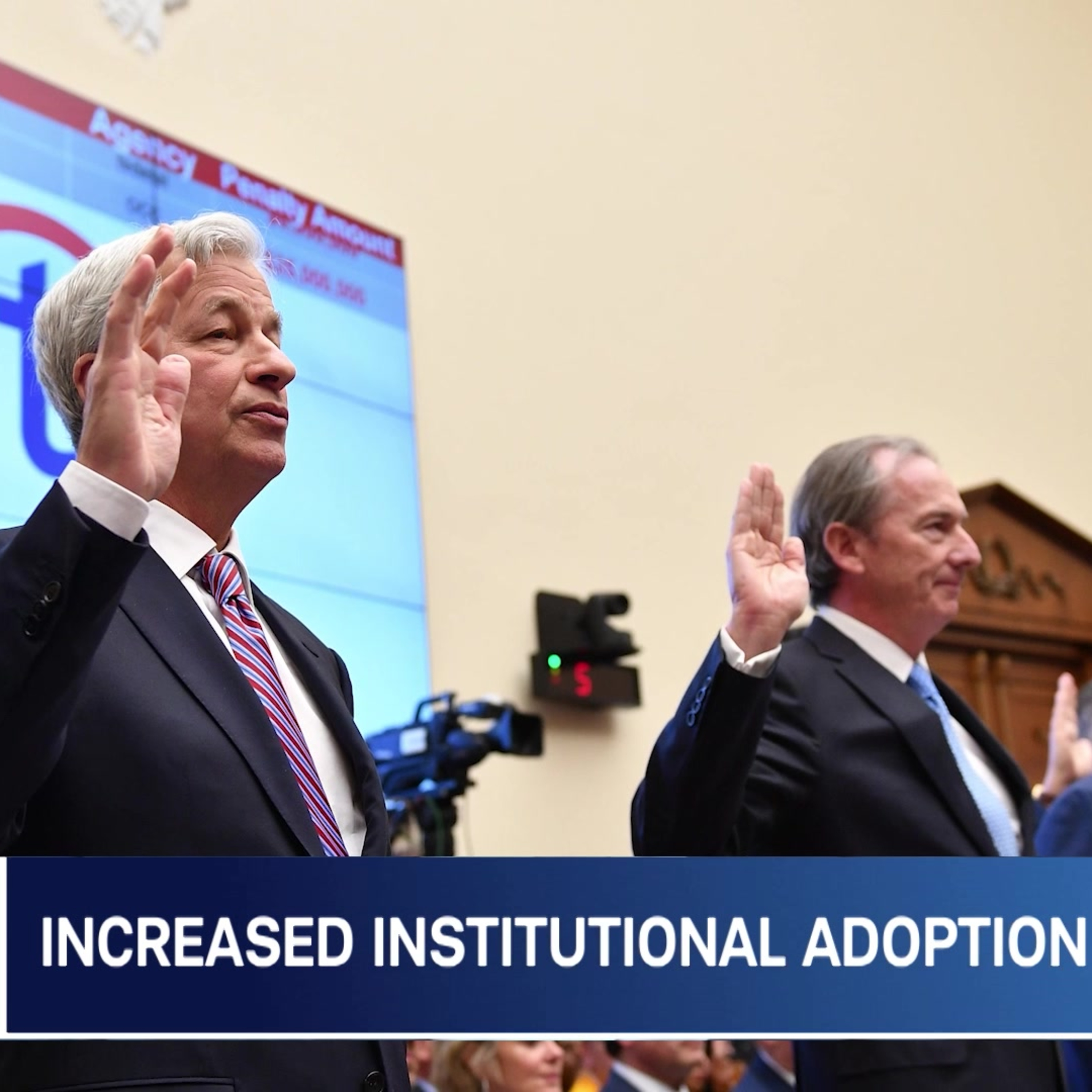
Charles Schwab's Adam Lynch returns to this week's Crypto Corner to explain why some traders see a bottom forming in Bitcoin. He compares commentary from prominent crypto traders to blockchain bears in weighing both sides of the argument. Adam points to JPMorgan Chase's (JPM) increased institutional adoption as a positive for the space for a variety of reasons, the leading of which being what he considers a "structural trend." A risk he touches on later on: BlockFills filing for Chapter 11 bankruptcy despite its institutional exposure.
======== Schwab Network ========
Empowering every investor and trader, every market day.
Options involve risks and are not suitable for all investors. Before trading, read the Options Disclosure Document. http://bit.ly/2v9tH6D
Subscribe to the Market Minute newsletter - https://schwabnetwork.com/subscribe
Download the iOS app - https://apps.apple.com/us/app/schwab-network/id1460719185
Download the Amazon Fire Tv App - https://www.amazon.com/TD-Ameritrade-Network/dp/B07KRD76C7
Watch on Sling - https://watch.sling.com/1/asset/191928615bd8d47686f94682aefaa007/watch
Watch on Vizio - https://www.vizio.com/en/watchfreeplus-explore
Watch on DistroTV - https://www.distro.tv/live/schwab-network/
Follow us on X – https://twitter.com/schwabnetwork
Follow us on Facebook – https://www.facebook.com/schwabnetwork
Follow us on LinkedIn - https://www.linkedin.com/company/schwab-network/
About Schwab Network - https://schwabnetwork.com/about
Get every episode summarized
Each time Schwab Network publishes, we email you a written briefing from the transcript — the topics, who appeared, and any specific claims, with the ad reads skipped.
Email me new episodesFree for 3 shows. No card needed.
Hosts & guests
Transcript ready
92 searchable segments. Every word is indexed and playable.
Full transcript
Schwab Network — Crypto Corner: Gauging Bitcoin's New Bottom, Institutional Pros & Cons. Machine-transcribed; use the interactive transcript above to jump the player to any line.
Welcome back to Crypto Corner here on Schwab Network. I'm Jenny Horne and joining me today is Adam Lynch. Adam of course from Schwab Equity Research but let's get right into it. Adam Bitcoin has been trying to stabilize after a pretty significant pullback. We're also hearing some calls that the bottom may be in. But as far as what you're watching from the charts, what are you seeing? Yeah, that's a great question, Jenny. After dropping 50% from its all-time high of 125K last year, it's understandable that most of the media we've seen around cryptocurrency is focused on some of these doom and gloom scenarios. But let's take a quick look at the chart. So what we're seeing here is essentially three years of history on a weekly basis. You can see that Bitcoin's price is sitting around 69, 70,000 today, which is a healthy 10,000 above its 50 week moving average. But it is a bit
below that 100 week moving average up there at 87K. So I guess the question is, yeah, could the bottom be in and could we be seeing some consolidation here? Well, trying to put a more positive spin on this week was prominent trader Taikimadeh. In his podcast earlier this week, he provided two key reasons for his bullish stance on Bitcoin and why he does think the bottom is it. First is extreme bearish sentiment. He claims that many traders are expecting capitulation around 45K and he sees this as a pretty overcrowded trade. His analysis of crypto-native fund flows, believes him to believe that things are shifting in a way which supports price stability where we're at now. Second, at the center of his view is strategy and its new fixed income product, STRCH. What is STRCH? Well, it's a preferred stock security, which offers an 11.5% yield with the proceeds used to directly purchase Bitcoin. It creates a reflexive loop, investors buy it for yield, capital flows into
the product and that capital is used to buy Bitcoin continuously. Medea argues that this effectively creates price and sensitive buyers, absorbing cell pressure and potentially establishing a strong market floor. Now, if demand for it remains strong, it could limit downside volatility, making some of these price corrections that we see a little less likely. But not everybody loves the idea and there are significant critics, one of them being Peter Schiff. Peter argues that the structure could resemble a Ponzi scheme. If Bitcoin enters a prolonged downturn since maintaining such a high yield may become pretty unsustainable. Now, strategy supporters will point to the fact that the firm has plenty of cash to hand to cover these payouts for over two years, which would reduce any sort of near-term risk. But overall, I think the point here is that structural demand for some of these new financial products could quietly reshape Bitcoin's market dynamics, making some
of these widely expected deep pullbacks harder to come by. Okay, we also got some pretty big headlines on the institutional front, JP Morgan now accepting Bitcoin and Ether as loan collateral as well as Blacklock launching now, this staked Ether ETF. And so, how important is really this shift in terms of legitimizing crypto with intraditional finance and does it change the longer-term demand story? Great question. I think it is a very significant week. So, this was probably one of the biggest weeks we've had in terms of institutional legitimization of cryptocurrency. I think this is one of the most significant developments with JP Morgan Chase starting to allow select institutional clients to use Bitcoin in Ethereum as collateral for loans within part of its trading business. This move represents a notable shift for traditional bankings engagement with digital assets, particularly given JP Morgan's CEO Jamie Dimon's history of skepticism. You may remember,
he famously called Bitcoin a fraud less than 10 years ago. But the acceptance of crypto as loan collateral by America's largest bank is a big deal for several reasons. First, when a major bank like this accepts crypto as collateral, it validates digital assets as legitimate financial instruments with recognized financial value. Second, it'll likely lead to broader Wall Street adoption as other firms like Morgan Stanley, TD Bank, City and others have already outlined plans to integrate Bitcoin and Ethereum into traditional finance as regulatory clarity tends to kind of continue to improve. Third, this is increased utility for crypto holdings. These clients can now leverage their Bitcoin and Ethereum holdings to access liquidity without having to sell the positions, expanding upon the practical use cases for these assets. And finally, it is a signal of market maturation. This reflects the growing regulatory clarity that continues to grind slower
ahead. It makes it easier for traditional banks to offer these services, which just suggests that this institutional adoption is becoming a structural trend, rather than some sort of speculative play. And then sticking with that theme of institutional adoption, you mentioned BlackRock. So on March 12, they launched the iShare State Ethereum Trust ETF. It's trading under ticker ETHB. And this marked a significant development within the crypto ETF space for a few reasons. It is, well, BlackRock's first ETF to incorporate staking, providing the investors with exposure to spot Ethereum while generating income by staking a portion of its holdings. The fund pays out over 82% of the staking rewards to investors, making it a very appealing option for those seeking yield in addition to price appreciation. And then the fund had a very strong debut performance, recording over $15 million in trading volume on its first day. And the timing of this is significant because it addresses a
staking feature gap within the crypto ETF market. By combining digital asset exposure with income potential, this fund expands BlackRock's digital asset suite and provides investors with a regulated excuse me, with a regulated vehicle to access staking rewards. Okay, and at the same time, we are still seeing cracks in parts of the ecosystem with Chicago-based BlockFills filing for bankruptcy. So does that kind of event now still pose a broader risk to the market, or is this just part of the maturing industry? I think it's more part of the maturing industry. It is a sign that there are still risks out there, right? This week, earlier this week, it was over the weekend actually, BlockFills did file for chapter 11 protection. The collapse unfolded in a few different stages. First, back in mid-February, they halted deposits and withdrawals, citing the conditions of the market. Later in the month, the minion capital filed a lawsuit against them, alleging that they had misappropriated some
customer funds that led a federal judge to freeze a bunch of the Bitcoin tied to their platform, and then in early March, they disclosed approximately 75 million in losses, stemming from lending, crypto mining, and trading activities. When they filed for bankruptcy, they essentially had assets valued at somewhere between 50 to 100 million against liabilities of 100 up to 500 million. Now, it is significant for a couple of different reasons. One is institutional exposure. This is a firm that was backed by very prominent investors, including Susquehanna Private Equity Investments, CME Ventures. That just indicates that even these well capitalized crypto firms remain vulnerable to this market volatility. There were some issues with maybe liquidity, right? This collapse occurred during the broader market decline. Could that be some sort of systematic risk in the future? Customer protection kind of came up in this one, these folks were locked out of their funds. One of the thralls were suspended,
just highlighting those risks with crypto custody lending practices. And then I think this is a little bit of a crack in market confidence, right? It adds to a series of crypto industry failures, which could damp an institutional appetite for crypto lending and trading. But overall, I think it just underscores the continued fragility of the crypto lending market platforms, things like that. And it just serves as a reminder, this is risky. There is risk associated with leverage, market volatility in the digital asset ecosystem. And it's something that we should all be aware of. Yeah, and I think really good points there. And of course, a space that we will continue to follow very closely because there's always a slew of news to break through. But Adam Lynch appreciate it. Thank you so much for joining us. And that's going to wrap up this edition of crypto corner to catch all of our episodes. Subscribe to the Schwab Network YouTube channel. I'm Jenny Horn. We'll see you again next time.
More episodes
More from Schwab Network

JNJ Balances Growth, Patent Transitions, and Legal Overhangs
Schwab Network

nCino (NCNO) CEO on Earnings, AI in Banking & Overcoming "SaaS-pocalypse"
Schwab Network

The Big 3: NET, TWLO, ASTS
Schwab Network

Tie Lasater on Inflation Floors, Energy Risk, and Private Credit Stress
Schwab Network