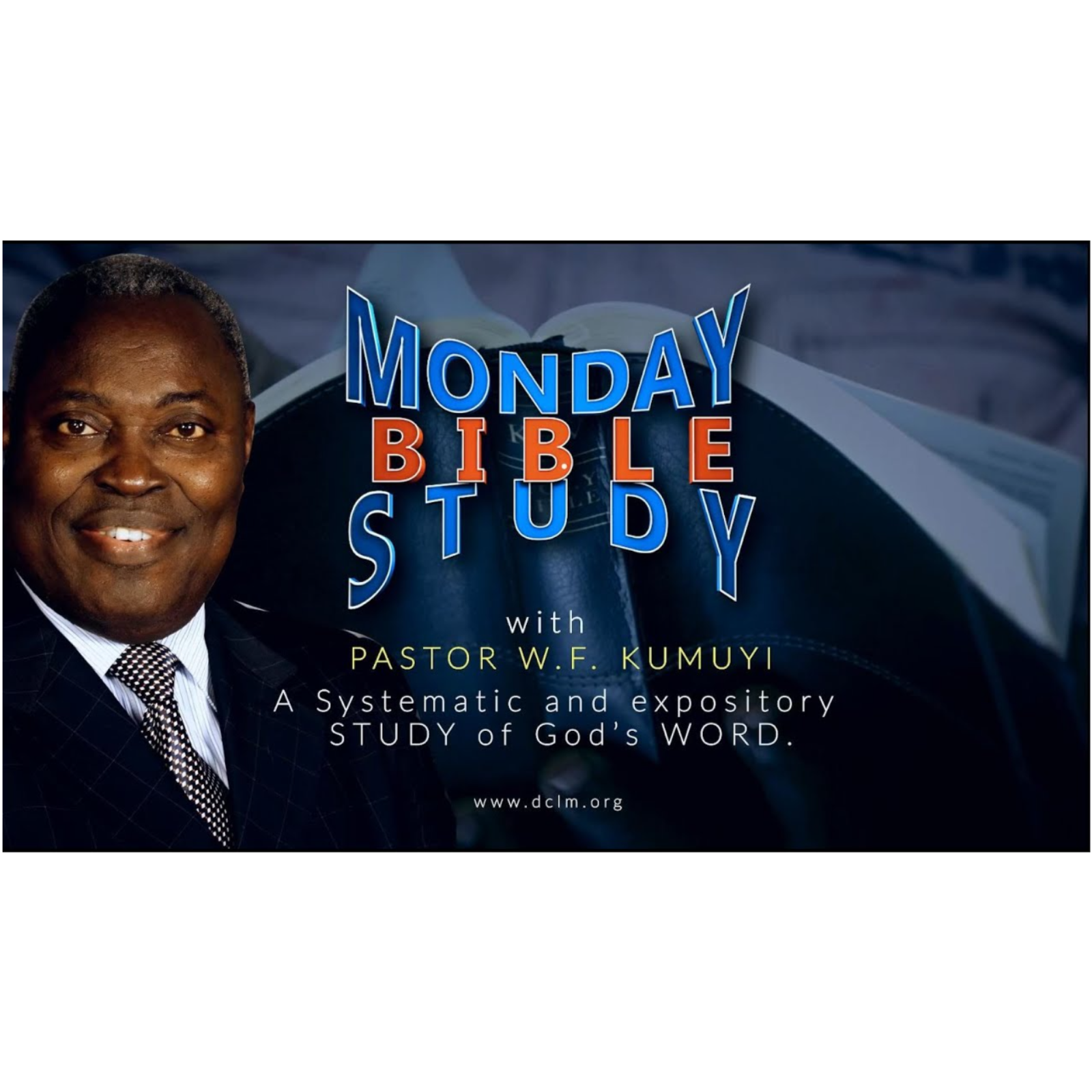
Becoming and Living as a Worthy Example
About this episode
Becoming and Living as a Worthy Example
The sermon by Pastor (Dr) W.F Kumuyi, "Learning to Become and Live as a Worthy Example", provides a spiritual roadmap for believers to establish themselves as godly role models within the Christian faith, regardless of their age. It emphasizes that practical holiness and consistent character are more influential than words alone, as many people observe a believer’s life instead of reading scripture. Believers are urged to live exemplary lives so that no one despises their calling or ministry, ensuring their behaviour points others to heaven. The message encourages the diligent cultivation of spiritual gifts through constant study and the rejection of trivial or worldly distractions. Furthermore, it highlights the importance of lifelong evangelism and the necessity of personal discipline to maintain a heavenly vision. Ultimately, the message calls for a deep commitment to meditation and self-monitoring to ensure one's conduct remains a worthy pattern for others to follow.
If you need the complete Pastor (Dr) W.F Kumuyi Message outline, download it via this link - https://tinyurl.com/LearningMBS20260112
Also, we love to hear from you. Send your feedback via this link - https://tinyurl.com/DrWFKumuyiPodcastFeedback
Please share this message with others. God bless you.
Get every episode summarized
Each time Biblical Deep Dive with Pastor (Dr) W.F Kumuyi publishes, we email you a written briefing from the transcript — the topics, who appeared, and any specific claims, with the ad reads skipped.
Email me new episodesFree for 3 shows. No card needed.
Hosts & guests
Transcript ready
215 searchable segments. Every word is indexed and playable.
Full transcript
Biblical Deep Dive with Pastor (Dr) W.F Kumuyi — Becoming and Living as a Worthy Example. Machine-transcribed; use the interactive transcript above to jump the player to any line.
Welcome back to The Deep Dive. Today, we are tackling a concept that is honestly a little bit terrifying when you really stop and think about it. Oh, yeah, it's one of those ideas that sounds kind of poetic at first, but the more you sit with it, the more weight it, you know, puts on your shoulders. That is quite the setup. Terrifying how? Well, we're looking at a document from the Deeper Christian Life Ministry, authored by WF Kumui just this past week. So January 12, 2026. Okay, it's very recent. Very. It's titled Learning to Become and Live as a Worthy Example. And I mean, right out of the gate, it hits you with this idea of living as a text. Ah, it's a striking metaphor, isn't it? It really is. The source makes this bold claim. Some people may never read the Bible, they'll only read your life. That is a lot of pressure. It's basically saying, you are the walking, talking documentation of your beliefs. Yeah. For a lot of people, your colleagues, your neighbors, maybe even your kids, you are the only Bible they are ever going to open. It is high sticks, certainly.
But what's fascinating here is that while this is a religious text, I mean, specifically a Bible study outline, yeah, if you strip back the layers, you're looking at a very rigorous framework for leadership or leadership for mentorship for personal discipline. Yeah, it's about the psychology of influence. It really poses the question, how do you live a life that is legible, a life that makes sense to the people watching you? Exactly. So our mission today isn't just to recap a sermon. We're going to unpack this specific framework. Right. We need to look at how this text redefines youth, which is actually quite surprising. It goes way beyond just your age, the psychological battle between fables and doctrine and this really powerful concept of the internal audit, which is where the real work happens. That internal audit is like the engine that drives everything else. So let's dive into that core metaphor again, the readable life. The text anchors this whole thing in 1 Timothy 4.12. Right. The verses let no man despise by youth, but be thou an example of the believers. Now usually when people hear
let no man despise your youth, especially today, they think it's a command to the critics. Oh, totally. Like, hey, stop looking down on me just because I'm young. Exactly. It sounds like a defense mechanism, like an anti-discrimination clause in a corporate handbook or something. Don't judge me based on my age. Yes, exactly. But the source flips that completely. It suggests that despising happens when a leader gives people a reason to look down on them. Oh, I see. It argues that people despise you when you lack courage, when you lack capacity, or when you don't understand the gravity of your position. So it's not saying ignore the haters. It's basically saying don't be despicable. I mean, that's a hard way to put it. But yeah, that is the core argument. It treats respect not as something you demand from others, but as a byproduct of specific inputs you provide. Right. The text argues that if you're being looked down upon, you need to check your output. And it gives a checklist for that output. Yeah. Right. It says to be an example in specific areas. In word, conversation, charity, spirit, faith, and purity. Yes. And we should probably pause on
conversation because that word has shifted over time. Okay. In the King James context, this source is using conversation doesn't just mean chatting. It refers to your conduct, your lifestyle, your citizenship. It's how you move through the world. You know, when you think no one is watching. So the checklist is really comprehensive. Then it's checking your speech, your behavior, your love for others, your attitude or spirit, your reliability and faith, and your moral cleanliness. Precisely. If you fail in these areas, the source argues you've effectively written a bad text. You've created a glitchy interface. And when the interface is bad, people reject the software. That's a great way to put it. They don't bother trying to understand your faith if your conversation doesn't match up. That brings us to a specific instruction in the text that I absolutely loved. It says, do not plan like a child. This is where we get into the maturity framework. I just feel like I know so many people, myself included sometimes, who have these huge dreams, but like childlike plans. You know, I want to do this massive thing, but there's no roadmap.
Well, a text defines planning like an adult as understanding your strength, your capacity, and the great height you are aiming for. A great height. Yeah. It uses that phrase to describe the ultimate goal leading people all the way to heaven. Wow. That's a tall order. It is. And the argument is, if you don't understand the scale of that challenge, you're planning like a child. A child says, I want to fly into the moon, but they build a rocket out of cardboard, a builder, a worthy example, calculates the fuel, the trajectory, the structural integrity. If you are going to be a model for others, you can't just wing it. It really emphasizes that visual aspect, doesn't it? The way you carry yourself, the way you project yourself. It's almost treating the believer's life as a user interface for the faith. That's a perfect analogy. You have to be intentional about the design of your life. It is a perfect analogy. And this brings us to the maintenance of that interface because you can't just design it once and walk away, right? No. The source moves into this really interesting dichotomy between bodily exercise and spiritual exercise. Yeah. I was not expecting a section on
gym memberships in a Bible study, but here we are. It gets surprisingly practical about physical health. It is pragmatic. The text explicitly admits that bodily exercise is profitable. It lists the benefits, improves circulation, strengthens the heart, prevents obesity, improves brain function. It's not dismissing the body at all. It throws a little shade at modern life, too, doesn't it? It does. It notes that in the past, you know, farming, rowing, walking everywhere, exercise was built into survival. You need a treadmill because life was the treadmill. But now with cars and phones and sedentary living, we have to artificially create that stress on the body. But? And there's always a but. It says that physical exercise is limited. Right. It says it profitif little. Now, depending on the translation, that can mean it has some value, which it does. But in the context of the eternal, it's limited. It's profitable for now. It has an expiration date. It has an expiration date. Your cardio health is great for this life, but it doesn't transfer over. The text contrasts this with godliness, which it claims is profitable
for now and eternity. So it's an ROI calculation. Exactly. Physical exercise pays dividends for maybe 80 or 90 years. Spiritual exercise pays dividends forever. Exactly. And here's where it gets really interesting regarding what we consume to stay spiritually fit. The text introduces the enemy of the spiritual exercise. Profane and old wives fables. Okay. Let's unpack this because old wives fables sounds like something out of a fairy tale. A little bit like brother's grim. What is the modern equivalent the source is warning against? Well, it defines them as extrabiblical stories, worldly drama, or vein babbling. In a modern context, we're talking about information hygiene. Information hygiene. Okay. Think about conspiracy theories, unverified rumors. The endless cycle of social media drama. The hot takes that everyone is angry about for 24 hours and then forgets. So junk food for the brain, worse than junk food. The text uses a very visceral medical metaphor
here. It says these words eat as doth a canker. A canker? That's an old word for gangrene or a spreading ulcer, right? Yes, it's a rot. It's an acrotic. The source argues that consuming these fables isn't just a waste of time. It actively overthrows faith. Wow. It creates a structural weakness in that readable life we talked about. If you are full of gossip and drama, the text you are presenting to the world is corrupted. It actually gets pretty specific with the damage report. It mentions two guys. I'm an aess and philetus. Yes. These are biblical figures, but they are used here as archetypes. They weren't just guys with bad opinions. They're fables and vein babblings actually overthrew the faith of some. They caused people to crash. So the warning is, if you let this rot into your system, you don't just hurt yourself. You become a hazard to the people reading your life. Exactly. You become a contagion. So the antidote to this rot is what just ignoring it, closing your eyes. No, it's active displacement. The source emphasizes the
role of repetition and remembrance. It says a good minister isn't necessarily someone who brings new information every week. It's someone who puts the brethren in remembrance. That's so counterintuitive. We usually value novelty. Tell me something I don't know. We want the breaking news. Correct. We are addicted to the new. But in this framework, mastery comes from repetition. It references Peter and Jude saying, I will not be negligent to put you always in remembrance, though you know them, though you know them. So I know you guys know this, but I'm going to tell you again anyway. Precisely. It's about reinforcing the foundation so that when the fables and the canker come along, the structure holds, it's like muscle memory in sports. Okay. You don't go to practice to learn a new rule of the game every day. You go to drill the basics until you can execute them under pressure without thinking. That makes a lot of sense. It's about stability. And speaking of keeping things stable and strong, we have to talk about the section on youth because I think
this is where the source delivers its biggest aha moment for me. Oh, absolutely. This totally reframe the concept of aging for me. The text basically says, forget your birth certificate. It redefines youth completely. It argues that youth is not defined by years, but by, and I'm quoting here, how sharp your mind can think and the strength of your vision. If you are still planning dreaming and desiring to achieve, you are still young. I love that definition. It shifts the entire metric from biology to psychology. It's empowering. You could be 70 and young by this standard. But it also comes with a warning. The text identifies a specific phrase as the language of decline. Uh, I am too old for this. That's the one. I'm too old for this. The moment you say that, the moment you say I've done my time, let the young people handle it, the source argues you have officially aged. You've accepted decline. You've clocked out. You've clocked out. It's almost a self-fulfilling prophecy. You say you're old, so you stop trying, so you become old. Exactly. So the obvious question is, how do we fight that? If we want to stay young in this
framework, what's the prescription? Is it vitamins? Is it trying to dress like a teenager? No, please don't do that. The answer, surprisingly, is books. Books. Give attendance to reading. The source is very explicit. If you stop reading, your brain grows old. And it's not just talking about the Bible here, right? I think that's an important distinction. So it is, obviously, as a religious text, the Bible is central. But the source explicitly encourages reading good, self-help, and instructional books, even outside of a seminary context. It mentions reading for instruction, for doctrine, for exhortation. Why books specifically? Why not just podcasts or videos? Well, think about the cognitive load. Reading requires active engagement. You have to visualize the concepts. You have to follow the logic. It exercises the brain in a way that passive consumption just doesn't. The source links reading directly to cultivating character and charisma. It says, reading is how you sharpen the gift that is in you.
It's really positioning the leader as a lifelong learner. If you aren't inputting new data, your output becomes stale. You start repeating those old wives' fables because you haven't learned anything new and true to replace them with. And your brain physically atrophies. The source links the lack of reading to a lack of mental impollity. If you want to stay young, meaning sharp, planning, dreaming, you have to keep feeding the machine. Now, there is a specific group this text is worried about. It talks about the confused youth. And honestly, the description feels very good now. It feels like it could have been written about any teenager today. It does. It describes them as hooked on the internet, endlessly browsing, scrolling. It paints a picture of a generation that is distracted and perhaps in the wrong company. It's easy to read that and expect to get off my lawn response. Kids these days are ruined. But the approach it suggests is completely different. It explicitly says, do not ignore them or say they cannot be straightened out. The command is to evangelize them gently, reasonably, and intelligently. That intelligently part
stands out to me. You could just throw slogans at a generation that has access to all the world's information. No, you have to engage. You have to make a compelling case. And the source uses a powerful historical example here, Saul becoming Paul. Right. For listeners who might not know the deep lore here, Saul was the bad guy. He was a terrorist, essentially, a religious extremist. The text points out that Saul was a young man in the wrong company. He was literally standing there holding the coats while a mob stoned Stephen to death. Wow. He was complicit in a brutal murder. If you look at Saul then, you'd say this kid is a lost cause. He's radicalized. He's dangerous. Exactly. But the text argues that potential for transformation is always there. The argument is about energy. Saul had immense energy, immense drive. It was just pointed in the wrong direction. So it's not about destroying that energy. It's about redirection. Precisely. That same fire Saul used to persecute the church was the same fire Paul used to build it once he was straightened out. The source uses this to argue that the confused youth on their phones today. The one
the endlessly scrolling ones endlessly scrolling. They are the potential powerhouses of tomorrow. They have the energy. They just need the heavenly vision to focus it. Redirection. That word is a perfect segue to the final and I think most challenging part of this document. The internal audit. This is where the rubber meets the road. This is the practical application of everything we've just discussed. The source introduces this concept of an energy redirect in our own lives. It critiques how we spend our mental energy. It observes that we spend an inordinate amount of energy monitoring, managing and criticizing others. Why did they do that? Look at how he's failing. I would have done that differently. We are constantly auditing everyone else. I feel attacked. I think we all do that. It's almost a hobby. It is human nature. It makes us feel superior. But the source asks a provocative question. What if you gathered all that energy every ounce of it and focused it solely on watching over your own life? It promises that if you did that you would rise
higher than you ever imagined. It's an efficiency argument. Criticism of others is wasted energy. You can't control them. You can't fix them. But self-correction. That's a direct investment. That is a direct investment. The text argues that if you took the magnifying glass off your neighbor and put it on your own conversation, your own charity, your own faith, the growth would be exponential. And the tool for this self-correction, according to the text, is mutation. Yes. Now, we need to be careful with words here. When we say meditation in 2026, people think of mindfulness apps, clearing your mind, breathing exercises. Is that what the source means? Quit the opposite. In this context, meditation is active. It is cognitive work. It is compelling yourself to focus on what the text calls the heavenly vision. Compelling yourself? That implies resistance. It plays you don't want to do it. Yes. It implies that your mind wants to wander. It wants to go back to the fables or the criticism of others. Meditation is the discipline of forcing your mind back to
the vision. It says you must give myself wholly to them. And what is this heavenly vision? Is it just a goal? Like, I want to be CEO. The source defines it as a purpose that comes from outside yourself. It says it drops into your heart during prayer or worship. So it's not a career goal you made up. No, it's a calling you received. It's a North Star. And the meditation is what keeps you loyal to that North Star when things get tough. Rainy season or dry season, as the text puts it, it uses the image from someone the tree planted by rivers of water. I love that image. It's so classic. It's a classic for a reason. Think about it structurally. A tree planted by a river doesn't worry about the weather. It doesn't matter if it rains or if there's a drought because its roots are tapping into a source that is constant the river. So the argument is that a leader who meditates, who constantly performs this internal audit is connected to that river. Exactly. They are stable. They are fruitful. They don't wither when the culture changes or when people criticize them. They have a supply line that others don't see. And because of that, they are consecrated.
That word comes up a lot. It means set apart. If you are constantly consuming the fables and van babelings we talked about earlier, you are common. You are just like everyone else. You're reacting to the same news cycles, getting angry about the same things. But if you are giving myself holy to this vision, if you are reading to keep your mind young, if you are auditing yourself instead of others, you become distinct. You become that worthy example. It all circles back to that first point. The readable life. You can't fake being a tree by the river. You either have the water or you don't. And people can tell that's the scary part we started with. If you are dry, if you are shallow, if you are planning like a child, the text to your life reads as a tragedy or a farce. But if you do the work, if you do the godly exercise, it reads as a manual, it reads as a guide. So what does this all mean for us? We've looked at the readable life, the redefined youth, the danger of fables, and the internal audit. I think the big takeaway is that
being an example isn't a passive state. It's not just about being a good person in a general sense. It is a rigorous intellectual and spiritual discipline. It requires the physical act of reading to keep the mind sharp. It requires the mental act of rejecting fables to keep the spirit pure. And it requires the emotional act of stopping the criticism of others to focus on self-improvement. It has to work. It's a job. It is hard work. But the source argues it's the only work that lasts for eternity. And more importantly for the here and now, it's the only way to ensure that the people reading your life, your kids, your team, your community are reading a story that helps them. Well, let's wrap this up with something concrete. We talked about that energy redirect. Yes. Here is my challenge to you listening. And to myself, honestly, the source suggests we hemorrhage energy by critiquing others. Right. It's a leak in our system. So try this for one week. Just seven days every time you feel the urge to critique a colleague, a family member, a politician, or even a public figure. Stop. Hit the pause button. Take that specific thought,
that energy, and turn it 180 degrees. Ask, what is the version of this flaw in me? And how do I fix it in my life? That is a terrifying experiment. You might find things you don't want to see. You definitely will. It's not going to be fun. But if the source is right, that energy redirect might just be the secret to rising higher than you ever planned. It's how you start editing your own story into a text worth reading. And becoming a worthy example. Exactly. Thanks for diving in with us today. We'll see you next time.
More episodes
More from Biblical Deep Dive with Pastor (Dr) W.F Kumuyi

Divinely Planned Transformation by Grace for Glory
Biblical Deep Dive with Pastor (Dr) W.F Kumuyi

The Transformed Achiever: Lifting Limits through Faith and Diligence
Biblical Deep Dive with Pastor (Dr) W.F Kumuyi

The Sinner's Doom and the Saint's Destiny
Biblical Deep Dive with Pastor (Dr) W.F Kumuyi

The Path of Faith and the Peril of Obstinacy
Biblical Deep Dive with Pastor (Dr) W.F Kumuyi