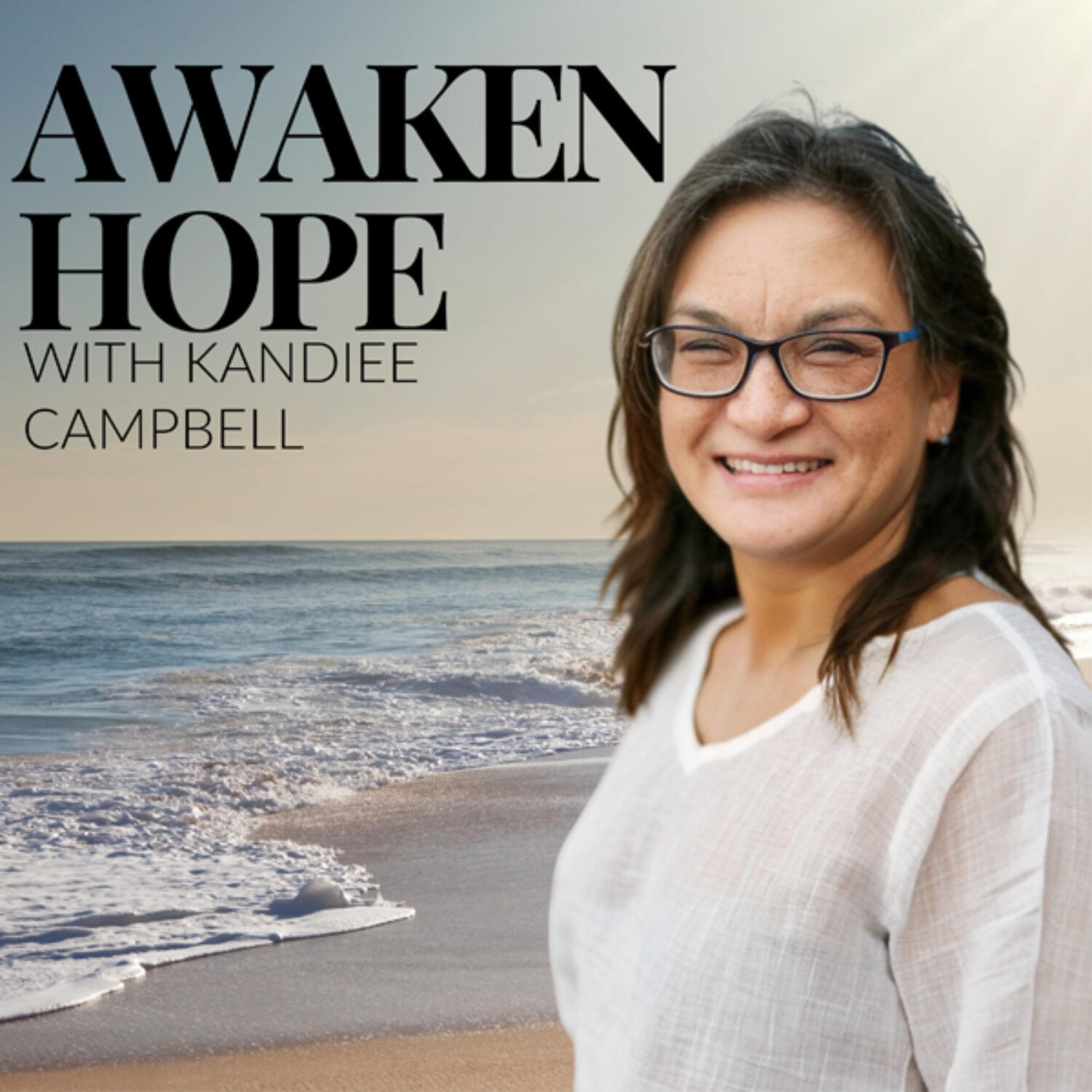
About this episode
Tara Hodgson has been teaching junior high for the past sixteen years. She spends her days surrounded by teens and has witnessed the changes that technology, especially social media, has had on the teenage experience.
She lives on an acreage in Sturgeon County, Alberta with her husband, two children, and a crew of cats and dogs. Information about Tara can be found at: TARA HODGSON
Get every episode summarized
Each time Brushwood Media Network publishes, we email you a written briefing from the transcript — the topics, who appeared, and any specific claims, with the ad reads skipped.
Email me new episodesFree for 3 shows. No card needed.
Transcript ready
957 searchable segments. Every word is indexed and playable.
Full transcript
Brushwood Media Network — Awaken Hope with Tara Hodgson. Machine-transcribed; use the interactive transcript above to jump the player to any line.
Are you tired of feeling hopeless? Or do you feel as though you carry around an invisible ball and chain? If so, you are in the right place. It's time now for a wicked hope with Candy Campbell. Candy is a therapist and grief counselor that works with women to help them process and heal from emotional events that can keep them feeling stuck. Let's take this journey together. And now, here's your host, Candy Campbell. Welcome back to another edition. I am so super grateful that you are tuning in. I have a returning guest here with me. Her name is Tara Hodgson and she has been teaching junior high for the past 16 years. She spends her days surrounded by teens and has witnessed a changes that technology, especially social media has had on the teenage experience. She lives on an acreage in Sturgeon County, Alberta,
with her husband, two children, and a crew of cats and dogs. And today, we are gonna talk about her new second book coming out, which is entitled, at least I'm trying. Welcome Tara, thank you so much for coming on the Awakened Hope Show and sharing your second book. I mean again, thank you. Let's talk about this book. I mean, I know we did your first book which was about social media and the impacts of it. But let's talk about what is, at least I'm trying about. Well, I love sticking with the theme. So I definitely kept with the social media theme just because it's what I'm really passionate about. But with this book, I went and veered into a completely different direction and really focused on the really, like the dangerous potential implications of social media. So I describe, at least I'm trying a Snapchat gone wrong. Basically, a young girl, she's 17,
re-smiller is a perfectionist. She has the pressure of everything on her shoulders. She's an academic and athlete, all of the things. And she messes up. She experiences a bunch of failure and she's not accustomed to that. And instead of just continuing on and trying, trying, trying. She gives up entirely and seeks a completely new path. And that leads her to new friendships and it leads her to a connection with a man from Snapchat. And things get progressively worse from there for a reason and she has to kind of find her way out. Wow. Well, I know, I remember from our previous conversation, you talked about the experiences that you see with these young adolescents, I guess, young, soon to be teenagers, some are teenagers, but that what they evolve into in Snapchat and social media and how some of them really don't differentiate
but some of those relationships that you see or you make online are not necessarily healthy ones. No, I think everybody kind of becomes a different person through social media. Like you're putting on a persona, right? And what I found, I did a lot of research in this and went through like down a really dark wormhole is that social media and these online games are actually the primary tools of predators. You know, when I was a kid, you were worried to be walking through the city by yourself or through the mall and today it is there. They could be in their bedrooms, safe, safe, safe on their phones and that's where they're being targeted. And through that research, it wasn't just, you know, we have this idea in our heads of people who are targeted by predators that they're, you know, people who have struggles and who don't have solid families or just a different demographic, but that's not true actually.
It's all the people who are targeted on there. Just anybody who's looking for somebody or something to fill a gap, fill some kind of space within them and it could be your middle class average family that look perfect and great from the outside but it's not always that way. So I wanted to really showcase that this is a tool used by, you know, people who are not, they don't have good intentions. So the person that Reese meets definitely does not have the best intentions. That's a very unsettling thing, especially knowing that as a parent because new teenagers are hard enough as it is. You're trying to find yourself, you're trying to figure out where you fit in and who you fit in with and to know that people use a space where teenagers are trying to navigate life, learn about who they are, who's their, who's their path, who's their friends, you know,
less than ideal individuals are using that to gain an advantage over a teenager or young adolescent who's in a space that they don't know any, they don't have any wherewithal to what life is about essentially. Yeah, and I think that's one of the challenges of social media is even in the real world, teenagers are figuring themselves out. They're struggling, they're making mistakes and with social media, those mistakes and that finding yourself become public and it's not just, you know, the people in your class or the people in your family or the people in your school, now you have such a wider audience of people who are privy to that information and that makes it really scary. And though, I don't think those conversations are all happening with all kids and obviously I'm not speaking on behalf of all kids. Right. But the digital literacy piece is so, so important but I've had conversations with kids
who look on the outside that they're smart, they're, they audit together and they're doing stuff online that would, their families, if they knew or would shock most people because it feels like it's safe. So just they're at home behind a screen, it's okay. And they don't know that it's actually permanent, it's public, it's all of those things that could really affect them, don't know. Because things that go on, you know, they think, I've heard, I do a lot of listening and I hear people say or kids say, oh, well, if I deleted it, you know, I, but you never, it can always be found. You can never fully delete stuff from the internet. Once you go on people, the kids love to take screenshots. There's lots of screenshots going around. That somebody has taken a screenshot of that before it's gone. Like it's, then Snapchat has that security, right? Like, oh, it disappears after a period of time. It doesn't. They share that it's still going to be posted
and what really alarmed me with Snapchat as well and this was a, from conversations with my own students is the snap map feature, which is sharing real-time locations with all of your followers. So they can open up your snap map and see exactly where you are at all times. And that's a little bit. I talked to kids 30. Yeah, they all use it and did not see why I was so alarmed by that. So it's perfect, perfect tool for predators to use should somebody find themselves in that situation where they could be tracked down instantly at school, at home, wherever they are. And in your book, at least I'm trying your main character experiences something like that, someone identifying where she's at. Yeah, and she forms a relationship with this person and they do, they connect in real life, but he has an ulterior motive. So yeah. Wow, that's, that's very unsettling as a parent.
Yeah, and I think even with chasing through time, my first novel, I don't shy away from the hard stuff. I definitely want to try and be as real and authentic as possible and talk about these real, even if they're dark, even if they're difficult to talk about, these real themes that are coming up. And I thankfully, at least I'm trying is not based on a real situation I've seen with the student. Thank goodness. Because it really goes through the ringer. But it is, it's a challenging subject, the things I address. So I definitely focus on the mental health. I don't shy away from these overwhelming feelings of anxiety, and sadness, and depression, and with reasons that pressure, it's so intense for her and she does not know how to navigate that. I try and touch on these family dynamics that I have seen as a teacher where there's this disconnect between teens and their parents and how that can lead to
then maybe doing things they wouldn't normally do. And this one, I touch on, those choices that teens have to make, are you going to drink? Are you going to experiment with the drugs? Are you going to take it further in your romantic relationship than maybe you're ready for? So I try and touch on all of these things, which I think can be hard for some people to digest. And I don't want to shy away from it. I don't want to bury heads in the sand because I see these things in these decisions and it's becoming more and more prevalent in the media that this is what kids are experiencing. So my whole hope is that even though it's hard to read, it's necessary and we have some really important conversations. Well, quickly before we go to break, I applaud you for that because these are topics and these are necessary issues that need to be brought to the forefront. If someone's not bringing them to the forefront and a lot of parents don't have these conversations with their kids and not to say anything
and don't shoot the messenger, but if you have kids, you know kids are going to do stuff. We were all kids at one point in time. Absolutely. Good stuff. And to say your child is not going to do that is, I would say, and yes, I'm going to say you're living in a little bubble world. And that is not realistic because here's your kids. Teenagers, especially, and they're going to do stuff that you would say, oh no, Johnny wouldn't do that. Oh, well, yeah, Johnny probably is. Yeah, their job is to mess up and you know, engage in risky behavior and get out the other side. You're supposed to do that. Right. Well, we're going to take a short break. We'll be right back and we'll continue this conversation. Imagine crossing two oceans and discovering not just a destination, but a home. That's what I found at El Tosoro, a family run farm to table retreat at the Cross Road to Tuscany, Lazio, and Umbria. OSREDA and Massimo welcomed me just like family.
I harvested olives, savored fresh, pressed, extra virgin olive oil, and took a cooking class in their restaurant kitchen. I'm still making that eggplant recipe back at home. Beyond the food, Rita guided us through Italy's rich history, intricate flower mosaics crafted by local artists, a wine tasting overlooking the lush green hills of Umbria, and a meal in Chibita di Bani Reggio, an ancient village we had to cross a footbridge to get to. El Tosoro isn't just a place to stay, it's a place to gather, celebrate, and reconnect. Whether you're seeking a peaceful yoga retreat, a dream wedding, or a meaningful family reunion, El Tosoro makes every moment magical. If you're dreaming of an authentic Italian escape, then you need to follow at El Tosoro underscore Italy on Instagram. That's I-L-T-E-S-O-R-O, underscore Italy.
Come home to El Tosoro. Welcome back. Again, I have Tara Hodson here, and we are talking about her book, at least I'm trying. And over the break we were talking about social media, it's not just, yeah, a lot of it is teenagers, a lot of it's adolescence, but it is not just them. Social media is taken over a lot of people's lives. I tried Snapchat once, it was not my thing, and I disconnected it and said, no, thank you. But also, I'm gonna age myself, social media in itself is not my cup of tea. And I'm on there as a necessity for business, not necessarily to look at everybody and see what's going on. Although it can suck you in and I understand that. But we were talking about how she had mentioned. You mentioned that you have parents that are concerned about this book not being appropriate for older children.
But the question I'd have for those parents, and you have to really think about it as a parent. Like she mentioned, Tara mentioned, what are your kids paying attention to? You don't know if you're not monitoring them and it doesn't mean they have to have protocols but you got at least ask questions. No kind of ask, who are they communicating with? There's nothing wrong with a parent, or at least in my opinion, nothing wrong with a parent asking their kids. So who are your friends, you know? I mean, yeah, most teenagers go, mom, you know, I mean, I can hear the response because my kids gave me responses like that. But I'm like, I kept pushing. I'm like, you know, I got to know who their friends were because you don't, if you don't know, they could be talking with any number of people, like you said, in your book, that have ulterior motives for that communication. Yeah, and I guess for me,
like I read everything and anything when I was a kid, my parents were like, you're reading. I'm happy, I don't care. And I think what I'm choosing to write is I'm using fiction as a way to learn. So it's nothing is explicit in any way at all. So even though I'm touching on some darker things, it's nothing is explicit, that's not necessary. But it's there for a purpose. So kids are reading it, parents are reading it, and then, oh, this is what happens if I do this. This is a potential implication if I choose to engage in this behavior, or if I choose to speak to this person, if I choose to experiment with drugs or drink, or whatever it is. And that's what I think fiction is for, and my challenge for parents who don't want their kids to read about those subject matters is what are your kids watching on their phones? Because right now, the average age of first viewing of pornography is nine years old.
No brain can comprehend that. And that is explicit. I mean, they could access literally anything they want on their phone. Regardless if you have parental controls or not, their kids are incredibly ingenious. They can work themselves around that faster than I could even think of ways to do that. So to me, reading about it, that's how we learn. And reading has lost its way a little bit with the inclusion of social media because teenagers would rather watch a quick video than put in the effort to read a book. So if kids are reading, they're reading. And they're learning. They're being exposed to content not for explicit purposes, but for learning purposes. So that's my challenge there. But it's frightening. They have this box in their pocket that they could search up anything they desire. And it's at their fingertips, which is scary to me. And you're raising awareness. You're, and that is the biggest thing.
Like I've always told the listeners and I'm like, the more aware you are, the more you can make informed decisions you're going to benefit you. But if you're kind of not aware, you've got blinders on, and you're navigating dark in a dark space that is not going to necessarily lead you to where you want to go. And even if you have some awareness is better than no awareness. Mm-hmm. And that's what led me to start writing, actually, is as a teacher, I felt. I could see these kinds of things happening. See the mental health effects, see how kids were disconnecting from their peers and really isolating, and all of these problematic behaviors that were sprouting up. And I didn't know what to do about it. So I just, this was my way of getting it out. And I mean, the material I could have, I could write books for the next 20 years because there's so much it's moving so quickly, right? And like now we have AI relationships.
I've heard kids talk about their AI relationships, their friends. What? Which, yes, it's, now we're pivoting to that. And there's just, it's moving so quickly that, you know, if you're not paying attention, you might not know that it's happening. So I, yeah, I just, we have to talk about it. Yes, this is a reality. Social media is not going anywhere. Our cell phones are not going anywhere. Technology is not going anywhere. So as a parent, like I have a 10-year-old and an eight-year-old, I want to be as informed as possible. And I want to have these conversations with my kids and a great way to do that is, hey, let's read this book. I'll read it and then you read it. And then let's talk about it. And it might be uncomfortable a little bit to talk about some of these things, but that's okay. But, you know, again, a raising awareness, having those uncomfortable conversations is going to open up a space that as a parent, you can at least address some of those hard issues rather than just saying, oh, no, Johnny and Susie,
they don't do anything like that. Well, Johnny and Susie probably are. And, you know, you can't, well, you could, people do it all the time, but it doesn't hope your kids to put on a blender and say, oh, no, they won't do that there. They're not looking at those sites, they're not communicating, but statistics have shown, like you said, kids are having conversations that one, they shouldn't be having, but two, they're having them with people that aren't there to protect them. They're there to hurt them in some shape or form. Yeah. And actually in the book, Reese's parents are the parents who kind of have their heads buried in the sand, because I wanted to show that they actually have a conversation because in the story, there's newspaper headlines throughout, of missing girls, kind of, they're going missing in surrounding towns and they're having a conversation about it at dinner and they're like, you guys wouldn't do that. You wouldn't have conversations with people online, right?
And her and her sister lie. Like, of course not, we wouldn't do that. And then they continue on and her parents never have those conversations with her as long as she's getting the grades, doing well in her sports, whatever, they're happy. So those authentic conversations, and like you said, creating that space is so important. So then if your kids are exposed to something they know is inappropriate or if they are connected with the stranger and something doesn't feel right, they will come talk to you. Because we see Reese kind of struggle with this. She has like her intuition is telling her something's wrong but she keeps pushing it away and ignoring it and ignoring it and ignoring it until it's too late. She doesn't have anybody to go to to talk about this. She doesn't have that space at home. So I really wanted to create that family dynamic to show that disconnect and how that kind of was one of the reasons why she did do the things that she does, the choices that she made. Yeah, oh, wow.
I love it. I love the fact that you are raising awareness because I've always advocated for that because you're gonna be wiser, you're gonna be smarter. Not to say that we're not gonna make mistakes but when we make them, they're not gonna be such deep mistakes that we always say you can come back from any mistake but the deeper the mistake, the more the climb is to get back to where you want to be and most people, when they make those very deep mistakes, like you said, it leads to other things. You have the mental health come in and then they're beating themselves up because they should have done that, didn't know. What if could have conversations going on with their head, the regret, the shame, the whatever stories that they're telling themselves and that leads to a whole nother area that is like a vicious cycle. Yeah, and we had, it's funny to say the way it could have should have. Reese has that exact conversation in her head.
Like if only I had done this, if only I had listened to that little voice in my head screaming at you that something wasn't right, she has that conversation. She makes that deep mistake and we see her at the end and I always leave with a semblance of hope because my books are heavy, they're emotional, they're raw, they're really like a really heavy on these real feelings. So I always leave with hope but I never want to tie everything up in like a perfect pretty bow because that's just not the way life works. So we see that Reese has hope but now she has to work through the consequences of this deep mistake that she made and climb, like you said, climb her way out of it. Well, we're gonna take a short break and we'll be back and we will finish out this amazing conversation. Hi, this is Sophie Zollman. Are you tired of throwing spaghetti at the wall and hoping something sticks with your marketing? I see this all the time. Seven and eight figure service providers just like you wasting time and money
on marketing efforts that simply don't pay off. After 20 years in digital marketing, I've learned that success starts with strategy, not guesswork. At FMD strategic partners, we become your fractional marketing department giving you expert marketing leadership without the overhead of hiring at all in house. We craft customized strategies specifically for your business, your audience and your goals. You'll get clear metrics that show exactly what's working and what's not so you can maximize your success. I often hear our clients say, I wish I'd done this sooner because there's nothing more satisfying than seeing new leads rolling in and knowing your marketing is finally working. Ready to stop the marketing madness? Visit FMD strategicpartners.com and book your free digital success session today.
That's FMD strategicpartners.com. Marketing is our passion. Let us take it from here while you focus on what you do best, running your amazing business. Welcome back. Okay, Tara and I have been talking about social media and her book, at least I'm trying. And you know, one of the things we were talking about over the break is, and I know this as a parent and I know parents don't want to admit this sometimes. I've been there, I've done that. Have the batch, don't not proud of it. You have to look at your kids and recognize that, you know, better to have that conversation about a tougher conversation, maybe introduce a book. Maybe it is heavy, but like she was talking about, you know, she reads with her kids, she could read it, they could read it, and then they could have a conversation about it. Better to have those conversations now than after something has gone horribly wrong.
Because once it goes horribly wrong, those consequences are, they're gonna come calling. And you know, no parent and of course no child or no teenager wants to face that. But you know, my kids are all grown adults, but I do have green kids that are coming into the world and I think to myself, that's unsettling. I mean, they're babies, they're toddlers and babies, but that's unsettling that social media could have that much of a on their little minds. Yeah, what concerns me is like, what's it gonna be like in 10 years? Well, it's like, right? Like it's been progressing so quickly. It's daily, it almost feels like, so like I think of my own kids, and yeah, I have a 10 year old and an eight year old even in the next two, three years. What's gonna be the next thing? What are we gonna have to navigate together? But I like, I know it could be hard to start those conversations just out of the blue.
So I guess like my books chasing through time as well are could be a tool for that. Because if you've never had those conversations, it could be really intimidating. You know, how do you connect? How do you bring this up out of the blue? So it could be used as a tool for that. And I think once you have that communication open, that discussion open, it just creates opportunities for more and for more and for more to come about more naturally. And if you have those conversations, even if they are challenging, you open up that, again, you open up that space that if they're faced with other situations, maybe they're different aspects of their life. Maybe it's something else, but it could be socially unrelated or someone seeing something or, you know, it allows the young person, at a less than teenager to, if you've had previous conversations, it allows them to come back and say, well, you know, mom, this has been occurring or I'm encountering this,
there is, you hold space warm to be able to feel like they can come to you when faced with a situation and it may not be ideal or a person saying something, you can at least verify and solidify that what's being told to them is either. Mm-hmm. And we see that at the end of the novel when Reese's family, like we see that whole kind of shift for them is now we need to start making space for these conversations. And it's very challenging for them because it's been so long that they haven't. Her mom actually just is overwhelmed by emotion, just been bottling up for years and years and years and she actually can't stop. And they have to kind of start from scratch. And she's 17 years old, turning 18. So yeah, the earlier the better, I say as well, like my 10-year-old, we have conversations, obviously age-appropriate conversations for his, you know, where he's at right now, but we're already talking about these things
just to have that dialogue started. And so he knows that he can, like I am very strict with obviously his tech use, but that doesn't stop him from going to somebody else's house or being at school and somebody else showing him these things. So I cannot protect him from all those things, but I feel confident that if that were to happen, he would come to me and we could talk about that and navigate that together because that could be a really scary thing to navigate as a, you know, a 10-11-12 year old. If you're first being exposed to content that's way beyond your ability to process. No, I appreciate that as a parent that you're doing this and you are opening a space for dialogue because that is the biggest thing is parents have to have dialogue, whether you're a two-parent family or a single-parent family, you still have to have dialogue with your kids because someone's having a dialogue with them. Yes, and they're looking for connection, right? Yeah. Even I feel like with teenagers push away,
I actually think they like me more. Like we think, oh, they're old enough now, I can kind of let them, I don't think so. Like I see them at school and some just like cling to me. Like they're looking for somebody to just be there for them and to just listen to them and they're still kids, they're big, but they're still kids and they still need that. Their brains are still developing, their bodies are still developing and their hormones, everything, their emotions, it's a roller coaster, they're going through so much, they need somebody there for them. And if they don't find it within their parents or a trusted person in their life, they're gonna turn to somebody that is saying the right things even with not so good motive because these predators, they know what to say, they know, yeah, if you listen to people, which is one of my favorite things to do,
they give away everything when they're talking. Yes, and we definitely see this in the book where there's just red flag after red flag after red flag, but it's mixed with just enough affection and saying the right things and the love and all the things that Reese is looking for that she overlooks those red flags because she just wants somebody to be there for her so badly. So it was very challenging to write that character because he is so terrible. But like creating that balance of, yeah, the red flags, but then, oh, how is she overlooking it? There's just enough to keep her like hanging on. Because yeah, like you said, they're going to find somebody who's going to give them that attention, that affection, regardless if there's those red flags scattered throughout as well because they want that, they need that. And that's what predators target.
They're looking for people who are vulnerable, looking for people who are lonely, who are isolated so that they can find their target. Grease my heart. It really does because, you know, I mean, I remember as a kid, you know, I remember always being told a little about strangers, you know, I mean, my mom always told me don't talk to strangers and to pay attention. But today, these days, kids are talking to strangers, thinking their friends. Well, even like their video games, their little video games, their strangers in the chat all the time, that they're constantly talking to thinking that their kids, but there's oftentimes that they're not. Yeah. And, you know, we have snap maps where they're followers because they want to gain as many followers as possible because, you know, that's teenagers. They want to look like they have a following, but now this person, these people, they have no idea who they are, they've accepted their friend request or accepted their follow, whatever. Now they know exactly where they are at all times.
And that's terrifying. That is, that's very terrifying. And I stopped to think about, you know, the number of cases of children that go missing. And I wonder, is this, I mean, this is kind of just me thinking, because I'm always thinking, is this being fueled by social media in the sense that, I know you're, you're dressing it as a predator, but are the predators learning these girls and are these young, young people in, just enough love, just enough encouragement that they're willing to step into something that may be irreversible in their life at that moment. Yeah, on my research, that is happening. Yes, I actually read a ton of first-hand accounts, girls who had ended up in the sex trade in sex trafficking, who, it starts out there, usually titled as a Romeo. So a man who is sent, they connect online first,
sometimes they made in person, sometimes they don't, and they give them gifts, give them affection, give them love, and then it all kind of goes south from there. But that's what many of the stories were, not just girls, primarily girls, but there were also cases of males as well that this was happening to where, yeah, they were just seeking something. And like I said, it's not, your people you think of, somebody who's houseless or somebody who doesn't have a family, it was very normal, your average, high achiever kids, live in a good home, good family, picket white fence, all the things, right? It was all kinds of people. There was no, you know, sent demographic, and yeah, a lot of them ended up in the sex trade due to these connections that they had made initially starting online. Well, my encouragement to you is parents, if you're, you know, you're listening, you have kids, or even if you don't have kids and you know people,
maybe you have grandkids, maybe you have nieces and nephews, you know, always whether they're your kids, encourage their parents or their providers, yourself, have a conversation, doesn't mean you have to come in blunt, but you can begin a conversation, you know, acquire at least time trying, and have those conversations read about it, bring about awareness, because if we don't do it, someone is going to do it. You know, it's our responsibility as parents and providers and family to watch out for our kids. We don't want someone else getting their clutches in them and learning them a way to do things that is going to cause harm. That just makes me kind of sick to my stomach to think people do that, you know, but I know I'm not deluding myself. I know people do, but you gotta be aware. You can't bury your head in a sand and say, oh, well, no, my kids don't do this or they wouldn't do that.
Well, we've all been kids at one point. And ask yourself this. Did you say, oh, I don't do things, or did you do things that your parents didn't think you did? I know I did, and we've had a couple conversations now as a grown-up. I'm like, oh, yeah. They weren't all like you said, those deep mistakes. Oh, I did things that I look back and I'm like, by the grace of God, I was protected because I could have easily landed in it. Who would have gone sideways, right? And it happens. That's like I said, kids are supposed to mess up and they're actually wired to engage in that risky behavior. That's how they're learning. They're supposed to. So they need to know that somebody is there when they do mess up, because they will. And to give them that love and encouragement to, if you make a mistake, it's okay.
You have an avenue or a parent or provider or someone in your immediate surrounding that are gonna hold you and say, you know what? Yes, you made a mistake, but you will get through this and you gotta keep on going. But to be able to open that dialogue, to have those conversations for them to feel safe enough, to come to you and say, I have, you know, there's been this man that's been talking to me or this woman that's been talking to me. And they may not be, they may be friends, but they're saying things, you know, more often than not, they're not kids, they're men and women. But leave it open enough that they can come to you and say, you know what, someone, I've been talking to Johnny and Johnny is saying that he can do this, this and this. And what do I do? Oh, exactly. So then they listen to that little voice in their head because they all, we all have that. They listen to that and they know they have someone to go talk to about it.
Because even, yes, there's the big dark theme of the book, but we see little things as well where, you know, that little bit of bullying that's happening online. I mentioned like little rumor accounts that pop up on Instagram where I've seen it tons at our school, they'll make an anonymous account on Instagram and people send in stories about other students, like these rumors and then they post it and people comment and it can get really, really ugly, really, really fast. So that is something that happens constantly. So even something like that, like, oh, somebody posted this about me online, what do I do? How do I get rid of that? How do I deal now with going to school when everybody's seen this on the internet and now they're talking about me? Like that's something that happens all the time, whereas, you know, the main, you know, challenge for Reese does not happen all the time. Thank goodness. I hope it never does, but it's those little things that could be detrimental to a teenager.
You are struggling so much yourself, conscious, you're already just not sure who you are. What other people think is so important. So when you now have something on the internet that's about you that's being spread, how do you outrun that? So having those conversations and opening up for those dialogues as well. Well, well, again, as a parent and, you know, a radio show host, I applaud you for this. I really do, because you're broaching subjects that are not easy, but definitely need to be addressed. And again, as parents, as providers, as family members, we owe it to our kids to have those conversations, to make ourselves aware, not bury ourselves in the sand and go, well, this isn't happening. Well, more than likely, it probably is. The more conversations you have, the more awareness you raise, the better those decisions are going to be able to be made
for their good, unless for their harm. Yeah, definitely. I keep saying, yeah, my books are, they're hard, but they're necessary. And, you know, my favorite book growing up was Go Ask Galis, which was a diary of a girl who becomes a drug addict. It's horrific. And I read it over and over and over again. So it just makes sense that I veered towards these difficult subjects because I just, I love contemporary fiction because I think you just learn so much from it. And that's what I want. I want people to learn. I want people to talk and I want to spark those conversations. So, we don't have sparkles. We don't have sparkles and, you know, this is something that is affecting each and every, probably each and every household that, especially if you have kids. I've seen kids that were, when I taught preschool, five-year-olds, four and five-year-olds, I had phones and I would bloom my mind. I was like, yeah, yeah. You see them navigate a phone and an iPad. It's wild.
Oh, you're fine. How? Yeah, I know. I watched them and I just blew my mind, I'm like, okay, I am navigating this very carefully versus you and you're going, boom, boom, boom. Yeah. Wow. Well, I appreciate having this conversation. I hope you will continue to write more eye-opening and awareness book with various topics or the same topic. And thank you, Tara, for coming and sharing, at least I'm trying. Ladies and gentlemen, I know you can acquire this book at any book place in the US and where in Canada? So in US, Amazon and Barnes and Noble would be the big suppliers and then in Canada, in to go and Amazon as well. So acquire the book. Have those conversations. Don't be, don't be that parent that has the regret.
And because you've heard me say, once regret comes in, yeah, that's a painful, painful friend. Have you follow around? Have the conversation before it becomes a situation where the should of could of would of conversations coming up or the shame blame and regret comes in. It makes it a lot easier and it'll be a lot more, a better conversation than it would be if you're like, oh my gosh, we should have known what we do, what didn't we do, you know, because I see people that, and I listen to people that have that regret. I've had my own fair share of regret on various topics. And once that friend comes in, it's painful because those consequences are common with it. Be proactive, right? Any last minute words before we conclude our conversation, Tara? Oh, I just appreciate being on here so much. And I hope people find the value in what I'm trying to say.
And yeah, he said, I'm gonna keep writing. I have so many ideas about these eye opening topics. So there will be more to come. And we will continue to host you as an amazing author. Like I said, this is our second book, at least I'm trying. And your first book is just remind me of the title again. Chasing through time. Chasing through time. So you can look, you can acquire both of them. And like I said, they're the eye opening as far as topics go. And they're gonna help you raise awareness. And awareness is gonna help you make informed decisions. Not, it's not like you're wearing a binder and going in the dark because if you have blinders on and you're navigating in the dark, what's gonna happen? Oh, awesome. Thank you so much. So ladies and gentlemen, thank you for joining us and continue to listen because we will continue to bring you amazing topics. And even the harder subjects, whether it be a book or just in general,
because the more informed you are, better your life is going to navigate in the direction you want it to go versus the direction it takes on its own. Thank you, Tara. Thank you so much. And I look forward to hosting you again. Ladies and gentlemen, keep sharing this. If this resonates with you, share it. Someone comes into your mind, share it with them because there's a reason why these people are popping into your mind. They need to know it. Maybe they have kids, maybe they have young people in their lives that they need to have this conversation and ability to for their young ones. Thank you. And we'll talk to you soon. Thanks for listening to Awakened Hope with Candy Campbell. If you find yourself struggling, just know there is help. Please take the first step in contact Candy. To learn more, go to CandyCamble.net. If you like our show, please tell your friends and family to listen. Join us again next time for Awakened Hope with Candy Campbell.
More episodes
More from Brushwood Media Network

Awaken Hope PM Edition with Ben Lemans talking about his book Between the Tines
Brushwood Media Network

Awaken Hope with Patrick Sangimino on Patrick Sangimino
Brushwood Media Network

Never Hand Over the Blank Page | Your Biz Needs a Book with Chris Fenning #2
Brushwood Media Network

Stacy Lee - Storyteller of Resilience and Strength of Family
Brushwood Media Network