Loading...
About this Episode
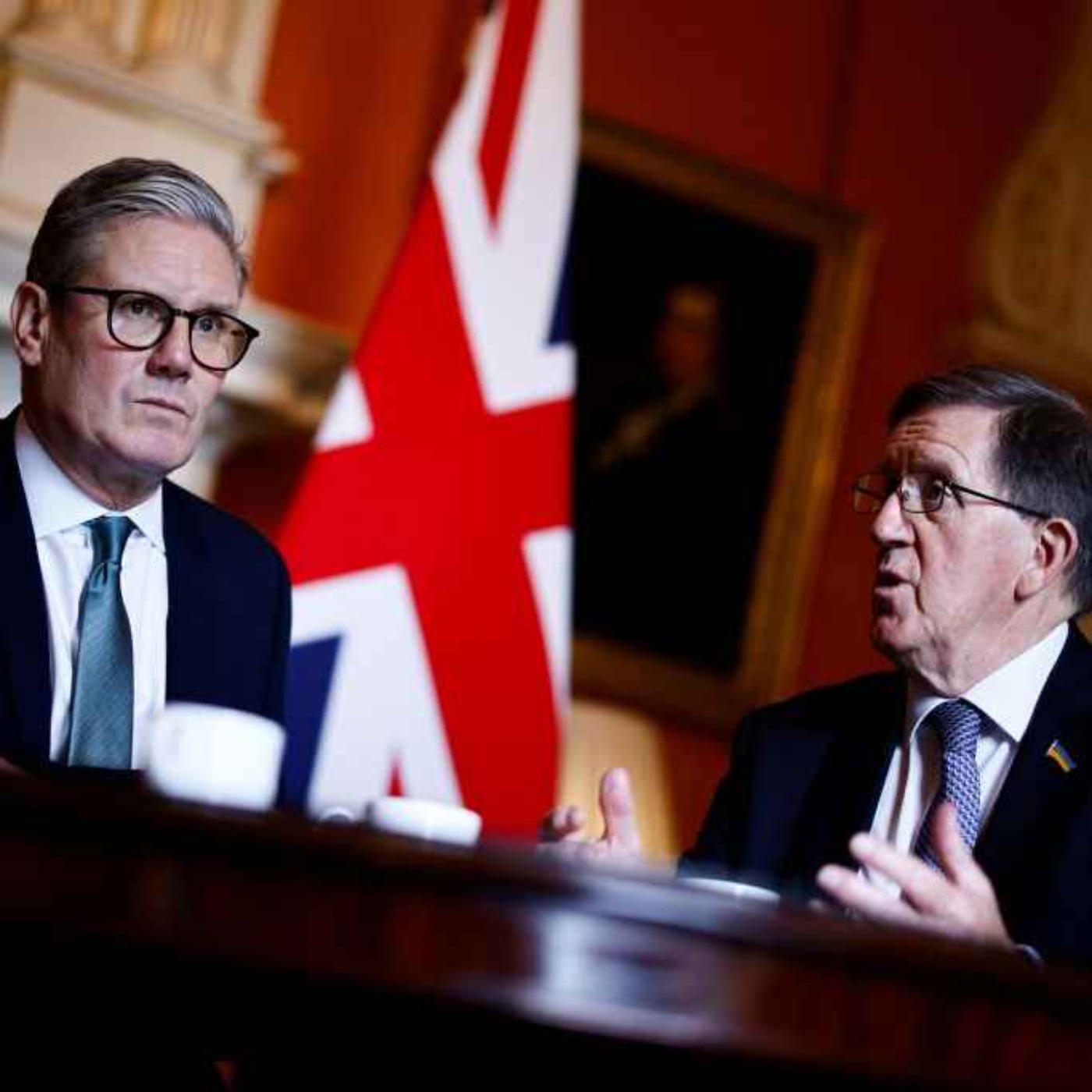
George Robertson (pictured), a former defence secretary and former NATO secretary-general, has accused the government of 'corrosive complacency' towards defence, which puts the UK 'in peril'. This is all the more stinging because the Labour peer was one of the authors of the government's Strategic Defence Review – and that makes two of the three who have since criticised it.
How much trouble does this spell for Starmer? And is this just the latest battle in the ongoing war between His Majesty's Treasury and the Ministry of Defence? Megan McElroy speaks to James Heale and Lucy Fisher, Whitehall editor of the financial times and who broke the story.
Produced by Patrick Gibbons and Megan McElroy.
Become a Spectator subscriber today to access this podcast without adverts. Go to spectator.co.uk/adfree to find out more.
For more Spectator podcasts, go to spectator.co.uk/podcasts.
Contact us: [email protected]
Hosted on Acast. See acast.com/privacy for more information.
Transcript
Hello and welcome to Coffee House Shots, suspected of daily politics broadcast.
I'm Megan McElroy and I'm joined today by Lucy Fisher,
White Hill Editor at the Financial Times and James Hill, our Deputy Political Editor.
So, Lord George Robertson is the author of the Strategic Defence Review
and Lucy, he's made a pretty major intervention in the FT.
As you put it, he's run out of patience on military spending.
Can you tell us a bit about what's happened?
Of course.
So, Megan Lord Robertson was asked by the government to review threats facing the UK
and indeed the capabilities needed to try and modernise and frankly overhaul
what all parties sort of now agree are a hollowed out British military.
He reported last June with his blueprint of what the UK needed to do
and of course he has a lot of credibility not only as a Labour former Defence Secretary
but as a former General Secretary of NATO, the entire Alliance.
So, a very trusted figure and essentially since then the government promised to come forward
with a 10 year plan on how it was going to fund defence.
First in the autumn, it's been repeatedly delayed and now we're into sort of spring
we're still not seeing it and last week John Healey even refused to rule out
that this could run into the summer.
So, as you point out, I dig George Robertson who has tried to work constructively
behind the scenes with the government to overcome the impasse on how defence will be funded.
He finally ran out of patience and decided to make this really heart-hitting attack
both in an interview with the Financial Times and in a speech in Salisbury on Tuesday
in which he warned that the government is guilty of corrosive complacency towards defence
that the UK is under attack and in peril in a stinging rebuke of Starmer's military policy
and in particular having a bit of a go at what he called vandalism
by non-military experts in the Treasury.
James, do you think part of the bigger picture here is the government can't agree on how to fund anything?
It's clearly a pretty big problem for us especially given that we've just had the news
that the UK has been hit with the biggest IMF downgrade.
Well, that sort of sums it up every time the government tries to plan budget properly
and one of a number of things happen either as you've just alluded to there, events intervene
and sort of throw the government's sums up into the air in crisis
or the MOD tends to do what the MOD does much to the Treasury's frustration, blowload of money
on a project that doesn't have the results that it was promised such as the AJAX defence programme.
And I think it's worth reflecting the wider context here which is that I think there's all the institutions within Whitehall
post-war, those who've had the most skepticism and hostility between one another,
perhaps the Treasury and the MOD.
The Treasury has always viewed the MOD as this wasteful department that sort of spends money
on these industries that actually don't yield any sort of results in terms of R&D.
The MOD is immensely hostile to the Treasury which it thinks is effectively cutting costs
to which potentially try and actually impact on saving lives and the capabilities of our forces.
And I think it is quite striking that we're now seeing people like Lord Roberts amid these speeches.
It's been briefed out although bizarrely again, I don't think this camera is going to be for the speech tonight
so it's also pretty which does seem a little bit odd when we're trying to sound the alarm.
But two of the three authors involved in the Street Defence Review last summer have now come out
and criticised it, Richard Barrens is the other one, he's writing big pieces in the Sun talking about
the need to rearm now.
And I think there is that frustration from the defence world, the defence community
that the warning is not being heated.
And I think that it was quite noticeable that Lord Roberts and tried to frame it as the question
between warfare and welfare saying can we save some money on this ever growing benefits bill please?
Going up to 400 billion by 2031.
But I think that right now we are still in that sense of the phony war as it were.
And whether rightly or wrongly that is I think the impact and impression
that I'm getting from talking to people in Labour, there is that sense of they want to spend more money.
But there's also I think a suspicion that the money they spend on the armed forces
will not really actually benefit the communities that sometimes people like John Healy do
when they try and say that it's going to benefit things like,
but the bar are some reans for instance, are they actually going to see a pound for pound conversion?
And I think right now given the tensions in the Labour Party, given the relative political weakness of the Prime Minister,
I think that it's no surprise that things like defence projects and defence investment plan can't be agreed
because the Minister is relatively strong compared to a week number 10 and a Prime Minister
who seems to show little understanding or impetus to try and go for big defence spending.
Lucy, do you think that this is the lowest point yet for Labour on military spending?
I think it's a really dangerous moment for the government on this issue.
You know, it doesn't mean to sort of detail the ways in which the geopolitical picture is growing in turbulence.
On the one hand, I do have a slight bit of sympathy for the government
because they committed to spend 2.5% on defence
and that was the envelope in which the reviewers were initially asked to look at the issue
and some of the major international programmes that the UK is committed to
from the previous Conservative Administration,
weren't properly costed or funded then.
So they sort of have the hangover of that.
Then Starmer brought forward, you know, additional defence spending last year
and thought that would be an end to it.
But of course, since then, not only have we seen the SDR and they're trying to make the maths of that add up,
it turns out there's a funding gap in the existing military budget
even before you account for the transformation in the SDR of around 28 billion over the next four years.
You've got new demands for the UK to invest in costly air defences
and following threats by Iran in recent weeks to sort of strike military bases
and people talking about whether Iranian missiles could reach the British mainland
and you've got the UK sort of talking up its leadership role
in some sort of future international naval protection force
in the Strait of Bournemers with France
and you know, while that's yet to take shape,
obviously that's an additional sort of burden for the Royal Navy
that will also come with a cost.
So, you know, new demands, new costs are sort of stacking up the defence.
And, you know, it is difficult for the reasons that James outlined
that on the one hand, defence of the realm is the first priority of any government.
However, at a time when Labour has reached such an idea in the polls
and is looking for how it can gain an electoral advantage,
it ain't spending on the military that is going to kind of keep voters on board necessity.
You know, it's welfare, it's health, it's education,
that you know, keeps Labour's coalition together.
So, it's a real bind for this government.
There isn't an easy way out and that is why we've seen the deadlock
between Downing Street, the Treasury and the MOD
just, you know, rumble on now for months with seemingly no end in sight.
I spoke to one person in the defence world a few months ago
and there was just saying there's no votes in it.
And what they went by that was the sense that even in this person
supported much greater expenditure on defence,
they were fairly cynical and philosophical about the fact that actually
they weren't going to actually see money constituent's vote for
high defence spending because it's one of those things
that I think Peter Hennessy when he talks about the Forkland crisis
is just sort of the little things that can go wrong.
The example being, of course, is that there was battleship down
in the Forkland's patrol in the South American seas,
which was then withdrawn, was planned to be withdrawn
under the naval cuts imposed by the first Thatcher government.
And it wasn't until that went wrong.
It suddenly blew up and those are Forkland's war.
These things, such as defence expenditure,
are things that no one sort of seems to mind about.
We've cut and cut and cut and cut and cut.
And now it's a big issue because the world has changed.
Our position has been exposed.
You've got headlines in the mail on Sunday about
HMS Dragon not being able to defend our seas and therefore
we're going to have to rely on, you know, on French ships
of patrol, British naval waters, given the threat from the Russians.
We're getting hostile powers sort of poking and prodding
all our different pressure points across the globe.
And all those little things that we have failed to address for a long,
long time because, you know, probably ever since the sort of strategic
defence review of the Milan government to the mid-50s,
we've had this assumption that actually we can just keep cutting
and cutting and cutting.
Now, unfortunately, the chickens are coming home to roost.
This is obviously a pretty mammoth question,
but to both of you, where on earth do we go from here?
Well, I think we're going to see more pressure on a defence
investment plan.
We're going to see, I think, a lot of behind those scenes
brief things in the next couple of fortnights or so.
And I suspect there will be an impetus to try and push
that defence plan before the summer recess.
Obviously, John Helius.
Lucy said they're refused to dictify that by a suspect
that's going to be one to watch.
Ultimately, I think that whatever we choose will not be enough
to say the demands of, say, Mr. Trump,
although given his fairly curial efforts in recent weeks,
maybe he won't be...
We won't be the focus of his IFFR too long.
But I think it's just also going to play to opposition party's
hands.
I mean, I think that Davey was out this morning giving an announcement
for the Liberal Democrats.
He was delighted, I think, the fact that we get to talk about defence.
I mean, coming back over the weekend,
on a defence conference was calling for the biggest single increase
of troops since the end of the Cold War.
It's playing to them.
It's playing to Nigel Farage.
You'd love nothing more than to talk about military history.
And I think that there's going to be something where the opposition thinks
that they can actually go on the attack.
And I suspect we may well see Kim and Bay not choose to go on a set
of PMQs tomorrow.
Obviously, you've got the Conservative record,
which is pretty lamentable, particularly during that coalition
it is between 2010 and 2015.
But I think right now it's going to be very difficult
on for the government because they don't think it's going to really
sort of deliver in terms of votes.
There's no things they need to do.
They really ought to do.
It's a bit like exercise.
It keeps you, though, the British state, sort of vigilant and healthy.
But ultimately, it's something that to know what to put the time
into yield the results long term.
And what do you think, Lisa?
I think James is right.
The final thing, I would say, is that the Prime Minister really needs to grip
this issue himself.
He said that the defence investment plan is on his desk.
And now it really is up to him to figure out how to move forward
with a blueprint for funding defence for the next decade.
It's not easy.
There's little appetite for tax rises or more borrowing.
So it feels like we're in the arena of trade-offs,
i.e. spending cuts in other departments to fund a defence spending uplift.
And part of the way for the Prime Minister to justify that and sell it to the public
will probably be more storytelling around the threats facing the UK.
The kind of press conference we saw last week with John Healey talking about
a covert Russian submarine operation in which, you know, Russian submarines were
in and around UK waters for a month, loitering near undersea cables
will be hearing potentially more declassified information like that
in order for senior politicians to explain to the public why more defence
spending is needed.
Thank you, Lucy.
Thank you, James, and thank you for listening.
Thank you.