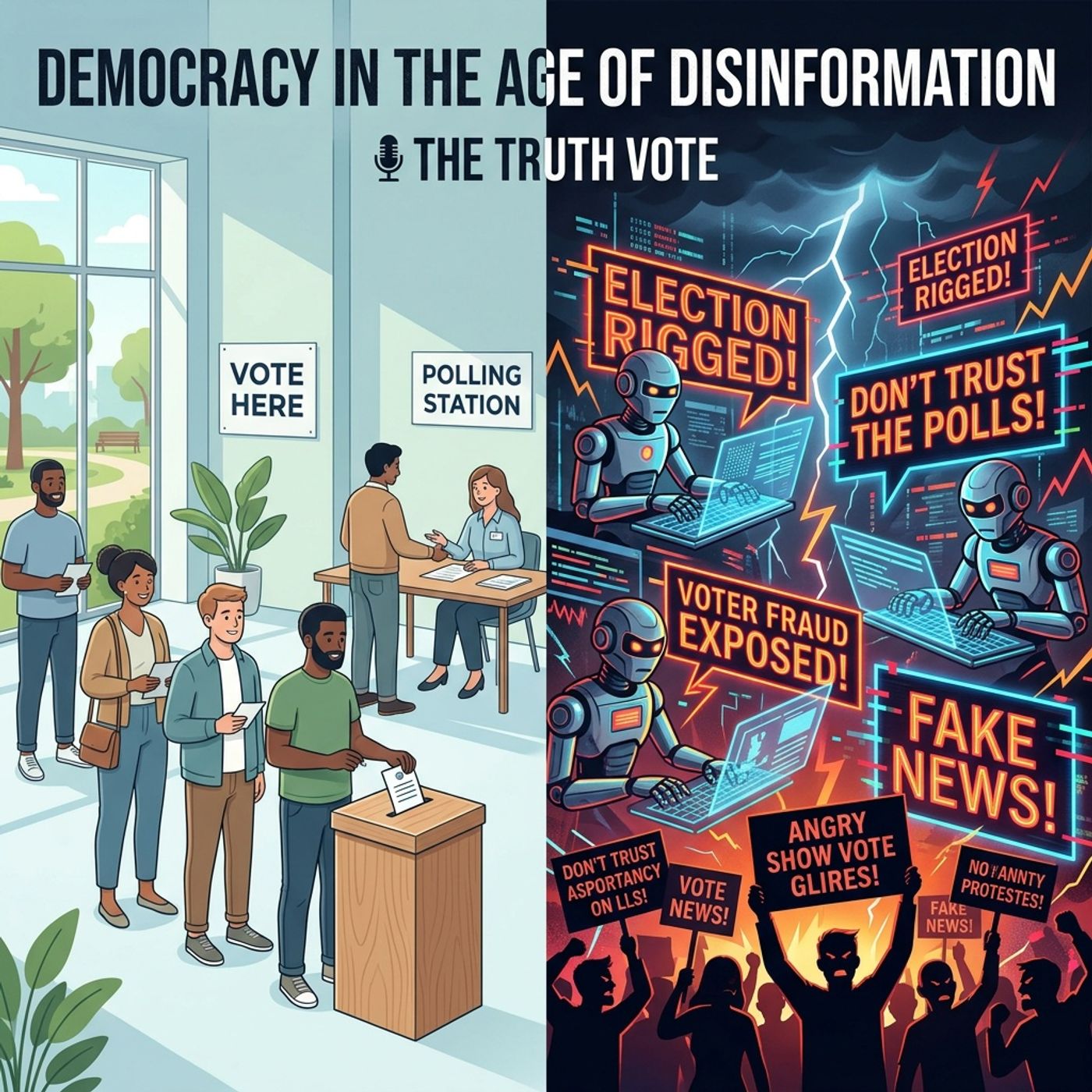
AI Disinformation Floods the Vacuum
About this episode
Become a supporter of this podcast: https://www.spreaker.com/podcast/conspiracy-theories-exploring-the-unseen--5194379/support.
Get every episode summarized
Each time Conspiracy Theories Exploring The Unseen publishes, we email you a written briefing from the transcript — the topics, who appeared, and any specific claims, with the ad reads skipped.
Email me new episodesFree for 3 shows. No card needed.
Hosts & guests
Transcript ready
42 searchable segments. Every word is indexed and playable.
Full transcript
Conspiracy Theories Exploring The Unseen — AI Disinformation Floods the Vacuum. Machine-transcribed; use the interactive transcript above to jump the player to any line.
Nicole hosts Easter every year. That's why she shops at BJ's wholesale club, stocking up on spiral ham, baked goods, fresh flowers, candy, and five dozen eggs. I've got a lot of baskets to fill. Nicole's not worried because she knows she can save big and get it all done in one trip. It's like winning the Easter egg hunt. When you save everyone wins. Get a $15 digital coupon when you spend $150 in one transaction now through April 5th. Visit BJ's.com slash Easter coupon for details. BJ's your Easter destination. Today we plunge into the shadowy world of AI-generated disinformation and how it's flooding and existing information vacuum. With the rise of AI technologies, the lines between what's real and fabricated have blurred dramatically, leaving the public grappling to distinguish authentic information from cleverly crafted falsehoods. Just think about it. AI now has the ability to create text, images, and even videos that can fool even the sharpest eyes. This advanced technology isn't just creating benign content. It's actively shaping public
perception, especially in critical times like elections. For instance, in the lead up to the 2024 US presidential elections, there were alarming reports of AI-generated misinformation making its rounds, influencing voter opinions and possibly altering the course of democracy itself. But it doesn't stop there. In February 2024, several tech giants, Adobe, Amazon, Google, IBM, Metta, Microsoft, OpenAI, and TikTok, signed a voluntary commitment to tackle the proliferation of AI-generated election disinformation. This collective effort points to a growing recognition that these tools can easily become weapons of mass misinformation. While discussing this alarming trend, we can't ignore the statistics that paint a stark picture of reality. In the Asia-Pacific region, incidents of deep fakes surged by an astounding 1,530% from 2022 to 2023. Shocking, right? It shows how quickly and effectively misinformation can be unleashed,
saturating the information environment. Public perception is also shifting. A study from 2023 found that many people rated AI-generated false tweets as more factual than those written by humans. This indicates a growing trust in technology-generated content, which is troubling, as it undermines our ability to critically evaluate the information we consume. However, the landscape isn't black and white. Cybersecurity experts point to a potential exaggeration of the threat posed by AI-driven disinformation, suggesting that traditional forms of fake news might still wield more influence over public consciousness. On the flip side, some researchers argue that AI-generated articles can diversify our often homogeneous information ecosystems. It challenges the notion that AI solely harms information diversity and suggests a nuanced reality at play. Initiatives like Dismiss Lab, a fact-checking and digital media research program, as well as platforms like Syabra, which focuses on detecting
and combating disinformation, are emerging as important players in this fight. They provide critical tools to verify claims and preserve the authenticity of online dialogue amid the deluge of AI-generated content. As we wrap up this first episode, it's clear that the intersection of technology and misinformation is a battleground that requires vigilance. Understanding how AI-generated disinformation fills the information vacuum is key to developing strategies that ensure the integrity of our information and protect democratic processes. In this ongoing series, we will delve deeper into the specifics of this phenomenon and uncover what can be done to counteract its effects. Thanks for joining the Fortune Factor podcast.
More episodes
More from Conspiracy Theories Exploring The Unseen

The Digital Mirage_ AI and the Death of Authentic Romance
Conspiracy Theories Exploring The Unseen

The Trust Trap_ AI and the Future of Romance
Conspiracy Theories Exploring The Unseen

The Ghost in the Machine_ Navigating AI Romance
Conspiracy Theories Exploring The Unseen

The Love Recession_ Why Digital Romance is Offline for Good
Conspiracy Theories Exploring The Unseen