About this episode
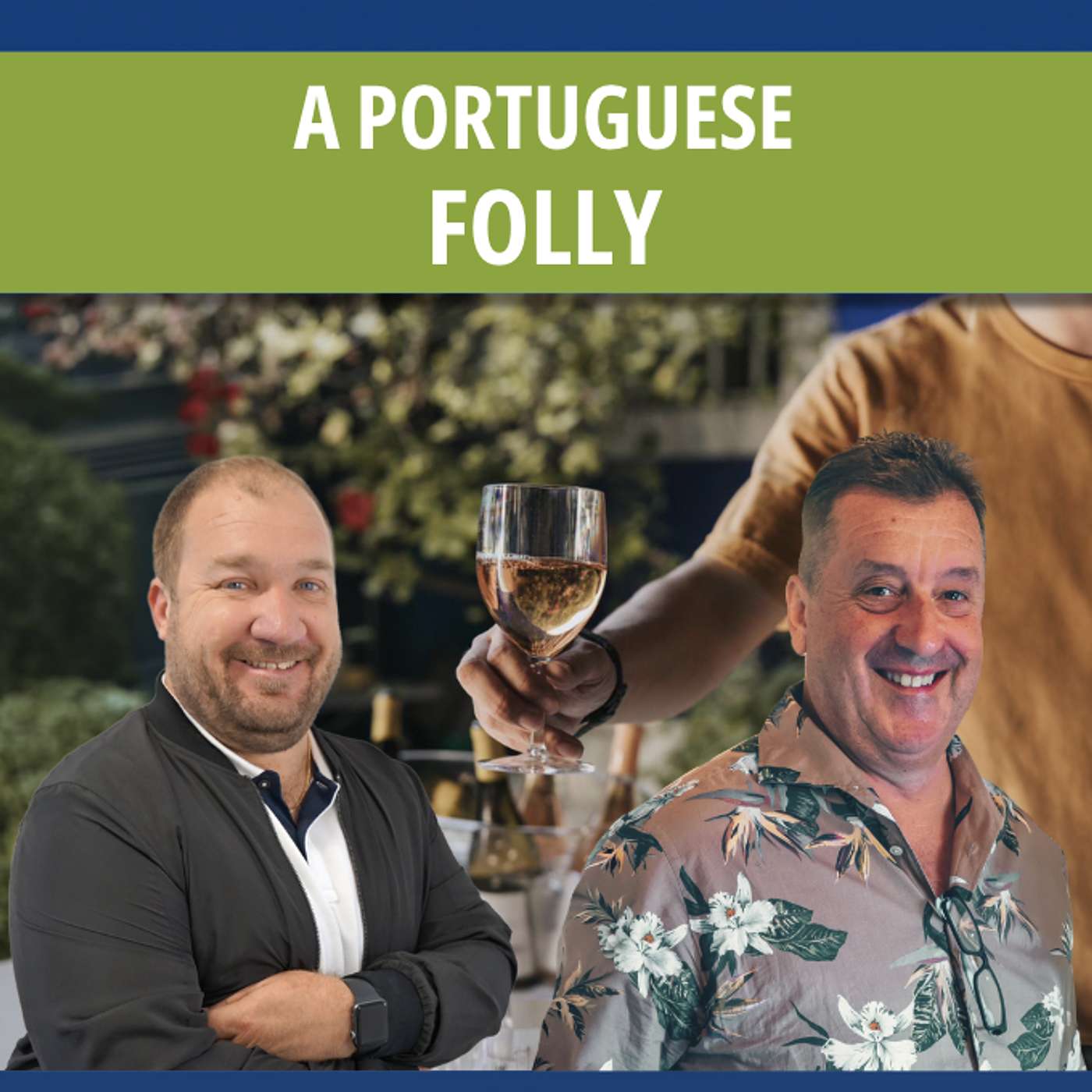
Howard is a businessman from Yorkshire spending his time between all over the world, including Hong Kong and the Middle-East. He discovered Portugal back in 1998 and spends most of his time. He is an enthusiastic wine lover and admirer of Portugal’s wines especially from the Alentejo region. As the “Howard” of Howard’s Folly Wine, he is the driving force behind this wine from Estremoz, with a vision to promote not just our wines, but the wines of the Alentejo and Portugal to a wider global audience. Howard chat’s to Dylan about, amongst other things, what makes Portugal so unique, his love for Portuguese wine and how Portugal is a fascinating mixture of 1st & 3rd world.
FOLLOW OUR GUESTS
ABOUT PORTUGAL THE SIMPLE LIFE PODCAST:
"Portugal - The simple life”, an insider's perspective to Portugal.
We already know about Portugal’s fantastic weather, food and people. In this podcast, we go deeper to meet the people who make this country so wonderful.
Dylan, who has made his life in Portugal, shares an insider's perspective on what makes Portugal the unique, beautiful and fantastic country it is. Join him and his guests weekly as they shed light on the incredible people, culture, history and lifestyle that make Portugal so appealing. A country where everyone feels like they belong.
Don’t forget to subscribe to our Podcast to receive more stories about living and moving to Portugal!
SPONSOR:
Portugal Realty, a Leisure Launch group company, sponsors this episode.
🇵🇹 If you are interested in 🏡 PROPERTY FOR SALE IN PORTUGAL, Dylan would love to chat with you!
Send us a message!
FOLLOW US:
- Portugal The Simple Life Website
- Portugal The Simple Life Facebook
- Portugal The Simple Life Instagram
- Portugal The Simple Life Twitter
- Portugal The Simple Life YouTube
FOLLOW OUR HOST:
If you’d like to get in touch or share your experience with Portugal, Dylan would love to hear from you!
- Email: [email protected]
- WhatsApp: (+351) 910 571 613
🔔 SUBSCRIBE to our YouTube channel for more podcast videos about Portugal!
🔔 FREE DOWNLOAD - Get your copy of 'Portugal The Simple Life Magazine'
Thank you so much for listening, or as we say here in Portugal: “Muito Obrigado”!
Welcome to the simple life!
Get every episode summarized
Each time Portugal - The Simple Life publishes, we email you a written briefing from the transcript — the topics, who appeared, and any specific claims, with the ad reads skipped.
Email me new episodesFree for 3 shows. No card needed.
Hosts & guests
Transcript ready
743 searchable segments. Every word is indexed and playable.
Full transcript
Portugal - The Simple Life — A Portuguese folly. Machine-transcribed; use the interactive transcript above to jump the player to any line.
I think Portugal has always been this wonderful mix of first and third world, hasn't it? You get out of the mainstream and up in the hills and you know, and in the Allentasia, particularly, you still see farmers leading donkeys down the streets, moving stuff around. That's the traffic in the Allentasia. That's it. Yeah, and that's delightful. I think Portugal always was and remains, you know, it's good. We must remember it was one of the richest nations on the planet, wasn't it, back when they were travelling the world and an empire. And the legacy of that still remains where this huge wealth was used to create fantastic buildings and build towns and all sorts of things like that and all that stuff is there. And since then, I suppose there hasn't been a lot of redevelopment because they haven't had the money, so it's remained untouched, which is great.
And you know, we say to people, you know, if I'm asked how would I describe Portugal, I said it's got great wine, great food, great beaches, great climate, great culture, the people are very nice. And everything really is almost the perfect lifestyle here. Portugal. Portugal. Portugal. Portugal. Our vegetables are like rock stars. Literally, Portugal is a small, diesel land for grown-ups. You know, I think that Portugal is like my geographic soul mate. It's hard to explain what it is because it's a feeling. And when I went there, I absolutely fell in love with Portugal. I want you to feel the crunchiness. Portugal, the simple life podcast. Portugal, the simple life podcast. And we're here on this podcast, Portugal Simple Life. Portugal, the simple life podcast, your insider's perspective into Portugal.
And our latest episode starts right now. Welcome back, or welcome to another episode of Portugal, the simple life. And I'm really delighted here to be joined by Howard Bilton. Bilton, built on. Built on. Built on. Yes. We have, I'm from South Africa, we have a meat core built on with the G on the end. It's almost felt exactly the same, but built on. I'm very familiar with that stuff. Rather delicious, it is too. I had some this morning. And as we know, in South Africa, chicken is a vegetable, isn't it? Meat is a vegetable. Meat is a vegetable. Very good. But Howard, thanks for being on the podcast. Why don't you start off telling us a bit about yourself? Oh, gosh. Right. Well, I grew up in the independent People's Republic of Yorkshire, the IPRY.
On a pig farm, my father was a pig farmer. Okay. And so for that reason, and I became a tax barrister. Yeah. Close connection. I can see it. Yeah. Yeah. Yeah. Complete non-sectority, really, isn't it? And I've spent the whole of my working life writing tax opinions. And in 1987, I formed a company called Sovereign in Gibraltar. Okay. And it was me and a secretary in a back room of a rented office in Gibraltar. And we now employ 600 people around the world. Well. In what sorts of weird, wonderful places, such as Cape Town for you. Cape Town? Yeah. Mauritius, Guernsey, Eileman, Jersey. Caydenman, Bahamas, BBI, Cyprus, Malta, Hong Kong, Stingapore, Dubai, Abu Dhabi, Oman, Saudi Arabia, Qatar, Bahrain.
So you're going to flavor for the type of tax that we do and have done 40 years. And that has allowed me to do other things which are non-locative, such as the Sovereign Art Foundation, which is a charity I've formed in Hong in 2003, and is now registered all over the world, including Portugal, which exists to help disadvantaged children. Get the lives back on track when they are unable to enjoy full-time education. I'll get the benefit of it. And we believe that full-time education is the key to the relief of poverty. So essentially, that's what we're trying to do. And we use art as a therapy and a rehabilitation tool, and that's our focus. Amazing. And then in 2005, I made the first vintage of Howard Folly. An absolutely stunning range of wines made here in Portugal in Estimos, and you kind of mentioned you've been to the wine ring scene, what we do there.
Yeah. And that wasn't designed not to be lucrative, but it's turned out to be so. And everybody warned me that would be the case that you can't make money making wine. And oh, I'll show them with all my business experience. I'll show them. I've shown them how correct they were. Okay. I don't know if I have it. Amazing. How did your relationship with Portugal begin? Take us back to that. Yeah. Well, that goes back a long time, because having started Sovereign in Gibraltar in 87, I opened an office for us in Portugal in 1988 in the Alga, which that office still exists today. And I was coming over to driving over from Gibraltar to Portugal once every six weeks to get this moving. And in those days, there were bad roads to the Spanish Portugal border and then used to get what was called a car ferry from I am on to the Villarreal.
I think the car ferry was more correctly described as a floating door with an outdoor board motor on it. I've seen it. Yeah, I've seen it. Yeah. And I think the journey was eight hours driving as fast as roads would allow. And I then sporty little saloon of golf GTI, which I had a lot of fun with. But now that's down to about three hours with the bridge and the better motorways and roads all the way there, really. But it was, yeah, hard jacket to begin with. And I did that pretty well every six weeks for nearly five years, I suppose, until 1992 when I moved from Gibraltar to Hong Kong. And so that was a lot further to come. And by then, the office was well and truly up and running functioning quite well. I'll probably have 10 or 20 people there and it remains there to this day. We used to do a lot of offshore work through Portugal, but now it's sort of morphed into more of an accountancy of pricing, helping expats in particular, file their tax returns,
providing fiscal representatives for them and doing a reasonable amount of tax work. But the offshore workers, it is no longer the most important element of what we do there. But I knew Portugal pretty well from there, particularly the Algarve, not so much the northern parts. Yeah. And then in 2020, I moved from, well, it appeared I moved from Hong Kong to Portugal. I actually, I actually left Hong Kong in June 2020, pretending to go back in September 2020. And then finally couldn't get back as Hong Kong went into total lockdown. Yeah, COVID. So our back, despite being a permanent residence, and because the ones who went to allow back were no flights, so you couldn't get that. So I waited around for a year in Portugal waiting for that to change. And then after a year, they were allowing you back, but you had spent three weeks alone
in a hotel room, quarantining, and not great hotels, generally selected for the purpose. And I said at the time, I couldn't actually imagine anything worse than spending three weeks alone with me in a hotel room. So I'm not doing it to myself. So they didn't seem to be any end to that. So after about 18 months, I concluded, well, it appears I've moved. And so established myself properly in Portugal and thought, well, I'll just stay here then. So that was it really. I was probably going to end up here, but I wasn't necessarily looking to move at that particular moment in time. But circumstances took over. So six years on from there was that a good decision, not that it was a decision, but happy with that move. Yeah, very happy with it. I suppose it coincided with Hong Kong changing quite dramatically after the protests and the crackdowns and then the national security law and China really marching in and taking over in a way that it had never done before.
We thought back in 1997 with the formal handover of sovereignty that things would change, but they didn't really things continued as normal. And Hong Kong was still, I would argue, the most vibrant, fast paced, wonderful city in the world. And to a certain extent, that's still true, but things definitely changed and not in a good way after the crackdown and the atmosphere changed. A lot of people, I think, perhaps similar to myself, took it as a cue to leave all circumstances combined with this meant they did leave. And there was a bit of a mass exodus around that COVID period of time for the reasons that it just wasn't feasible to live there if you had connections abroad. And in my case, I had a daughter at boarding school in England. So this quarantine idea just couldn't work. I mean, she couldn't see me without getting stuck in quarantine for the whole of her holiday, which is no fun at all. And if I was going to see her regularly, I'd have to turn around rinse and repeat that quarantine experience regularly and often, and it just was very unappealing.
As I said at the time, which you'll probably have to edit out, I think I would sooner have stapled my penis to a burning building. I'm not editing it out. I'll open an advisory, you know, specific material, but I'm not editing that out there. Yeah, take us back to coming back and forth to Portugal. I mean, we've seen Portugal change. I mean, I've been here since 2009. So you've got a lot longer experience with the country than what I do. What did you enjoy back then about coming back and forth between Portugal? What was your, how did you enjoy the experience of Portugal back then? Yeah, I mean, to me, it hasn't changed very much. Although to be fair, I now live in Lisbon, visit Estromas when I was down in the Algarve. And I think the Algarve was already quite well developed for tourism and remains so. I suppose the quality of places, the sort of five star experiences more prevalent down in the Algarve than it was.
So that's that's changed. But otherwise it's it's pretty similar. And I think Portugal's always been this wonderful mix of first and third world. Hasn't it? Yeah. You know, you get out of the mainstream and up in the hills and, you know, and in the Alentasia, particularly still see farmers leading donkeys down the streets, moving stuff around. Yeah, that's that's the traffic in the Alentasia. That's it. Yeah. And that's delightful. And I think Portugal always was and remains. You know, it's got we must remember it was one of the richest nations on the planet. It wasn't it back when they were traveling the world and had an empire. And the legacy of that still remains where this huge wealth was used to create fantastic buildings and build towns and all sorts of things like that. And all that stuff is there and since then I suppose there hasn't been a lot of development because they haven't had the money. So it's remained untouched, which is great. And you know, we say to people, you know, if I'm asked how would I describe Portugal?
I said it's got great wine, great food, great beaches, great climate, great culture. The people are very nice. And everything really is almost the perfect lifestyle here. And but perhaps better if you're retired and don't need to get on and do business because that can be frustrating. And I think nobody who's lived here or even the Portuguese nationals would argue that this place does not work very efficiently on a business fronts and things which could take short time, take a very long time and sometimes a huge amount of time. And that can be frustrating. And I think, you know, I'm not trying to be unkind at all to my adopted home, but I don't think anybody would argue any different. Not even the most fervent Portugal supporter would would suggest that that isn't true. And it was a shock to some degree, not if you come from Hong Kong where things happen instantaneously. I don't think there's a faster social or business environment in the world and then you're coming to one of the really, really rather slow ones.
And I was already familiar with this, but I suppose I hadn't dealt with it to the same extent. So it still becomes frustrating just trying to get things to happen. And part of it's the system doesn't really cater for it because ultimately everything has to go back to government and civil service whenever you need to do anything, you need licenses and paperwork and that can be slow. And maybe partly because the population got used to it and therefore has adopted some of the rather lazy fair attitudes to it on the basis. There's no point trying to do anything about it because you can't, which exacerbates the problem. I think that's my feeling anyway and, you know, you are hampered by you are restricted by the infrastructure, but also we find that after a while, maybe everybody slips into the same sort of. Yes, the type mentality, which is, which exacerbates the problem. I mean, Joe, we say about Spaniard talking to the Portuguese and he says, you know, is there anything in the Portuguese language, the equivalent to our man Yana.
And the Portuguese thinks about it well and then says, well, nothing, which conveys quite that same sense of urgency. Yeah, I mean, I have been here working for since 2009, I've got clients from all over the world and the thing that they love is that the slower pace of life. But there's two sides to that, you know, so it's something always to be aware of. It's when it's good, it's when it's on the right side, it's great when it's on the other side, it can be something that you have to get used to here. I mean, that's right and you're right to some that would be a blessing. I think particularly if you are either retired or not looking to work, why would you care. But if you are trying to start or build a business, it can be very, very frustrating and I'm just inexplicably, you know, tearing your hair out moments when why cannot this not happen within a reasonable timeframe. Yeah, I want to come on to the business side of things and how it's fully, but what I mean, it's been six years now, more or less, what do you enjoy about living here?
Just as how is that the normal guy if we can't call you normal? Yeah, I'd like to be normal. My wife may disagree with you, but we can interview her on another on another episode. Yes, that could be entertaining in the extreme. But everything else really, I mean, the social life is good. It's very easy to meet people. The Lisbon people are very hospitable both the expats and the locals. You know, the climate leans itself to a lot of outdoor activity. You've got the beaches, the walking. I live in Alcantra, well minutes away from on Santa, which is great walking. I can get over the bridge to Estermars very quickly and easily. And the airport is is a quick trip straight on to the main road after months and to announce the airport. So it's ideal. In a previous life, I was a tennis coach and later paddle tennis coach. So I'm find it, you know, easy to find courts and players.
And that's really nice and a social circle can quickly build up around that. Of course, I'm in the F&B industry, I suppose. And visiting restaurants and bars and an necessity to promote the wine. So you meet a lot of people that way. So you can very easily slot in and hit the ground and immediately have a nice social circle. And there's much social activities you want. So that's that side. The business in Portugal has been established for a long time. So they've largely worked their way through all the tealing problems. But you know, we are bringing clients over and they find it hard to understand why things take so long. But we want to start the conversation. This is Portuguese. You've got to relax a little bit on deadlines and time scales. So business wise, that that's OK. But I sit in Lisbon running the group as a whole. So most of these frustrations would be suffered by people in my Portuguese office in the Algarve. Not really by me as I'm dealing internationally. And you know, what a lovely place to be and run your little empire from here.
I suppose it's so it could be anywhere in the world. So I. It's not like Portugal chose me. I chose it with with the choice of everywhere possible on the planet to go. Which is a nice position to be in and thought no, this is good. I like it here. Amazing. Tell us about how it's folly and how that all started and how it's going. Yeah, there's a long story in a short one. So I'll stick with a short one, but it's medium. It's OK. OK. I came here looking to start something in wine. Possibly I saw it as a way of cutting the cost of my massive personal consumption and. Smartly. Smartly. Not at all, but it seemed it at the time. Also had a lot of mates who were very interested in in wine. So in there was a natural thing to do.
I think, you know, perhaps most people on the planet would like to earn a bar restaurant or a winery or something in that nature. You know, which perceived as fun industries and loves that they are, but. You know, also proper businesses. And at the time, I've got this idea that. I would employ an Australian winemaker because they were starting to do this flying winemaker concept where they've got all the technical skills in a way that very few others had. I'd be trained in chemistry as well as the art of winemaking, which was somewhat unique. And that way we wouldn't have to employ him full time because he could go back to Australia in their season and come, come here and ask. So that was sort of an idea, which would limit your capital need. And then coincidentally bumped into the famous David Baba stock. Portugal's most famous wine maker who's been here 40 years, who immediately said, well, I'd be interested. So well, I'll go into partnership with you.
So we quickly agreed that he'd do all the work and I'd put in all the money. I've definitely kept him my side of the bargain, but I'm going to argue he hasn't kept to his because I'm heavily involved, but that's a nice thing. And probably he prefer if I wasn't. So we did, we initially went looking for a wine estate with the. With a perceived amount of money to spend. I'd asked him at the time when I first met him, like what's the minimum amount of capital you need to invest to get us up and running to buy a nice vineyard and have a nice little winery attached to it. And we agreed a figure of about one and a half million. And indeed that proved to be correct except that any wine estate that came on the market, and it to come with a great big house attached to it, which at the time back in 2003 for when we're looking, I had no interest in and thought that's just going to be a money pit.
And of course, if you're going to come and live here eventually or then would would would would be you need someone to live. So why not, but I wasn't I was going to stay in Hong Kong for the foreseeable future. So we were kind of giving up actually and thinking there isn't anything going to come up, which is within budget and is going to work for us. And then David said, well look, why don't we just make some wine? That's what you mean? He said, well, let's just buy some grapes, borrow wine and make some wine. That way we don't have to have them on a state of our own. I said, well, why didn't you think that that two years ago? I don't know, anyway, we did exactly that. And we started that way. And that is probably not a non-uncensible way of doing it as you probably wear most wineries by and grapes. And okay, they probably have their own winery facility, but those are the time went hard to find to borrow a bit of space in a winery, which had more space than the needed. And we got started that way. It went quite well. So we out and grew the space as you know,
most wineries only build what they need plus a little bit extra to expand into. And if they expand into it, they have to ask you to leave. Or if you outgrow the space, they've got available you need to leave. And that was what was happening sort of every two or three years and it became very tedious. And then we grew a little bit more. We ran out of options. It's time to buy the bullet. I think we proved concept and we better get our own winery. Saw that building in Estromos, which was vacant and thought, that's nice. It is nice. Yeah. And coincidentally, one of the world's most glamorous looking and beautiful stately homes is in Yorkshire, just where I grew up. It's called Castle Howard. I thought, oh, it's my own little castle Howard. So we bought it, refurbished it, got it ready for the 2018 vintage just in time. Literally the day the grapes came in, we got the license to start making wine there.
The mayor at the time was very helpful and pushed the application up the chain a bit. I also said, look, if we don't get it, I'm going to have grapes on the street and you know plans ruined. And he wanted us there and was very helpful and supportive. So he got us the license just in time. So our first vintage there was 2018. Amazing. And as expected, once you've got your own state of the art, large roomy facility, you can really start doing a whole different series of wines, and we only had a red to start with one red we had. And now we could make all sorts of different small batch wines. And the quality has increased exponentially as a result. There's no substitute for being in control of your own destiny and having control of the whole process. And David continues to be heavily involved in his marble. You know, you may know he's the only foreigner to one wine maker of the year in Portugal.
Try to be the person to one it twice and he won it for the fourth time last last November. So he is the rock star of Portuguese wine. And if you're going to start any wine operation, you need a USP and he was asked because if I drifted around the bars and restaurants of Portugal, would you like to try my wine? I'd probably get fairly short shrift and not much interest. And indeed, that was what happened. And I said, well, it's made by David. But I was like, oh, come in there. We want to taste that. So that got us, you know, a start, which was amazing. And the name Howard Foley, tell us a bit about that. Well, that came about quite really by accident because at the time I started, I just had a new door to call Lara. And I wanted to call it kind of the Lara. But that name was taken. And I thought at the time it was probably taken by Villa Lara down in the Algarra famous hotel. Because they would probably have registered in the F and B current, you know, trademark.
And that, that, that particular type of trademark. But I think actually it was, there is a kind to Lara down in the Algarra, very low key. And I didn't see it for many years, but kind of cross it quite recently. So it was a bit stuck us at the time. We didn't have a place to attach a name to, you know, normally it's the name of the shadow where you make the wine, the name of the farm or whatever. And I didn't have any of that. So there was no real grounding for the name. And then it was David who came up with that idea because in Australia, there's a very famous wine, one of probably the top 10 wines called Lakes Folly. Because a wine started by a dentist called Max Lake, who was the first wineer in the Hunter Valley. And people said to him, this is complete following. And he decided to call it Lakes Folly as a joke or a rebuttal to them. So we knew about that. So we picked up on that really. And I have to say initially, I wasn't very keen on the name.
And I wasn't sure I wanted my name blasted on the front of the centre through the bottles. But David persuaded me it was a good idea. And now I've got used to it and rather like the name. But it took me a while to get used to it. I think, you know, I might have a large ego, but it wasn't big enough to want my name, front and central on the wine bottles. And in fact, you know, a few years ago, my son's running the wine winery now. And we suggested we change it to HF wines, how it's following wines, but we reduce it to lettering. And then more emphasise the name of the particular wine on the bottle. But him having spent some time at the front end said, basically, over my dead body, you don't realise what good will we build up and how well this name is recognised. So if you change it, you just make my job more difficult. And said, OK, well, that's persuasive, so we keep it. Yeah. That's what we've done. Looking for a home in Portugal. This break in Portugal, the Simple Life podcast, is brought to you by Dylan and his team of certified realtors at Portugal Realty.
Portugal Realty offers the exclusive Simple Life home buyer programme. Visit PortugalRealty.com today and book your free call to find out more. Welcome to the Simple Life. This might be asking to choose between a favourite child, but what's your favourite wine that you've produced over the years? Oh, no, I can answer that quite easily, actually. OK. We've got a new wine out called Christina, named off the girl who found the particular vineyard. It's a single vineyard offering. If one best red wine in Portugal last year are the grandest Scoliest of Inos. In fact, we won best white wine and best red wine in the same year, which, I think, has never been done before. And it was for our alvarino, best white wine. And this Christine was best red wine. But the brief today, it was, I was starting to see a lot of quite expensive Portuguese wines coming out from the top vineyards, you know, two, two, three hundred euros.
And I said, maybe something we should be selling for a hundred euros up. And he made that. And it's, I think, for me, almost perfect red wine. We're actually selling 70 euros because Tom thought we should launch it softly and with a reduced price. But I think it is 100 euro plus wine. In fact, the vineyard that we take the grapes from, which we manage, we don't own. They'll never sell it, but we have control of it. Use to sell the grapes to Cartusia to be put into Paramanka. Which is a 350 euro. And to be honest, when we try them side by side, I cannot say that there's this better. I think ours might be better, it's equally good. So I'm going to argue. No possibility of me not doing some free advertising here that it's as good as Paramanka at a quarter of the cost. Yeah. But it's a stunning wine. So that is definitely my favourite.
No question. And I can, you know, luckily get it at cost price. So I could drink it virtually every day if I drink every day. Yeah, which comes back to you, you know, helping you with your own costs with the wine. Starting, starting, starting the wine. I can assure you, it would be vastly cheaper for me to abort first-growing door and drunk that. Yes. I get you, I get you. It has vastly increased my cost really rather than decreased it. So yeah, it hasn't worked that way. I think my son tells me we made about 400 euros last year. But it's probably an accounting arrow. So, you know, we spent a lot of years investing to get to this stage. It takes a long time, you know, it takes a long time to get it right. And it takes a long time for the market to realise you've got it right. And there is too much wine in the world that is essentially the case.
Not everybody is going to sell their wine at all no matter what price they put on it. Yeah. So, you know, where some wines have been turned into industrial coal, some have been poured in the ground and the use having another go at paying people the rip-up vines. But it is a flawed business in a way. You know, we now manage or own our own vineyards. And it's costing us a lot more to produce the grapes than we could buy them in at. And that is fundamentally ridiculous. Yeah. Because farmers selling grapes would need to make a profit. And they're clearly not. Because it's half the price that we cost us to grow our own grapes. And that's crazy. So in theory, of course, a lot of operations based on those economics will go out of business. Then prices will rise. And it will find its own level. But the problem is with agriculture is such a long-leading time. Yeah. You plant vines and you get your first usable crop after three years.
And then, you know, you put it into bottle. You get your first vines, even a straightforward, easy-drinking white wine. It's going to be five years out. So you're trying to ride those predictions. It's not simple. You're not just switching it on and off. So in time, it must shake out like that, you would think. But it's taking a long time at the moment. Yeah. Yeah. I mean, just tell us in terms of, because now, Portugal is very much on the map in terms of vines. You could argue 10 years ago, not as much. But what do you think? Yeah. What do you think makes wine so good here? Well, the technology has got a lot better. And that's important. Wine is, we can argue about the percentage, I mean, let's say 50% artistry and 50% science. And David Bavostok is almost single-handedly responsible for introducing the science.
When he came 40 years ago, a lot of vineyards were producing occasionally great wine. But the quality was all over the place. And there was no consistency because they weren't really. They didn't have laboratories in chemical analysis. They weren't using the same extent. I think he's widely credited as introducing this industry wide and making Portuguese wine a lot more consistent. But here, what I like about it, what drew me to it as a place to base a winery, was the interesting grape varieties. We've got 280 indigenous varieties, which you only find in Portugal. And second most in the world, if I'm not mistaken. I think that's probably right. Italy has the most. Italy has the most. There's a debate with Georgia has possibly more than Portugal. But officially, yeah. Yeah. So that makes it interesting. And we use a bit of syrup, but that's the only international variety that we have.
But otherwise, we're using purely Portuguese varieties. Yeah. Sierra works really well here. Everything that I've heard is that it grows really well here. It bottles really nicely. We love a good syrup here. Why is that, do you think? I don't know. I guess the climate must just suit it. Yeah. It must be that. You know, it's a hot climate grape and we have that. But tradition as well, I suppose, plays a part. I mean, there's no reason why Cabernet Sauvignon couldn't do really well here as far as I know, but is very little. Yeah. And I think that's good that we should stick to our guns and stick to our local baratels. And that should be a point of difference. Unfortunately, the point of difference makes it also a little bit more difficult because it's harder for people to understand. Yeah. You'll be familiar with the practice you walk into a bar restaurant. We'll do it, even if wine wankers like me and in the industry.
I'd like to glass a red wine please. We've got a Sirara Cab Sabapino. Nobody asks who made it. Where's it from? What year is it? What the quality is? Yeah. So there's a race to the bottom by bars and restaurants just to have the cheapest of those vehicles which aren't going to make people throw up when they taste them. And in fact, you know, if you go and ask the customer after he's drunk that class, what do you think of that wine? I wasn't really paying attention. I'll have to go and have another go at it to give you an informed opinion. But you can imagine if that's the way that it works in bars and restaurants, the idea of explaining to your punter that this is a blend of 20 different indigenous Portuguese grapes with names they've never heard of. They're going to have fallen asleep by the time you finish the explanation. Well, I don't know what that is. I'll go for the cab sab please. Yeah. And that happens. So it doesn't make it easy to sell. Yeah.
I think the story around the wine is super important because you've got, I mean, I grew up in South Africa. It's all single variety. It's very rare that you'll find a good blend. But a good blend in Portugal is very common, you know. And the way that they pair the wines is actually fantastic. But it's to sell that story is the challenge. It is hard. I mean, I suggest the bars and restaurants though what you're trying to do is get a glass of wine in front of your punter as easily and quickly as possible so that they can now you can move on to serving somebody else and or get them to order a same one because they've got it quick. So you can actually cut down the time by just saying, well, the best red wine we've got on the list is this, bump, dumb. You don't need enough to list the other varietals and we're trying to train them to do that because, as I say, you know, they try and explain what our wine is. Everybody's lost interest by the time they've got halfway through all that. Yeah, they just want to drink. They just want to drink. Yeah, they just want to drink.
You know, if we can spend time with them, we can sway them that, you know, Portuguese wines are fantastic value for money because they are. And I always say, if you want bang for your buck, you go to South Africa or Portugal. That's where you get a great value in wine. You get a great wine making expertise. Really good wines for a reduced price because the market has dictated that. Oh, in South Africa, it's more to do with RAND, I suppose, being so fucked. True story. So your job is to convince people that Portuguese wine is not a folly. Do you see that irony? I do. And yes, it is. Yeah, amazing. And what is some of your favorite varieties that you guys work with? I'm always curious about the different grape varieties. Well, I've loved Alvarino and that is a single variety. Super. Yes. And it should be. It should be to be fair. Yeah, I mean, it's, I think it's a king of wine grapes in Portugal and possibly the world.
I mean, Jans is Robinson who's the famous critic and a good friend of mine. Wax Lyrical about reasoning. But I think Alvarino is not so far from reasoning and we have had. Alvarino is from when we started in our library in the, in the, in the Estromas. And we're drinking the 2013. And it's amazing, but it's not known for its aging potential because nobody ages. It tends to whack it out quite quickly with no barrel aging, just stainless steel. But there's a few who are using barrels. Chestnut barrels are an interesting thing. I mean, it is aging well. And I think it is capable of more, but we, we see the potential, but it's just delicious, isn't it? Yeah. To me to embody all the best qualities of. So many on Blanc, reasoning and on wooded chart and they all combine into one and should please everybody. Yeah, I prefer it more than those ones.
Actually, if you're going single variety, I do, I do like it more than a reason. Yeah. Me too. It's interesting. Just reasoning if you find it can be a thing of absolute wonder. It just gets better and better and better. And so I might be drinking recently from Germany and Austria. Amazing, amazing wines, but to really show they need a lot of age, which again is not normally how they're presented. I mean, Portugal is so interesting from a, from a wine region point of view because you've got so many. Possibly exclude. Maybe unfairly exclude the algorithm that, but you know, you talk Alan Tasia, Dow, Doru. These are, you know, you've got the vineyard region. It's phenomenal for such a small country. The variety and the different wine regions and they taste different. I mean, there's a taste. There's an Alan Tasia taste, which is, which is amazing. Yeah, that, that is a great thing about Portugal in such a small country.
It got so many different climatic conditions and so many different grape varieties and so many different wines. It's, it's amazing. And I love old byrada. Baga, when it gets older is fantastic. Not so good. It's young. No, tough, tough, tough, tough, tough, tough drink. When it's young byrada, byrada wine here. There's a few who are making them to be drunk younger and they're doing it well. But generally speaking, I wouldn't touch it until it's 10 years old. Yeah, good move. Yeah. Where we are in the Alan Tasia again, we're, we're doing something rather different because all of any answer in the salmon made amounts and outside Portolegra where we've got 800 meters of altitude. So effectively, we're producing cool climate Alan Tasia wines, which have a lot more. Interesting. Biness and elegance than you'd normally expect. I mean, I like Alan Tasia wines, but your typical red is 15 degrees and you can almost stand a spoon up in it. And occasionally that's just the marvellous thing. But I think the market's moving towards lower alcohols and lights and wine and luckily we're,
we're doing exactly that and we're able to do it because of the altitude. And as you probably know, 100 meters in altitude is generally one degree lower in ambient temperature. So we're in effect eight to nine degrees cooler than sea level in the Alan Tasia. And that makes a huge difference. Yeah. Yeah, it's something that struck me is, is, I mean, we talk about, you talk about how it's, it's kind of a challenge marketing Portuguese wine in some ways. And a lot of guests on the podcast have previously described that it's, it's difficult to get the story across. Because when you, when you drink with Portuguese people and they tell you about the wine, it's, it's a thing of beauty. And you know, I always remember people opening up a bottle and going, listen, I've had this in the back for five years. Let's give it a try and it's this grape and it's from here. And the wineries, this, this many years old and they love that story behind the wine.
And it's always paired with amazing food and with time. It's, it's, it's an art, like you said, it's an, it's an art form, not just, just the science. It is. And people do like the stories. And with us, we've got lots of say because our labels feature artworks done by artists who helped with the sobbing art foundation. Yeah. So professional artists or children we've taught through the foundation. So our sonny door entry level range, they have labels done by three year old kids. We taught through in Hong Kong and got their lives back on track. So every bottle tells a story that way. And indeed, you know, there's an integrated approach in that every bottle supports the work of the foundation because we give money from every bottle to the foundation. With the wine that way. So they've been a big contributor to the foundation in Portugal. We have other fundraising activities as well with, with the art side.
That's right. It's allowed us to expand our. Our classes and our help centers from estremals where we started because it was convenient. I had a building I could use to the Algarve to Clarke of Elias to Lisbon. And, you know, we hope to expand the country rise with time. So to wine makes a real difference to the community. And we need to tell the story about the wine, the Portuguese grapes, the art on the label and the foundation. It provides for a rather different experience when we do a wine tasting as we bring all that in. We can't really talk about the wine without talking about the charity angle. Yeah, for sure. I mean. What would you. Because you've got this amazing project and it's connected to the location. It's grounded in that particular region. You've got stromised, which is this amazing place.
You've got the. The children side of things you've integrated into into Portugal with the way that you run the business as well with the way that you've developed the wine and and done this project. That was kind of the question. Yeah. Was that was that was that intentional? Was it something you wanted to do? Yeah, entirely intentional. And I suppose these days, the charity side of things means more to me than the business side of things, but the business side of things funds the charity and it funds the winery as well until now. So, you know, the three have to be integrated out of necessity. It was always my intention that they should be integrated because one can feed off the other. So it's a it's a delightful component of what we do, I think, and different in the chases, but there was no way it was ever going to be any different.
Yeah. You know, more and more I'm spending more on my time and energy is on the charity side. Because I can and I'm lucky enough to be in that position. I do subscribe to the theory that nobody ever does anything for other than purely selfish reasons really, but I don't mind that the selfish reason is helping. Yeah, I wouldn't I couldn't wouldn't do it if it didn't, if it didn't please me and give me great pleasure to do it. And, you know, I was saying, look, Mother Teresa was healing the sick in Calgata because she enjoyed doing it. Ultimately, I even though it was very hard and could be very dispiriting at times, but. You know, that shouldn't detract from what she achieved there because thank God there are people who get pleasure out of helping others rather than just helping themselves. Yeah. So I'm pleased that that's my mindset, but it is it is essentially a selfish thing. I'm happy to admit it.
Yeah. Please. Well, that's a good segue. I mean, how and how can people follow? How can people see what you guys are up to and also support Sovereign Art? Yeah, well, we're very active in Portugal and we have lots of events and their publicize as well as we're able to through our website. Sovereignartfoundation.com and through the usual social media channels, although personally, I don't use social media, but I have a team of people who do. And there's always something going on. We do regular workshops with the children where we're happy to have volunteers come along and help just to supervise or artists get involved and that happens a lot. We have regular events which are designed either to fundraise or raise awareness of the foundation in a in a soft way. All our wine tastings basically include presentation about the charity because it's necessary to explain what's on the label and the connection between the two.
Sure. Yeah. Yeah. You have various rather grander events. We've just held our annual dinner at the Palacito Bakaloa where we're cooperating with the Burados who've been really helpful and that was, you know, a dinner for 350 people where we sell some art and try and raise money to help fund the programs in the following year. Our next event actually, which will be interesting, I think will be is is a pig parade in. In 2018 in Hong Kong, it was the year of the pigs. So I managed to find a source for heavy duty, fiberglass pigs and we sent them all over the world to artists to paint. Together in Hong Kong showed them all around Hong Kong. They went into the cafe first and business class lounges and we had 150 pigs half of the mother pigs and the rest piglets. School children painted the piglets and professional artists, amateur artists and super famous artists painted the pigs and then we brought them all together.
Option them all off with all the proceeds going to the charity to the sovereign foundation. In fact, I think I can claim that I've created a unique event, which gives me three different ways of losing money combining one project. I paid to have the pigs produced and sent around the world to the artists at the auction. I bought about 20 of them back off myself for quite a lot of money. And then when I left Hong Kong, I shipped it to them to the restaurants in Estromarsons, played them there. And then if somebody insists they want to buy one, I sell them it and tell them they've got to give the money to the foundation. And so it's three different ways of losing money in the same project. So I thought armed with the extreme success of that, I'd replicate it for Portugal. Last May I brought 250 pigs from and the only place you can buy these in the Philippines, you would no idea how hard it is to buy a decent solid model pig, which can be painted. There's one place in the Philippines, so we brought two of these over.
Again, we got artists from all over Portugal to paint them and we painted the piglets. We had a party in the warehouse behind the winery and sold quite a lot of them. We still got some left and we still got some blanks left. And at the same time as part of that party, I brought all these graffiti artists from all over the world to painting the insides of my warehouse, where I've now put two paddled tennis courts. So they're sat in the middle of this graffiti heaven. They came down and did all this graffiti in 12 hours. You've no idea how quickly these people work and how much of this thing they produce. And then we got them all to paint pigs as well along with the local artists and sold them off. And we're repeating this party pig painting and more graffiti on in May this year. So we've got some more pigs coming over, some left over, some more graffiti going on the outside of the building. This time not on the front Esplanade receiver down the sides and the graffiti artists will come and paint those up. And then again, we'll have DJs like music and hopefully we'll sell a lot of pigs when I'm in aid of a local community.
So we're going to put some links in the show notes so people can follow, get in touch and also go visit and see the pigs and go visit the winery and instruments. It's a beautiful part of the country as well to go and visit. Really is, isn't it? Astromals, yes. Spectacular. And we love to stay there. Really, isn't it? Yeah. Absolutely. Beautiful. So how would a question and the last question and a question that we ask all of our guests, Portugal, the simple life, why? Well, I think I probably covered this earlier but let me repeat, I think it's worthy of repeating. Great beaches, great scenery, great culture, great buildings, great art, great food, great wine, great climate. Unique, as far as the small country with all these different places in which shows the signs of when it was the wealthiest country in the world.
And lovely people who are very welcoming on the whole and kind and you know, they're smiley aren't they? Yeah, they're happy, they're just happy to speak to you, which is... Yeah, they're happy people and... Which is a joy these days. That combination I think is unique and compelling. So, you're right. I agree. Simple life for a good life. Lovely. Howard, thank you so much for being on the podcast. It's been a pleasure to speak to you. And that's a wrap. So thank you once again to our guest and thank you to all of you for listening. Please subscribe, share with your friends, give us a thumbs up and please leave a comment or a review. We always love to hear from you and one more thing. Between my job as a realtor at Portugal Realty and hosting this podcast, life is pretty busy. But lately I've been receiving so many messages from people that want to know more about buying property here on Portugal Silver Coast that I've got to do something about it. So starting now for subscribers only I'm offering up a 30 minute session per day.
That's five 30 minute sessions for a one-on-one meeting to talk about buying property here on Portugal's beautiful Silver Coast. This is for subscribers only. So please subscribe to book your session and get in touch with us through the links below via WhatsApp or email to book your session today. I'll be happy to speak to you. It's for subscribers only and it's completely free. We'll be back next week with a brand new episode. And as we say in Portugal says this being Vindo, welcome to the Simple Life.
More episodes
More from Portugal - The Simple Life

Portugal and your longevity
Portugal - The Simple Life

Stupid Questions About Portugal - Gabriella & Marcos
Portugal - The Simple Life

Surfing Nazare is not fun.
Portugal - The Simple Life

Portugal is a warm embrace
Portugal - The Simple Life