About this episode
Interactive timestamps
Jump to segmentGet every episode summarized
Each time Travelers In The Night publishes, we email you a written briefing from the transcript — the topics, who appeared, and any specific claims, with the ad reads skipped.
Email me new episodesFree for 3 shows. No card needed.
Hosts & guests
Transcript ready
22 searchable segments. Every word is indexed and playable.
Full transcript
Travelers In The Night — 378E-414-Enormous Visitor. Machine-transcribed; use the interactive transcript above to jump the player to any line.
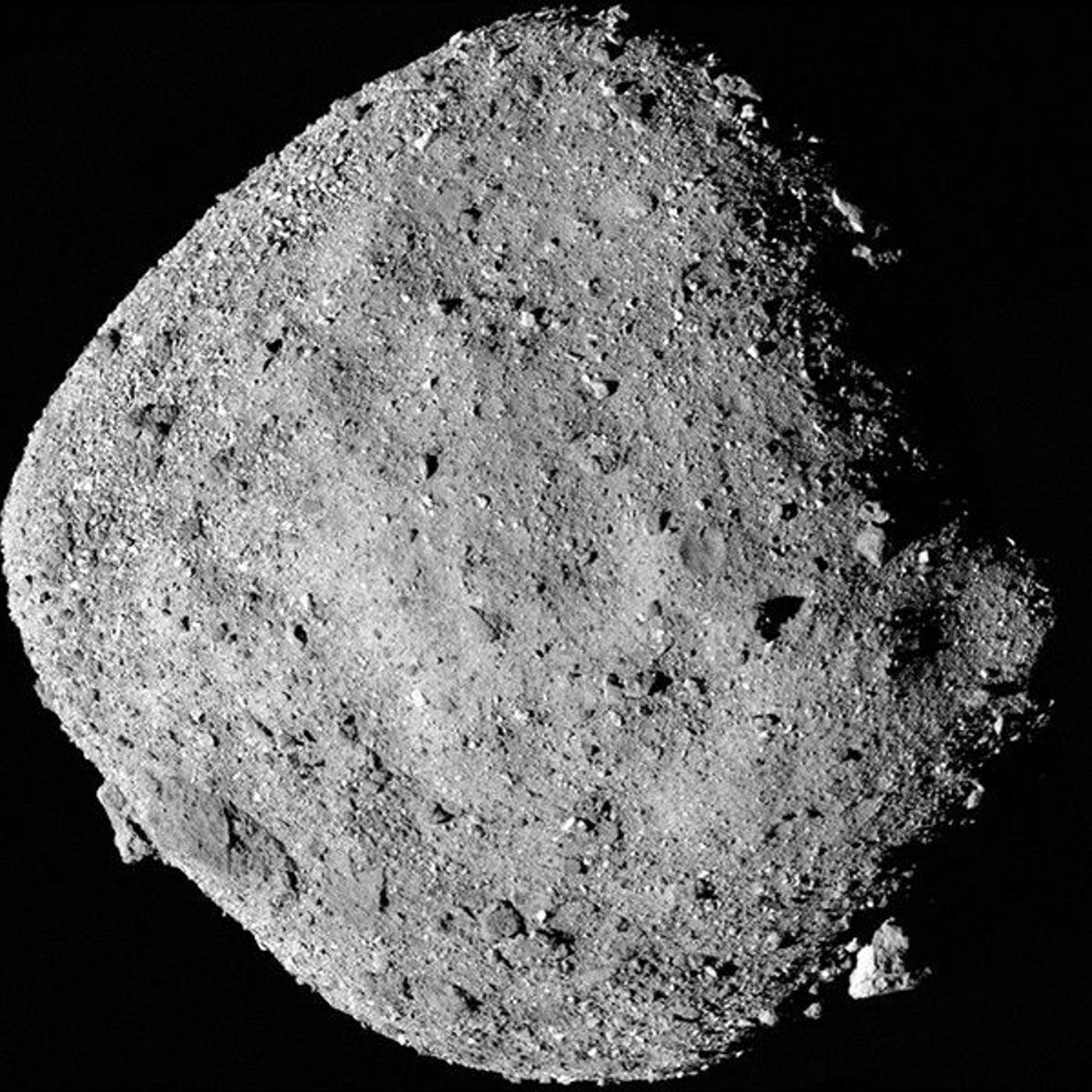
0:00Without additional data, the true nature of the rapidly northward moving point of light, my Catalina Sky Survey teammate Carson Fools had just discovered would have remained a mystery. Fortunately, this new object was tracked by telescopes in both Arizona and New Mexico. These data were used to calculate its orbit around the Sun, estimated size, and give it the name 2017-UX-5. When Carson first spotted this enormous 1,200-foot-diameter space rock, it was more than 30 million miles away, traveling in our direction at 10.7 miles per second. Its orbit and that of the Earth's nearly intersect, and at the closest point, there are about two and one-half times the moon's distance from us apart. And asteroid the size of 2017-UX-5 impacts the Earth every 76,000 years or so. According to the impact calculator developed at Purdue University and Imperial College
1:04of London, if 2017-UK-5 is made of porous rock and came in at an angle of 45 degrees, it would start to break into pieces at an altitude of 41 miles and upon reaching the surface would create a crater 2.2 miles in diameter and 5-8s of a mile deep in sedimentary rock. The results 20 miles away from impact would be that of a 6.4-rictor-scale magnitude earthquake followed by a 176 miles per hour air-wind blast which would blow down 90% of the trees and collapse wood-frame buildings. Fortunately, asteroid hunters have not discovered any object like Carson's discovery with our number on it. For travelers in the night, this is Dr. L. Grower. Go to travelersinthenight.org program 414 for more information.
More episodes


