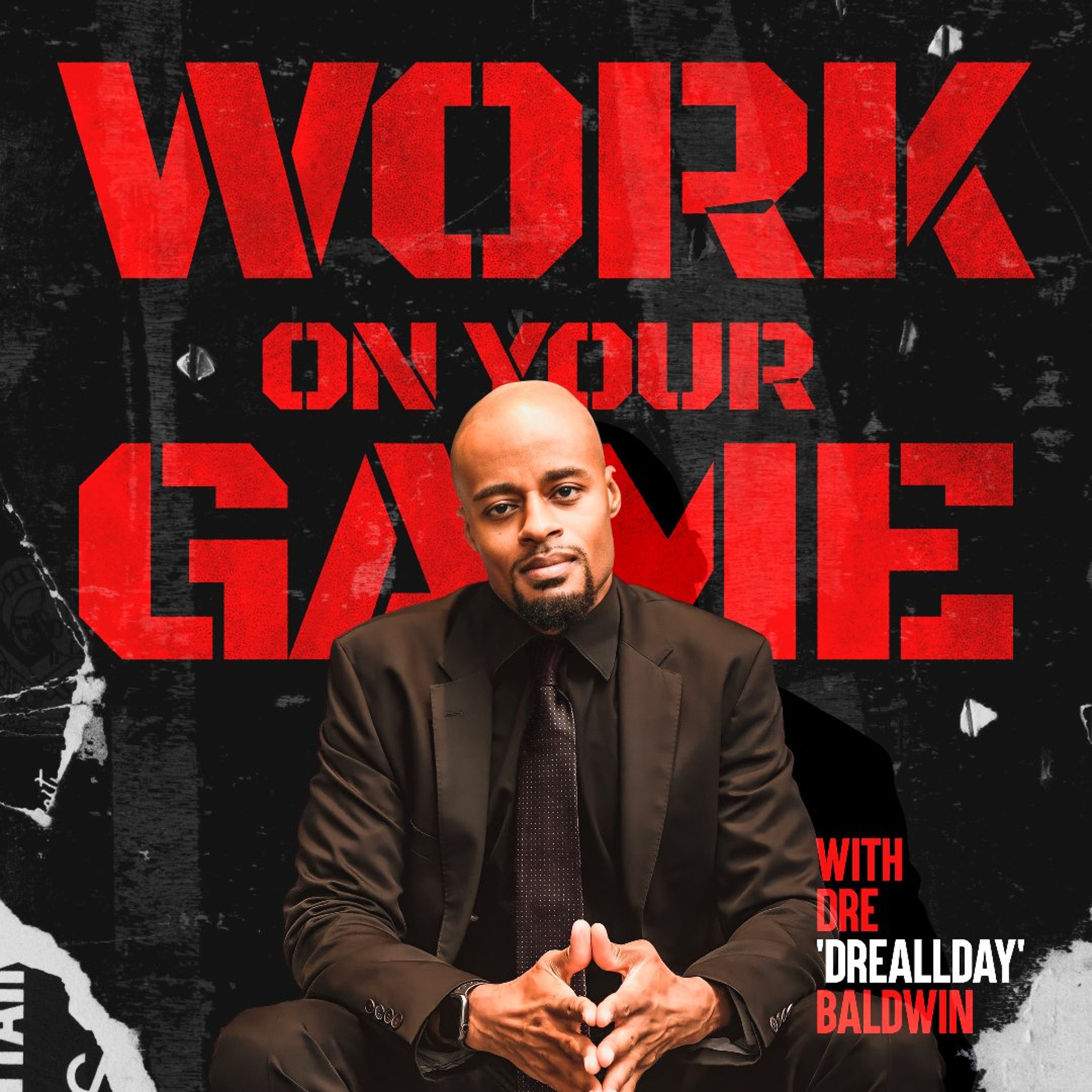
#3766: A "Normal" Approach Can NEVER Produce Exceptional Results
About this episode
Get every episode summarized
Each time Work On Your Game: Discipline, Structure, and Execution Under Pressure publishes, we email you a written briefing from the transcript — the topics, who appeared, and any specific claims, with the ad reads skipped.
Email me new episodesFree for 3 shows. No card needed.
Hosts & guests
Transcript ready
597 searchable segments. Every word is indexed and playable.
Full transcript
Work On Your Game: Discipline, Structure, and Execution Under Pressure — #3766: A "Normal" Approach Can NEVER Produce Exceptional Results. Machine-transcribed; use the interactive transcript above to jump the player to any line.
There is a private calibration process connected to this work. Most people should not look at it. It assumes responsibility, not curiosity. It assumes pressure, not interest. Details are in the description. Do whatever you want with that. Most people don't need more information. They need better execution. That's why I sent a daily game email focused on the things that actually move results. This is a plan decision making, leadership, structure, execution, personal accountability. That's the kind of thinking you want in your inbox every morning. Go to workonmygame.com. That's workonmygame.com. Enjoy for free. Talent is the entry fee in some spaces to even be in the game, such as professional sports. But without the uncommon behavior done consistently, intentionally, intensely, and more often, more frequently than everybody else, you don't stand up.
Great old days. Great old days. Workon your game. Workon your game. Workon your game. This is Dre Baldur. And workon your game is the system that turns discipline into dominance. Today's topic is normal people do not become exceptional. That could be a tweet. That could be a status update. Any of you who's listening, you can steal that. You can post it on your Facebook or your LinkedIn or no, send it to you. One of your friends or kids, somebody you want to motivate. By definition, that sentence is 100% correct because normal means average, similar to everybody else. There is no exception when you're normal. That's the very point of being normal is that there are no exceptions. There's nothing exceptional about you. No means you are off the beaten path of the normal. You're off the beaten path of what everybody else does, what everybody else thinks, and what everyone else expects. So if you are normal, you can't possibly be exceptional.
And we're calling it normal. Another word you can use here is average. Most people don't consider themselves to be average. Most people don't want to be average there. Actually, there's a population people out there who are okay being average. I would guess most of those people are not listeners to a show like this one. So most of you don't consider yourselves to be average, but you may not consider yourself to be normal. You may not give yourself that label, but your behavior, your actions, your expectations, your standards. They may reflect normalcy. That's why I'm making this episode here to wake you up out of that sleepwalk of normalcy. If your aim, your goal, is to be exceptional. Every top performer, and we're going to talk about some today, and I'm going to give you some structural examples, if not personal examples, of every top performer is extreme in some area that produces results. Let me say that again. Every top performer is extreme in some area in which they are producing results, especially the areas that make them who they are. That's what makes them a top performer. We talked about living on the edge in episode number 3471.
And the edge is all about choosing where you're going to be exceptional. Not understanding being exceptional doesn't mean you have to aim for exceptional in every aspect of your life. That's structurally impossible to be exceptional in every aspect of your life, but you can be exceptional in specific areas. Again, areas that lead to performance and outcomes in your life. What average and normal people would generally refer to as imbalance of someone doing a little bit too much, going too far in a certain area, or what some people would call most people who don't use the word imbalance, but they may say, obsessed. Some of them say you're obsessed at something, they say you're psychotic, they say you're kind of crazy, or they say you're a little bit too intense in a certain area. That is the exact trait that creates your lead outcomes. Let's talk about that. Point number one today, stopping once again, is normal people do not and cannot become exceptional. Number one, elite results require uncommon behavior.
One thing that happens to a lot of people. One place where a lot of dreams go to die is when you begin to adopt or think about adopting extreme behavior. Some behavior that is way outside of your normal, way outside of normal of your associates or anyone around you, very different than what most people who would be in your space have ever seen or even thought of, and you begin to do this abnormal behavior. What happens is someone, whether it is you talking to yourself or others around you or some material you took in through the internet, starts to tell you that, hey, you're doing a little bit too much. You need to moderate your behavior. You're being a little bit too extreme. You're going a little bit too far. You're being extra here. You're not going to be able to keep that up. That's not necessary. You don't have to be like that. You can still be successful without doing this. Most of you have heard or used some form of this language or something that rhymes with what I'm saying here.
This is when you start to become uncommon to other people, see it as not as a little bit too much. They will ridicule it, attack it, offer you quote unquote advice to tone it down a bit and you, for whatever reason, decide to accept their guidance. You accept that guidance from others or from yourself and you tone it down a little bit. Let me not go so far in that particular area. You just killed your opportunity to be exceptional because I already told you in an introduction. Every person who is known for being exceptional at what they did or do, they had uncommon behavior in that area. There were some uncommon behaviors or a singular, uncommon behavior that they did that made them who they were. Without that uncommon behavior, it would be impossible for them to have achieved what they achieved. You look at someone like Lance Armstrong. The guy was uncommon in the way that he trained on that bicycle. Now I know some of you had negative ideas of Lance Armstrong because he came out and
was accused and eventually admitted that he was doping or using performance enhancing drugs while he was riding his bicycle. Well, the thing is, if you look into what happens in bicycle racing, all of the motherfuckers were taking drugs. He was taking the tube. With everybody performance enhanced, he still beat everybody. So I still give him the credit. Same thing I would say about Barry Barnes, the baseball player or many other baseball players who were found to have used PEDs as they say, performance enhancing drugs. Well, if everybody was taking it and then he was still the best and I mean, he's still the best, but I digress. The point is, Lance Armstrong was exceptional in the way that he trained on that bicycle. That's the way he was able to perform the way that he performed. Even if you think that not everyone was taking PEDs, can we all agree that Lance Armstrong wasn't only one. So he wasn't only one yet. He was still winning. That still means he was exceptional. All right. In some way, he hasn't been. Tom Brady was exceptional in a way that he prepared in football. I saw this documentary they had about him on Facebook years ago.
It was after he had won the last Super Bowl he won with the Patriots, but he was still on the team and doing it. And he flew to California and he hired a quarterback coach who was critiquing him on his throwing motion and on his form. This is why he's 15 or so years into the NFL and had already won a whole bunch of Super Bowls. And at that point was looked at as the best player in the league and one of the best players of all time. Yet he was still investing in training and coaching of someone critiquing how he was throwing a football. The one thing that he had positioned himself to be the best in the world at, he was still going to getting trained for it. That is exceptional behavior. And it's exceptional even though, yeah, of course, he didn't own camera. I think he was still doing it. I don't think he was making it up for the camera. Listen, I played a professional sport. I know I got a professional athlete. So I got a professional athlete once they quote unquote make it. And when I say make it, I don't mean one of a bunch of championships, make it meaning they are at the pro level with steady employment. They don't hire trainers. They don't do any training. They may do some stuff for the cameras that looks good so they can show it off to their
Instagram followers, but making a real investment in real training like the details of what you're doing was what Tom Brady was getting that training for from that coach. The coach was just talking about his throwing most of the details, not like he was out there in 200 degree, whether sweating like a dog, that's not what he was doing. It was the technique of what he was doing. Those are the small little things that don't seem exciting. They're not sexy and they're not really Instagram worthy because not really anything sexy about what you're doing. He was doing that because he continued to make that investment even after he got to the top. That is exceptional behavior. And you look at other top athletes in football, you had a guy like Jerry Rice in basketball, you have your Michael Jordan's. People in boxing you had someone like Floyd Mayweather. These people have exceptional behavior patterns. I'm using these people because they are famous and their athletes and most of you are familiar with them. Even if you're not a big sports fan, you heard it. He's got to say, this is the reason why you heard them. Yes, they had exceptional talent, but also they did exceptional things to home that talent. A lot of people have similar talents to the athletes that I mentioned, but you don't know their names because they didn't do the things to home the talent to take themselves
to the highest possible level. And your own line of work or in your life in general, you have to ask yourself, where are your life right now if you're aiming to be exceptional? Are you exhibiting uncommon behavior? Where do you do things that are just not normal compared to the average person who is in a similar lane? So you think about your fitness. If you want to be exceptional somehow, some way there, what are you doing exceptional? Where is your behavior uncommon? In your work. If you want to be exceptional, where is your behavior uncommon? Does that answer the question? Any aspect of your life in which you wish to be exceptional or you think you're exceptional? Ask yourself, what uncommon behavior am I consistently engaged in? If you can't answer the question, then you're not exceptional. It is that simple. Top performers do uncommon things. More often they do them more intensely. They do them with more intention and they do them more consistently than everybody else. That's what makes them a top performer. It's not that you can do it. That does not make you exceptional.
What you can do is not make you exceptional. There's a lot of people in the world with can do also known as potential. What I could do, I might be. I could get to this place. A lot of people have that. Talent and potential are a dime a dozen in every industry. From lawyers to doctors to architects to plumbers to basketball and football players. Talent is not exceptional. Talent is the entry fee in some spaces to even be in the game. That's as professional sports. But without the uncommon behavior done consistently and intentionally and intensely and more often more frequently than everybody else, you don't stand out. That part needs to be part of the story. You've got to be one of the chapters of the book. The outcome becomes extreme because the behavior is extreme. But understand, extreme outcomes done one time are usually not that big of a deal. Even though you may only know about it one time, there's a whole lot of times that was done before. You saw the one time that made the person famous. For example, you take an Olympic athlete because the Olympics only won every four years.
Some like Michael Phelps. In 2008, he goes and wins all those gold medals. Yeah, he can only do each race one time when he did what he did. But how many times did he practice hitting those numbers and doing what he was doing before he got to the Olympics? Over the course of four years getting ready. So that's what I mean. He did it a whole bunch of times that you didn't know about. And nobody even knew what his damn name was. We all know his name because of what he did in the Olympics on the big stage. He did that a million times before everybody found out about it. That's extreme behavior. That's uncommon behavior, especially when you're not getting attention for it. Point number two, today's topic once again is normal. People do not become exceptional. Number two, most people want the result without the lifestyle. This is the gap that we see, especially a lot in today's world. A lot of people want to simulate or demonstrate what's called demonstrate. They're not really demonstrating. But in quotation marks demonstrate the result without the lifestyle. Demonstrate the result means someone showing off that it looks like they're doing a certain thing or that they have a certain ability, but they're not really living the thing that
they are trying to put on display. In other words, what we call fronting. They're pretending as if they have this outcome, but they're not actually living at lifestyle. They're lying to you. Social media has created an outlet for people to do this. And it incentivizes people to do it because you get a dopamine rush when people begin to validate the show that you're putting on where you're not really living the thing that you're putting out front on your social medias. And again, they're incentivized to do it. So you can't even be mad at it because human beings do respond to a sensibs. The opening, the opportunity for all of you is, remember, the opportunity is always an opposite. So right now what everybody is doing is showing that they are a certain way when they're not really living like that, which means they're lying. So where's the opportunity to be a certain way without telling everybody you're doing it? The inevitability will eventually catch up. The world will find out one way or another that you're like that, whether through your results or through somehow, some way they stumble across you. But when it is truth, the truth is self-evident. Self-evident does not mean the whole world is going to find out. But when they do get around to it, the truth will be self-evident.
You know how to tell them? You know how to explain it to them. And a lot of people want a result, but they don't want the lifestyle. When I say the lifestyle, what that means is, aren't you setting your life up in such a way that the result is inevitable? Those people I mentioned earlier, Floyd Mayweather, Tom Brady, Jerry Rice, Lance Armstrong, all these people when they were playing. They set their lifestyle up, such that the result became inevitable because all of these people had to deal with elements and opponents who they had no idea what the elements would be. They had no idea what their opponent would do. So they had to be so ready that no matter what happened that was outside of their control, which is most of what they had to deal with, they were ready to still dominate and be the best. And that's why they ended up being the best because their lifestyle was built around that. It was built around the inevitability that I'm going to win regardless of what the circumstances would be around me. And that requires you committing your entire lifestyle to a certain outcome, to a certain way of women, certain uncommon behaviors.
First of all, just the act of committing your entire lifestyle to the purpose of achieving a certain outcome. It's uncommon in and of itself. We've got people don't want to do that. We call that something out. Something out meaning you're going to go all in just knowing doing things this one way without doing anything else without a guarantee that it's going to work. If I had a guarantee that you're going to get a result from doing it, most people don't want to do that because again, something out doesn't guarantee the result. Something out doesn't guarantee that you are doing everything you can towards the result. Doesn't mean you want to get it. Most people don't want to make that bet, not knowing if it's going to win. Everybody's heard the phrase bet on yourself, right? You notice when you hear people talking about betting on themselves, it's only after they win. Where are we doing here anybody espousing the concept of betting on themselves when they're making the bet, but they haven't yet won? Because then they be putting themselves in a vulnerable position and waiting, what if I lose? Now everybody's going to be asking, hey, what's up with that? We'll have them with that bet. See, this is the reason why you only hear about betting on yourself after somebody wins,
there's a lot of people who bet on themselves lose. Most people never bet on themselves at all. So that's why they live by care so you can do the people who do. Betting on yourself means knowing what I'm talking about here, selling out. Designing your lifestyle around, this is the outcome that I want to achieve and I'm going to sell everything else that I could do out in order to just do this, also known as opportunity cost. I'm going to give up everything else just so I can do this. And I don't even know if it's going to work, but I'm going to try anyway. I'm going to send my favorite rep and put out an album. This first album is called Get Rich or Die Trying. That was selling out. He sold out to the outcome. Many people admire the success of others. This is what I just thought. While rejecting the habits that produce that success. Most people pay attention to the outcome that they can see, but they don't pay attention to the process that leads to the outcome. Then what are also here is a lot of people talking about the process that leads to the outcome when they don't really know. You'll know the process of the outcome if you ain't done it. Most people want the outcome.
Everybody wants the outcome. There are a few people want the process. The process is not fun. The process is not sexy. The process is not social media share worthy. The process is not interesting. The process is not stimulating. The process is not exciting. This is the reason why I got a people don't want to deal with the process. The stuff that I'm pointing out from these athletes that I mentioned, out of it, is stuff that got printed and published. The boss of the body on the backside, who was around when the cameras were off and they talked about it, or the athlete themselves who show you some stuff that they talked about that happened without the cameras, or some stuff that we saw that was actually on camera. Or just a combination of different people dropping different snippets over time and eventually you piece the story together. But understand that your favorite known successful person, most of what they're doing, most of their lifestyle that allows them to be that successful person that you know is not happening for public display or public consumption.
It's not on camera. Most of it is not on camera. You think about your life even if you're filming all day every day, most of what you do ain't on camera. I remember I would tell athletes this back in the days when I was making basketball content. The videos that I put on YouTube, most of the videos I put out were less than three minutes and went, if I put out a video, I was longer than three minutes, that was it. In exception, most of the videos were very short videos. And I would tell players many times, I would say to them, understand that the video that I put out on Tuesday, Wednesday and Thursday, each of those videos combined, the total time elapsed of all those videos was less than 10 minutes. Do you think I was only in the gym for 10 minutes? What am I doing to rest of the workout that I didn't put out on YouTube, that's the fundamental stuff, that's the boring stuff, that's the basics. That's the same stuff over and over and over again every single day was my fundamentals were sound because I worked on the fundamentals every day, but I didn't put that on YouTube every day because it would have been the exact same video. YouTube might have struck down a video and say, hey, this is duplicate content. You put this out yesterday, even though it was a different workout, but it was the same
stuff if everybody gets what I'm saying. Exceptional performance comes from commitments that average people are unwilling to make. Exceptional performance is not look, is not random, happenstance. That comes because you made commitments off camera, so to speak, or literally, such that when you come on camera, it doesn't matter what other externalities are abound, you're going to perform at a certain level because you condition yourself to where nothing else can happen, also known as inevitability. Power presence calibration exists. It is not training, it is not coaching, it is for people already operating under consequence. That's not you, ignore this. Information is in the episode description. Point number three, today's topic once again is normal people do not become exceptional. Number three, every high a tver is extreme about something. I told you this in an introduction. Every high a tver has some level of extremity about something. Those of you who want to be high a tver, as you need to ask yourself, where are you extreme?
Where are your extremes in your life? Can you name any? Where are you doing things that the average person will look at you and say, why are you doing it? The first thing they would say, then when you explain it, they would still say, all right, I get it, but then that's crazy. What aspect of your life would fit that description? So for the high a tvers, I'll give you a couple examples or a couple ideas to think about, just with yourself. Maybe it's extreme in your discipline, extreme in your preparation and your learning and your training, your networking, your execution. What is it? Where are you extreme? Where are you just going above and beyond if you're just going to achieve and accomplish at a level that most people don't see? When I was in Lithuanian and a teammate named Mike, Mike was from New York and Mike was a little bit older than me. He had played overseas a couple of places before he ended up in the same place that I was at that time. And I will say this as a heterosexual man. I can look at another man and tell when a man is attractive and he's probably going
to get a lot of female attention just on the strength of being who he is and just walking into a room. Mike was not that. Mike was an opposite of that. He was an average looking guy who just walking into a room, he's not going to get much female attention just on the strength of his look. He just wasn't that. I'll do respect Mike if he happens to be listening. But one thing I will tell you about Mike is Mike was extreme in actually how do I want to say this. Mike was exceptional. He was not a female interaction he was able to generate. That's what I'll say about Mike. Now I'm from the city of Philadelphia. I went to college. I went to Penn State University, have a degree from there, traveled a bunch of different countries, playing basketball, hanging around a bunch of other athletes, tall black guys who play sports who are in great physical shape. Some who are exceptionally good looking guys and some who were not. Mike was amongst all the men I've ever known in my life. I don't really hang around gay guy. I saw him hanging around heterosexual men who are interested in women. Of all the men I've spent time hanging around in life from basketball to business and everything
else. Mike was exceptional when it came to the amount of female interaction he was able to generate for himself. And I'm pointing this out because Mike was not an exceptionally good looking guy. The reason why he was able to generate so much interaction with females is because Mike was extreme and his willingness to approach women. Mike was extreme. When I say extreme, let me tell you what Mike would do. He told me this and then I saw it with my own two eyes. When I got to Lithuania, Mike was already there. And those of you who haven't played a sport at the professional level, you play a professional sport. You have a lot of time on your hands. You can pretty much do a whole other thing besides play your sport because you have a lot of empty space on your calendar. A long day at work is a couple hours. I mean, a long day might be three or four hours. A short day might be an hour. And there are some days where we don't have work. And you got time. And when you're in a foreign country where you don't even speak the language, which was Mike and I's both of our situations, you don't have as many options as you would if you're
just living in New York City or Oklahoma City or Seattle or Los Angeles. You can't speak the language. You don't know how to move around as easily. You don't have as many options. So Mike and I are talking and I tell him, hey, I got my computer here. I'm an internet geek. Those you don't know, I'm a closet internet geek on top of being an athlete entrepreneur on all those things. So I told Mike, I was just using the internet, but the building we were in, mind you, this is 2005. There's no Wi-Fi in the building. So I would have to go to the computer lab. I didn't have a laptop at that time. I would just go to the computer lab and use the computer there. But I had a lot of internet and those stuff that I was doing, I had a blog at that time. I would go to the computer lab and that's where I was spent my time. I was sitting there for hours when I didn't have other commitments. Mike, on the other hand, was not an internet geek. I never saw Mike in the computer lab. I would be in there. He wouldn't be there. And Mike couldn't speak English like me. The TV that we had was only local with the Wayney in channel, so we didn't watch TV. So what the hell you gonna do? And again, mind you, this is 2005. So this is not, we don't have smartphones.
There's no Instagram, there's no Facebook. You can't just scroll on a feed. There's nothing to scroll on a feed in 2005. You have to find something to do to fill your time. We were not in the gym playing basketball. You had to have something to do. While I was in a computer lab, me and a computer geek, Mike was walking the streets of Countess approaching every single female he saw. And when I say every single female, I'm talking along as they were of age, I was able, every single female. Mike would approach like 50 women a day. I'm not bullshit. Mike would approach like 50 women a day. He would get these women's phone. Now you have a brief conversation with them. It was like a process, it was like a system that he had. He would approach the girl. He would see the girl. And if the girl even looked in his direction, he would go approach. Start a conversation. Mind you, this guy does not speak the language. And the girl often did not speak. She would actually do something. They would speak English. I knew they speak English. He would bring many girls back to the department and he would take the girls to bring your friend. Once I was there, he would tell the girls to bring your friend. So shout out to Mike.
There was a lot of trickle down action as a result of Mike's behavior. It's not that I didn't approach girls at all, but I was much more selective in dealing with women and Mike. Mike was not selective at all. He would, any girl who looked at him, he would approach her. She'd just looked at him, he'd approach. He was like those people in a mall who stand in the kiosk and they try to get you to try out some lotion or, hey, come get you back in the day, come get on this new cell phone plan. You know what sprint? Come get on Verizon. Notice people when you walk through the mall and you know as soon as you walk by and you see him staring at you, noting on trying to talk to you. He's trying to perfume. Mike was like that, but with girls. That's how he was. And he was able to roam around so he wasn't stuck at a kiosk. I don't know how many girls phone numbers he had in his phone, but he had a lot. All right, probably more than 100. And any day I would come back from my computer geeking at the computer lab and it'd be a girl in our apartment. Sometimes, several times this happened. I would come into our apartment and there would be a girl in the apartment, but Mike would not be there. She would just be there. It's just a girl just sitting there. I would come in and I'm like, hey, hello.
She's sitting in the apartment and I would text Mike. Like, hey, she would say, you might roommate. Yeah, he mentioned you a set of set of. And then I would text Mike like, yeah, who's this girl sitting in the apartment? He was like, yeah, I went out. I went and did whatever, whatever. He was like, do whatever you want or just kick her up. Like, that's what he was. Bringing all this up to let you know. That being a high achiever and being extreme is a choice. It's not some birthright. You don't need to be born in any special talent. Mike did not have a special talent when he came to, as I told you, he was not some super physically attractive guy. You wouldn't notice him. You saw him. You would see him and immediately ignore him if you saw him even away. He's a robust and so this, but damn it. If that man didn't have a lot of activity going on when he came to the women and it's because he was extreme in his execution. For one of them looked at him, he approached over and over and over again. I saw it in action. I saw the results of it. There were times I'd be at the computer, I had known my computer geek thing and he would
text me and say, yo, were you at? He would say, hey, come to such and such a restaurant. This girl I'm talking to is here and she brought a friend. I'm going to put you on a friend. And many times I don't know why this is, but there were many times where I would come to the restaurant and I'm talking there with Mike. And we'd be texting each other because he's communicating to me what the deal is because I didn't know what his girl was. His girl was the friend. And many times the friend would better than the girl he was talking to. Mike, no, this is good. Hey, shout out to Mike. Whole point is he was extreme in his behavior. Now, common denominator is an unusual level of commitment that ties up this third point that I'm making here. Recavon today's class, which again, the topic is normal people do not become exceptional. Number one, extraordinary outcomes come from uncommon behaviors. Where are you taking uncommon behaviors on a consistent basis? Number two, success requires trade-offs that most people avoid. Most people don't want to make the trade-off of extreme behavior because extreme behavior requires that you completely turn off some other behaviors. And a lot of people want the quote-unquote, balance or quote-unquote moderation of normalness.
And number three, elite performance is built on unusual commitment. Decide what you're going to commit to an unusual way and then actually follow through in a commitment. That's the hard part. Final thought, everybody. The question is not whether top performers are extreme. They are extreme. The question is whether you're willing to be extreme enough to join the top performers and achieve what the average people will never know, but they can watch. They can talk about, but they'll never really know. Work on your game. Dre, all dead. Execution is not about effort. It's about reliability. Your results don't match your ability. Your execution is inconsistent. We measure that. Execution, reliability, index. Get your score at work on your game.com-e-r-i. That's work on your game.com-s-e-r-i.
More episodes
More from Work On Your Game: Discipline, Structure, and Execution Under Pressure
#3770: How "Red Pill" Men Are Just Like Feminists
Work On Your Game: Discipline, Structure, and Execution Under Pressure
#3769: The 4 Quarters Of Life (And What Each One Is For)
Work On Your Game: Discipline, Structure, and Execution Under Pressure
#3768: The Rarest Skill In Business- Get Shit Done!
Work On Your Game: Discipline, Structure, and Execution Under Pressure
#3767: How Consequence Forces Priorities
Work On Your Game: Discipline, Structure, and Execution Under Pressure