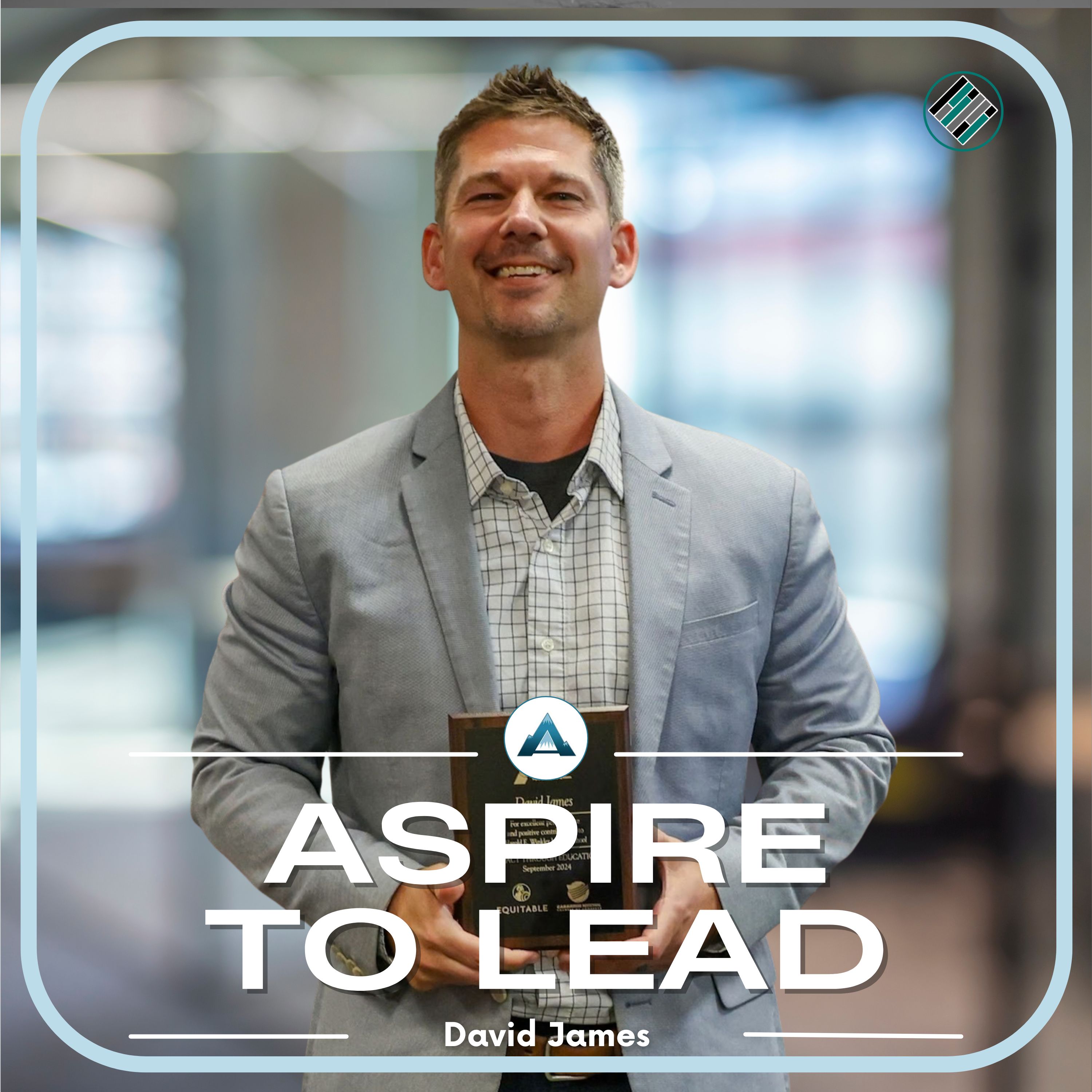
About this episode
Get every episode summarized
Each time Aspire to Lead publishes, we email you a written briefing from the transcript — the topics, who appeared, and any specific claims, with the ad reads skipped.
Email me new episodesFree for 3 shows. No card needed.
Hosts & guests
Transcript ready
402 searchable segments. Every word is indexed and playable.
Full transcript
Aspire to Lead — 371. Lead Where Your Feet Are: Featuring David James. Machine-transcribed; use the interactive transcript above to jump the player to any line.
Welcome to A Spire to Lead where we empower educators and school leaders to grow, inspire, and thrive. I'm your host, Joshua Stamper, author, speaker, and leadership coach, bringing you conversations at Spark Transformation, challenges to status quo in education, and equip you to make an lasting impact on your campus or in your district. For more information and resources, visit JoshStamper.com as we're looking to ascend to new leadership heights together. All right, welcome back to A Spire to Lead. Once again, I have a fantastic guess. Something that I've been connected with for a little while. I'm actually going to meet him in person in just a few weeks over at the NC MLE, moving the middle forward conference in North Carolina. I can't wait to see this gentleman, David James. So with that, David, I want to thank you so much for being on A Spire to Lead. I appreciate it, Joshua. Thank you for having me. I'm really excited to meet you and a bunch of other people here in a few weeks. The end of March at the NC MLE conference. I appreciate you connecting me, and I appreciate you giving me the opportunity to talk about my educational leadership journey. Oh my goodness. I'm so excited for folks to get to know you a little bit more.
So let's dive into that. So if you don't mind, just share in a little bit about your background in education, but then also in leadership. Yeah, so I have been in the game for about 18 years. I graduated from Ohio University in 2007, and did some substitute teaching. My journey starts in the substitute realm, and it really gave me a really fresh perspective on what it looks like in the classroom. What the good, the bad, and the ugly looks like in the classroom, honestly. But I did substitute teach for a few years, and when I tell my beginning teachers like be thankful for this opportunity and use this opportunity to grow, that's kind of what I based my whole career on is that first few years was tough. And when I got my first job, I was really thankful for that opportunity, and that started in North Carolina. So that brought me down to the Charlotte area in 2010, 2011, and I was part of the inaugural teaching group at Harold E. Winkler Middle School from 2011 to about 2015. And then there, I got the tap on the shoulder to become an assistant principal within Cabaris County Schools. Cabaris County Schools is just north of Charlotte. A phenomenal school district. This is where I've done all my teaching,
and I don't find myself moving anywhere else at the time, but I did get an opportunity to become an assistant principal. Great opportunity, great people, great reflections in leadership, but the time came where I thought to myself, my son was born at about this time as well, and COVID was hitting. And I was just like, you know what, I miss children in the way that I joined this profession to see children. And I really miss teaching. And in about 2020, I moved back to Harold E. Winkler Middle School and landed in the same exact classroom in the seventh grade hallway. I've been in middle school for like I said, 18 years. I am a die hard middle school teacher. It is a special group of kids and adults that teach and learn from each other every single day. So we're going back on about six years here back at Harold E. Winkler Middle School, really, really phenomenal school building with great people and a great culture. We've gone through leadership changes in recent months that have tested things as far as the school and as far as the group of teachers goes, but we are strong and the leadership is strong.
We just have a great group and base of people that can lead students and teachers in the right direction. So that's where I'm at currently. My leadership is also kind of me and the realm of state organizations. So in 2019 or so, I became a member of the North Carolina Association for Middle-Level Education. NCMLE is the only advocate of middle-level education in the state of North Carolina. We are a passionate group of educators that are volunteers that work extremely hard to push the middle-level mission forward. And that's what we believe in. We believe in the teaming structure. We believe in socio-emotional learning. We believe in the extracurricular and the club-based athletics and intermurals within the school building. All of these opportunities for kids to have within the school day is something that we really hang or hat on. And then as far as the NCMLE group goes as an executive board member, I became the conference director of that organization. And we are going on our 52nd annual conference in Charlotte here in just a few weeks,
looking forward to seeing you and others that come into Charlotte and just pour into all of our educators in North Carolina. We'll have over 400 educators join us at the La Meridian Conference Center in downtown Charlotte for three days of just learning, networking, fun, and growth. That's kind of where I'm landing right now. We are finishing up, like I said, 18 years of my career, which makes me think I'm more than halfway done with this. And it's been enlightening. It's been positive. I don't see myself doing anything else. You know, there's ups and downs with this profession. And if I'm speaking to my North Carolina group, they understand those ups and downs within the state itself. But there is not a more passionate group of people than NCMLE welcoming incredible educators to Charlotte every single year. I currently sit right here at my desk in 702 at Winkler Middle School. And this is where I'll be for years to come. So that's kind of where I am. That's where my leadership is. My leadership extends a lot of places within the school building. When I came back into the classroom, it gave me a different perspective of what the school
should look like at the classroom teacher. I think the administrative team appreciates that from me. So I have a different perspective as far as different departments work and the functionality and the big picture of the school. I don't close my door and just teach the 30 kids in front of me. Every kid in this building, all 1,200 of them I see as my own. So my leadership is different than it was as an AP in this classroom. But I think it extends and has as big of an influence than it did when I sat in the big chair in the office. Yeah. And I was just thinking through this, David, there's not too many folks that I've had on this podcast that have had that trajectory where they've been into the administration office and then gone back to the classroom. And I love the fact that you said that you know, you've learned quite a bit from that pathway. I'm curious if you're thinking to like, man, I wish other teachers had that leadership perspective or experience to help them understand truly what goes on in the front office or with those leadership decisions. If you feel like more teachers should maybe extend themselves in that direction. Yeah, that's a great question.
And the answer is yes, I do wish more people had the perspective I do. But I also get the feeling that more administrators do as well, right? Like so from the administrative piece, those that are sitting in the office, I wish they all got it kind of like David does, right? And that's not tuning my horn in. It means I just think that my perspective is very helpful for them specifically. And I know how the hard they work and I know that they're running around with putting out fires all day. And if I can take something off their plate as it pertains to the professional development or thinking about something differently, then I think they appreciate that perspective. So yes, it would be helpful if we all had a big picture mindset and looked at education differently in terms of the different departments that work together, the parent communication, the IEP process, the 504 process, all the things that are bombarding us on a daily basis, my perspective is certainly bigger picture. But I also think it's helpful for the administrative team to understand that they can lean on me because I have that perspective. So it's very helpful, I believe. For sure. Yeah, I could think of even in my own journey, it would probably been good to
like, I don't know how you would do this, but even step back for a year, go back into the classroom and then come back into that position because I think you're right. You need to have both perspectives for those leaders to understand the current struggles, our educational system changes often. You need to have both perspectives, I think, to be successful. And it's great that they have you to be able to understand both sides and to communicate that to them. I want to go further about the professional learning because I know sometimes growth mindset turns into a buzzword. It's unfortunate, but when we're also looking at professional growth and growth mindset, sometimes, you know, we get educators that roll their eyes. And so for you personally, what is your professional learning look like here to year that makes you feel like you're extending your growth mindset? Yeah, I think it's more than in the growth mindset, which is definitely something that I hang my head on, but I think it's also just filling my bucket. When I talk about going to different opportunities and doing things with conferences or even a Friday session that we can talk a little bit about within my school, that is filling my bucket, learning from other
people. And it's not even sometimes the PD that's being that's being presented on. It's sitting with somebody next to me that enjoys learning like I do, right? Like when it's Friday morning, and I come into the building, and I'll talk about our structure here at Winkler Middle School. On every Friday morning, we have what's called the Wolfpack workshop, professional development in-house PD sessions. And this is PD that is done by our colleagues in the building that are passionate about a topic, and they have some expertise, and they're pouring into each other in the room. And that's empowering because not only are they leaning into their leadership, but they're talking about things that are relevant to our school building. So we go to conferences, and I'm the conference director of a state organization, and we come to these big conferences, and we learn, and we grow, and we put them in place in our professional setting back at the school. But on Friday mornings, when it's me and the eighth grade science teacher or the sixth grade ELA teacher and the multilingual teacher and the exceptional children's teacher and the gym
teacher altogether, that's even more powerful because we're learning from each other as it pertains to our school building. So growth mindset, yes, and I think you do have to have that, and you have to have this mindset that I'm going to get better for those around me and for the students in front of me. But I also go on Friday mornings because I need that in my life, I need the camaraderie, I need the bucket filling, I need the conversations, and I think that's a mindset shift altogether. That's not growth mindset. That's just changing your perspective on what you need as a professional. And for me, connecting with you, and connecting with others, and connecting with my colleagues on Friday morning, gets me through that day and moving forward. And if I learn something, that's even better. Both almost like a mental health component too. Mental health is professional development. I think those two things should be connected and there's a correlation there. So I love that you said filling my bucket. I think that's a huge piece in addition to the growth, both professionally but mentally. I want to talk about beginning teachers. So when you think about beginning teacher
supports and your own journey, what were some structures or routines that made a huge difference early on in your career? And how have you used those experiences to shape those who you're mentoring now? Yeah, so when I got the tap on the shoulder, I would admit that it was probably a year or two early. I wasn't quite ready to step into that office. And quite honestly, if you called me back today, and I get these questions a lot from those, you know, are you ready to go back into the office? And I think I am. I think I have that perspective. And I'm ready to do those things. It's just the right time with the family and the growing up of my son and the love that I do every single day in the classroom. So that's a different topic. But the structure that we had in place previously at Winkley Middle School when I first started, I just don't think it was as strong and didn't provide me the opportunity to grow as much and reflect enough to make that really hard decision. And, you know, honestly, for me, it was the trajectory is this. I'm going to do this. I'm going to be an AP. I'm going to be a principal. And then we're going to keep moving up. And that was just something that I thought was natural. And then when it happened, I was like, hmm, I don't know
if I'm very good at this. I know I'm very good at that. I want to go do that again. I want to teach kids, love on kids and hang out at my house and not the middle school basketball game that I'm supervising every other night, right? Like those are the things and God love our administrators. They work so hard and they pour into other families all day every day. But I just don't think I had the structure and I don't think I had the guidance early in my career. And that probably believes what guides me the most because here in North Carolina, our retention rate and teachers leaving the profession is incredibly high. And we have got to fix that because what is happening is that we are not going into the profession. So the only thing for us to just keep the train moving in the right direction is to keep those in the profession in the profession, right? So I have got to work hard as a lead mentor in the building to put mentors in place to meet with teachers to push into their classroom to provide feedback. And those are some of the things that we have done really well at Winkler. We talk about this through line between the boardroom to the classroom. And the district office has provided us with some funding to get me into the classroom,
provide a substitute to give teachers feedback to allow them to kind of fail in front of me to allow them to get better. Those opportunities are there for improvement. And I really cherish those opportunities and I feel like that really helps our teachers a lot when they can bounce ideas often, me as the professional in a very non-evaluative way because I don't do their evaluations. I don't check any boxes. I'm just giving them feedback that I'm thinking that could help them in the future. So I take that very personal and that's probably my favorite leadership role right now. NCMLE is definitely at the top of the list and it's actually NCMLE during the conference because everything that leads up to that is just chaotic and crazy and just very stressful. But that role is awesome. As the lead mentor in this building, I find the most value and the most bucket-filling opportunity for me because when we find those successes and we find those connections with their mentor and the connections with kids, I think that's very powerful. So to speak to the lead mentorship at the building, I feel like our structures are very powerful. I think they're very strong. I think we have an official mentor for each beginning teacher. Our beginning teachers are
years one through three. So I was going into the AP role at year five, probably a little bit too early. Year one, two, three as a beginning teacher and year four and five I think are just prime opportunities for growth for those beginning teachers and then those mentors are going to continue with them all through those years and moving forward. We meet often maybe twice a quarter, we'll come together as a group, we'll talk about our observation cycles, we'll talk about our grades, we'll talk about parent communication, talk about teaching pedagogy, anything that is important for them to improve and just to think about moving forward. So really proud of the structure we have at our building now, I am looking for a little bit of help in that structure because I would like to pull in some more people that are ready for some leadership that have been really good mentors and say, hey, why don't you come and join me as a lead mentor so we can kind of hit this in multiple angles and you're the science brain. Any chance that you want to look through those classrooms with a science mentality or the social studies mentality and just try to pull in some more leadership. That's my goal for 26, 27 is to pull in a few more perspectives to just layer
that support for our beginning teachers. But I'm really proud of that. I think the Wolfpack Workshop PD series also provides another layer of support because it is free, it is voluntary. And if you have that growth mindset and if you want to build that toolbox, it's there every Friday morning. And I think that's another piece of our BT support program that's very valuable. All right, so I was in middle school for almost 20 years. So I love it, but I also know when you enter into that world, it's very hard because there's a lot of folks that are unprepared for the emotional and the behavioral complexities of that age group specifically. It's very different than elementary. It's very different in the high school. So when you're supporting these teachers within your mentorship program, you said one through three years, what are some supports that you're providing to kind of help them navigate some of those, again, emotional and behavioral situations that they may not have seen prior to and either they're soon teaching in elementary or in high school. Yeah, I'll give you a great example of that. My mentee now came from
high school and he, his student teaching wasn't high school. And it was a very high socioeconomic school that was much different than what he and I are teaching. And now, so when we talk about PD in the middle school for beginning teachers, we're talking about consistency and structures. And that is going to set you up for success no matter what. And I know that's very prevalent in elementary and high school, like you can't come into a classroom without consistency and structure. But when we talk about consistency at the middle school level, like it has got to be on point, then the structures have got to be on point. And I'll just give you another conversation that I had with him last week. You know, we were talking about students missing work. And he said, well, you know, when students turn in their work, they turn it into the box or into the whatever it is on the counter. And I said, well, what is the follow up there? Like, what if they don't turn it in? Because guess what? They lost it. And what are you going to do next? That doesn't mean they didn't do it. And that doesn't mean they didn't do the content, but they just didn't get it into the box. So what are we going to change? Right? And these conversations are, well, if the structure is in
place, we don't turn in stuff to a box. Like, don't do that. Stand at the door and accept it in your hand and make sure their name is on it. Right? Like, these are the things in the middle school that is very, very important and is kind of unique. And those are things we have to be okay with as well. Because if you're not okay with that, then I'm sorry that you're not a middle school person. You have got to have a mindset to teach 12 through and the 12 year old boy is not going to get that paper into the box. And you could yell and you could scream and you could lose your mind, but it's not going to happen. And instead of screaming and losing your mind, let's try and let's try a different way to do it because it doesn't matter, right? They doesn't matter where they turn it in. It doesn't matter. I get the responsibility piece. I get all that, but there's a different time to teach responsibility when it comes to kids as great in our opinion. So we're turning in stuff into our hands. We're making sure it's on. And then we're putting that in a pile that is labeled and paperclipped on my desk. And now I have all everybody's work. We can't lose our mind and we can't yell and scream because we're we can't do that. Like we can't have that mindset
and we can't teach and learn and and and have a, you know, we're talking about the social emotional piece of adults. Like we can't act like that because we're going to drive ourselves crazy. So it's those things that are very prevalent in middle school that we have to make sure we have buttoned up. And it sounds very easy, but it's not. And that's what makes middle school so unique. It's extremely unique. I would say it's like they're not extremely needy like the elementary students, you know, like when you walk into an elementary classroom, you've got kids attached your legs immediately. And then you look at high school and you've got where you feel like, am I even noticed in the room? Am I needed at all? Like they just are so self-sufficient. And then middle school is like this for me anyways, it was like this perfect little middle ground where they were still self-sufficient, but they also needed your help. You know, and so I love that piece. And I want to talk about also in the middle school level, sometimes we can feel like, especially in secondary, that there's silos that are created. You've already talked about this
workshop model that you have in-house where it's a professional development series, which sounds like you're starting to break down those silos. I didn't know if there was any other things that are initiatives that kind of help get folks to collaborate, maybe fill their bucket, also had that growth mindset instead of just being in their own rooms. Yeah, one thing that's really unique about middle school is the teaming aspect of it. And NCMLE really advocates for, as the middle level advocate of North Carolina, we believe in these specific middle school nuances. And one of those is the teaming piece. So to speak to the teams here at Winkler Middle School, specifically on seventh grade, you know, we have an ELA, a math of science and social studies teacher that work together with the same students. And we use that to build camaraderie and family and love and trust among each other. And then we talk about consistency and structure within those four teachers. And the consistency and structure within those four teachers sets these 12 to 14 year old kids, these little adults, I think they know everything into a trajectory that's very successful. So they are going to the different classrooms
that have the same expectations and the same rules and the same way of doing thing. And this in grade book and the same parent communication, like that's very necessary for our kids. You know, they come from elementary and they may be with the same adult all year long. And I do believe in the fourth and fifth grade, they start to, you know, departmentalize a little bit and they go to their different classes, but they're still pretty with their adults for most of the day. And then they come to the middle school and it's like this eye opening experience of independence. Well, we can't treat it like that because we got to provide these scaffolds to make sure that they're successful because they're still 12 years old. And then we're asking them to walk to the gym by themselves without providing them a schedule or a room number. And then we wonder why they're acting crazy in the hallway by themselves because they've been walking in a line for the last six years from case K five, right? And they've been, you know, doing these things this way and then all the sun, they lose their mind. And then we get mad at them. We have to have these structures in place in these scaffolds. Now, when you get to eighth grade, if you want to loosen the reins a little bit, so be it, but I'm still the the opinion that they're in high school yet and they're not adults.
And I think you would agree with that with ninth graders specifically, but I substitute taught ninth graders. I struggled. That was a really difficult group. And it was because that I thought that they were older and actually more mature than they were. And I soon realized that seventh grade, I was even more crazy because it's definitely more of a problem. But nonetheless, if you have the structure, you have the consistency and if you have the love of the game, I think you can find some success with middle school students. Yeah, I couldn't agree more. Some of them went like they were married, had kids and were driving every day and they definitely did not have the mental capacity of an adult that's for sure. So I totally get that. All right, I want to talk about the NC MLE conference that's coming up in a couple of weeks. I can't even tell you, David, how excited I am to be a part of this event. But for folks that maybe this is the first time that they're hearing about this special conference, will you just kind of share out, you know, what was the birth of it? Maybe your experience as far as jumping in and being a part of the committee and then also leading such a amazing PD event. Yeah, so we are going on our 52nd annual conference, which is amazing to think
about with this organization. But to go back a few years, 2020 put a big damper on our organization. I think most organizations struggle to do in person conferences and our attendance kind of nose dived. We went to an online format. It was successful. We did the good. We kept the organization afloat. But when 2122 came, we just continued to kind of struggle to get our numbers back up. And then we moved to Charlotte with our organizational conference. I took over in 2223. I believe for as the conference director, I think this will be my third or fourth conference in a row. And I think as a whole, the organization is moving in a very healthy, forward direction. Our conference numbers and our attendance is moving in a positive direction as well. We have a lot of respect with our the kind of mothership organization known as the association of middle-level education AMLE, which is the the forefront of middle-level education nationwide. At their annual conference, they have a lot more people join them. But I just got off the phone
with their middle school director just yesterday. And she said who will be at our conference that we put on one of the best state organization affiliate conferences in the country. Nonetheless, when I became the conference director a few years ago, I had vision of kind of connecting people all around the country. Honestly, it needed to happen. The state of North Carolina, we just weren't pulling enough numbers in. So I was kind of figuring out a plan to bring in some some big name speakers. That year, we had Jonathan Allshimer join us as a keynote speaker. He was a great keynote speaker. He joined from the state of Virginia. We brought a lot of people in that were known as featured speakers. And then that's kind of evolved into a bigger event. So every single year, like I said, we have our North Carolina educators, the heart and soul of the North Carolina classrooms that come to learn and to grow from each other. And then we have people from across the country like yourself, Joshua, coming from Colorado to join us in North Carolina that like to network with other individuals that are featured speakers at different conferences. So these are authors. These are, you know, EDU consultants. These are leadership experts. These
are podcast authors as well that have all of these kind of platforms to push into our conference and pour into our people as well. So you could learn from anybody from, you know, Kim Strobel, who's our keynote speaker on Monday morning to Darren Peppard and learn about educational leadership. You could learn from London Nelson about teaching strategies and pouring into teachers specifically. Josh, you and Charlie will be with us to talk about your best-selling education text, the language of behavior and the growth mindset within teachers and how we can keep ourselves afloat to pour into to our students. So there is everything from A to B to Z that you can learn from at our conference. We're really proud to offer 80 plus sessions that will have everything. And then we have a little bit of fun. We have our meals that are taken care of and paid for as part of the registration. And it is just a really bucket-filling event at the end of March. And when we talk about March, we talk about kind of getting to the end of our time together in the school year.
And these are coming, the integrate testing. And I need some positivity in my life. And that's where I find it as at the NCMLE conference at the end of March every single year. So this year, it is March 22nd through the 24th. We will be starting on Sunday night with a featured speaker round table with you will be a part of. I'm looking forward to inviting everybody there on Sunday night. On Sunday evening after that, we will have trivia night. One of the fun events that we have that we can socialize, kick back, enjoy the company of others, get to know each other, network a little bit, kind of get our schedule and calibrate our mind for the conference. And then starting on Monday morning, we'll welcome Kim Strobel to the big stage and she will be our keynote speaker. She's going to pour into our participants on Monday morning. And then we will have five breakout sessions Monday, including the NCMLE awards luncheon, which is a tremendous event every single year here in the next day or so. I'm going to be posting our NCMLE award winners. We're really proud of the teachers to watch, the beginning teachers to watch, the teams to watch, the administrators to
watch from across the state. And that is an amazing celebration of education excellence at the NCMLE awards on Monday. Monday night, we have the Monday night mixer. So it's kind of a karaoke, just hang out, listen to music and socialize with your friends on Monday night. And then we'll finish up on Tuesday morning with a few other sessions. I think there's three breakout sessions scheduled for Tuesday. We'll finish up with the closing and then everybody gets to go home early on Tuesday from the NCMLE conference. And you know, my take on the conference and my goal is to not only put on a huge and just very successful event where everybody feels empowered and celebrating education, but I also want them to go back and feel that when they walk into the building on Wednesday morning. I think that is just most necessary for attendees. It's to just go back into the building, reflect and then pour into their people as they go in. The people that come into our conference are teacher leaders. I know this about our participants and I want them to really feel empowered to go back and just pour into their staff. So it trickles down in achievement.
I was very excited. Not even Mark said to be there. I've never actually been in the state of North Carolina. Although I'm an avid North Carolina tar yield fan. I have been since I was a child. Wow. I know. So I'm super excited about that. But not only that, but I'm going to have the podcast set up there. So I'll be doing some bonus episodes with a bunch of the speakers that are there. A lot of them have been prior guests. I think everyone that you listed David have been on the spirally podcast before. I consider them friends. And so it's going to be awesome to see them in person. Again, we'll be pushing those out after the conference. But I definitely wanted to highlight NCMLE beyond just the event because I can't tell you how many folks have told me how amazing it is and what a brilliant job you've done over the years to build this up and make it something that's long lasting, something that they feel like, like you said, it's not just I'm attending and just getting knowledge. It's also a community event. You're also filling your bucket. You're you're extending yourself and growing. So to be on site, to be there to speak, to be there to podcast, I can't wait to be in your presence and to all the educators in North Carolina and surrounding
areas is going to be brilliant. So so lucky to to be with you for that time. As we're winding down, I'd love to ask you a question that I ask all of my guests here. So for those who are maybe the teacher leaders that you're speaking of in your state and across this country, across the world, or maybe there are some current leaders out there. If there's something that they can do tomorrow next week to enhance your leadership journey, what would you recommend? Yeah, I think big picture and a great question. When I when I'm speaking to my teachers leaders across North Carolina and above, I just want to remind them to just lead where their feet are. I think too often and I'm guilty of this, you know, we have these aspirations. We have this trajectory and sometimes it's just not what it is. Lead in your classroom, lead in your building and lead where your feet are right now. Like I'm not taking away from, you know, I have a master's degree in leadership. I have a, you know, everything is is pointing in the right in that direction, but maybe it wasn't in the right direction. And the right direction right now is in this classroom with kids. I feel like my classroom leadership is on point. I feel like my building leadership is on point, and I feel like because of that, I'm having a tremendous impact and influence on this group of
kids and this group of adults. So lead where your feet are at big picture. More practical, get connected. My journey really changed not when I became an administrator, but when I became part of a state affiliate organization. So I'm a school teacher through and through, but it blows my mind sometimes that I get to talk to you, Joshua, and to others on a podcast to talk about my journey and my successes and my opportunities for improvement because I never saw, I never saw this coming in a million years that as a school teacher, I'd have the opportunity to do that. And that's all because I connected myself with people around me and I took the step to do that professionally. So, you know, we don't have to be well read. We don't have to be well researched, but we need to connect with people around us that are going to push us a little bit and maybe take us to the next level and then be thankful for those opportunities. I'm so thankful for the opportunity from the NCMLE board and those individuals that, you know, saw something in me that was more than what I ever realized and it's turned into an opportunity just like this sitting here talking to you and just communicating the great thing that I feel like I've done and maybe
it's inspiring others. Connect yourself whether it's an affiliate and organization or somebody that can maybe take you to the next level and be thankful for that as well. So, lead where your feed are, do what's best for yourself right there in that moment and then get connected with others and just hang, yes, because that's what I'm doing. I love it so much. All right, David, I want folks to connect with you. Obviously, I'm going to put in the show notes everything as far as your social media links and whatnot. I'm going to put the link in for the conference also, but is there a place that you want to direct folks if they have any questions or want to just take your advice and connect with you on social media? Yeah, I'll take an opportunity to plug a few things here. So ncmle.org is our home-based website where you can go and register for registration is still live. We need that to get buttoned up pretty quick so we can make sure we have all of our meals and our name tags and everything done by the time this podcast drops, we'd probably be really close to registration being cut off and those things. So go to ncmle.org and get yourself signed up for the NCMLE conference right there at that website. To connect with me personally, you can find me at
heroic history 22. I'm a social studies teacher and I teach on the heroic team. We talked about the teaming structure and how important that is to me. So that is going to find me on Twitter and Instagram. You can also find me on Facebook under David James. You'll probably come across some footballer from Europe named David James. That's way more popular than me, but if you do a little plugging with Joshua here, you'll probably come across my profile and I'm super happy to connect with you to enter anything in cmle to talk about beginning teacher support to talk about in-house professional development, anything that you would like to bid my ear about. I am 100% willing and able to do that and I would love to connect with you. So thank you, Josh, for this opportunity to connect with others across the country and the EDU space. It's really important to me and I appreciate the opportunity. Oh my goodness. It's my pleasure. I will make sure that I had that link in there for everyone that's listening. I'm highly endorsing this event. So if you're in North Carolina surrounding areas, you can make it to the event, make sure you click register, join us. There's so many people that are going to be phenomenal speakers at this event that I know
personally. So it's going to be a brilliant professional development experience for you. And so hope that everyone that's listening has an opportunity to click that link register and join us in North Carolina. So with that, David, thank you so much for your time, your expertise, your passion and love for education. You're doing so many amazing things, not only in North Carolina, but beyond. And you talked about inspiration. I know my listeners are inspired by our conversation today, and I hope everyone listening will reach out to David and make sure you're checking in on the NCMLE event. Appreciate everything, Josh. We'll see you soon just in a few weeks in Charlotte, North Carolina. This podcast is a proud number of the Teach Better Podcast Network, Better Today, Better Tomorrow, and the podcast to get you there. Explore more podcasts at www.teachbetterpodcastnetwork.com. We'll see you on the next episode.
More episodes
More from Aspire to Lead

370. For the Educators Who are Exhausted and Overextended: Featuring Kim Gameroz
Aspire to Lead

Aspire Mailbag: EQ Over Ego & Navigating School Politics
Aspire to Lead
369. The Science of School Discipline: Featuring Nathan Maynard
Aspire to Lead

368. Every Child Deserves a Team: Featuring Kurtis Hewson
Aspire to Lead