About this episode
Antimicrobial resistance (AMR) continues to grow as a global health threat, making infections harder to treat and leaving fewer options for patients. The need for new antibiotics is an urgent matter — but traditional discovery methods are slow and limited.
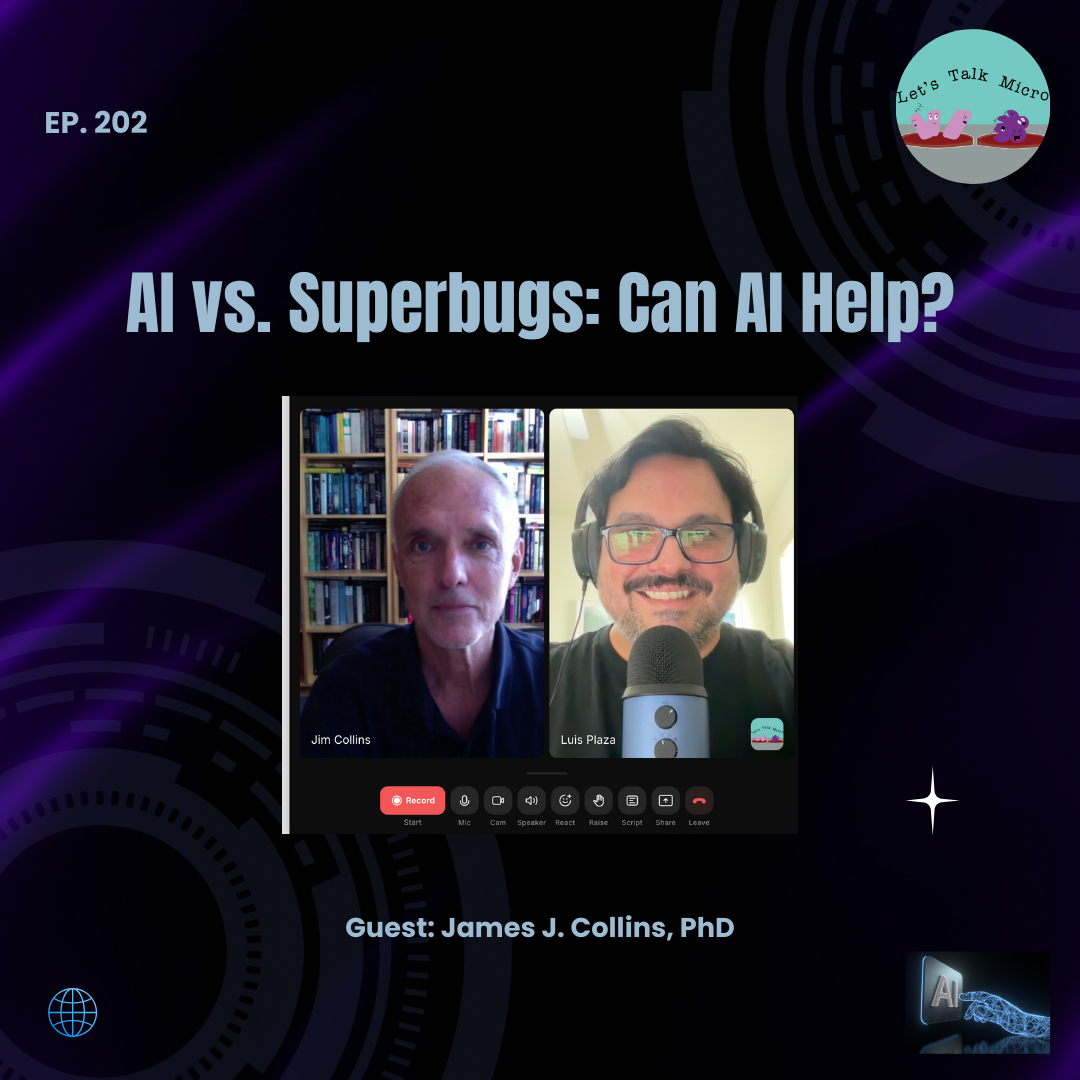
In this episode of Let's Talk Micro, Luis is joined by Dr. James Collins, professor at MIT and researcher at the Broad Institute, who is leading efforts to apply AI to antibiotic discovery. We discuss how his team used deep learning to uncover promising new compounds, including NG1 and DN1, which showed activity against drug-resistant Neisseria gonorrhoeae and Staphylococcus aureus. We also talk about the challenges of bringing discoveries from computer models to the clinic, and what this approach could mean for the future of the fight against superbugs.
Link to study: https://www.cell.com/cell/abstract/S0092-8674%2825%2900855-4
Check out the website: https://www.letstalkmicro.com/
Questions? Feedback? Send those to [email protected]
Want to support the podcast? Here's how:
Venmo: https://venmo.com/u/letstalkmicro
Buy me a Ko-fi: https://ko-fi.com/letstalkmicro
Get every episode summarized
Each time Let's Talk Micro publishes, we email you a written briefing from the transcript — the topics, who appeared, and any specific claims, with the ad reads skipped.
Email me new episodesFree for 3 shows. No card needed.
Hosts & guests
No transcript yet
This episode has not been transcribed. Request it and it moves to the front of the queue.
More episodes
More from Let's Talk Micro

242: Microbiology & Infection Prevention: Partners in Crime
Let's Talk Micro

241: What Can Whole Genome Sequencing Realistically Tell Us About Resistance?
Let's Talk Micro

240: CLSI M100 2026: Actualizaciones
Let's Talk Micro

239: Inside ASM Microbe 2026
Let's Talk Micro