About this episode
Get every episode summarized
Each time The Lucy Ann Lance Show publishes, we email you a written briefing from the transcript — the topics, who appeared, and any specific claims, with the ad reads skipped.
Email me new episodesFree for 3 shows. No card needed.
Transcript ready
238 searchable segments. Every word is indexed and playable.
Full transcript
The Lucy Ann Lance Show — 090426 ~ Par for the Soul - Scott Dotson. Machine-transcribed; use the interactive transcript above to jump the player to any line.
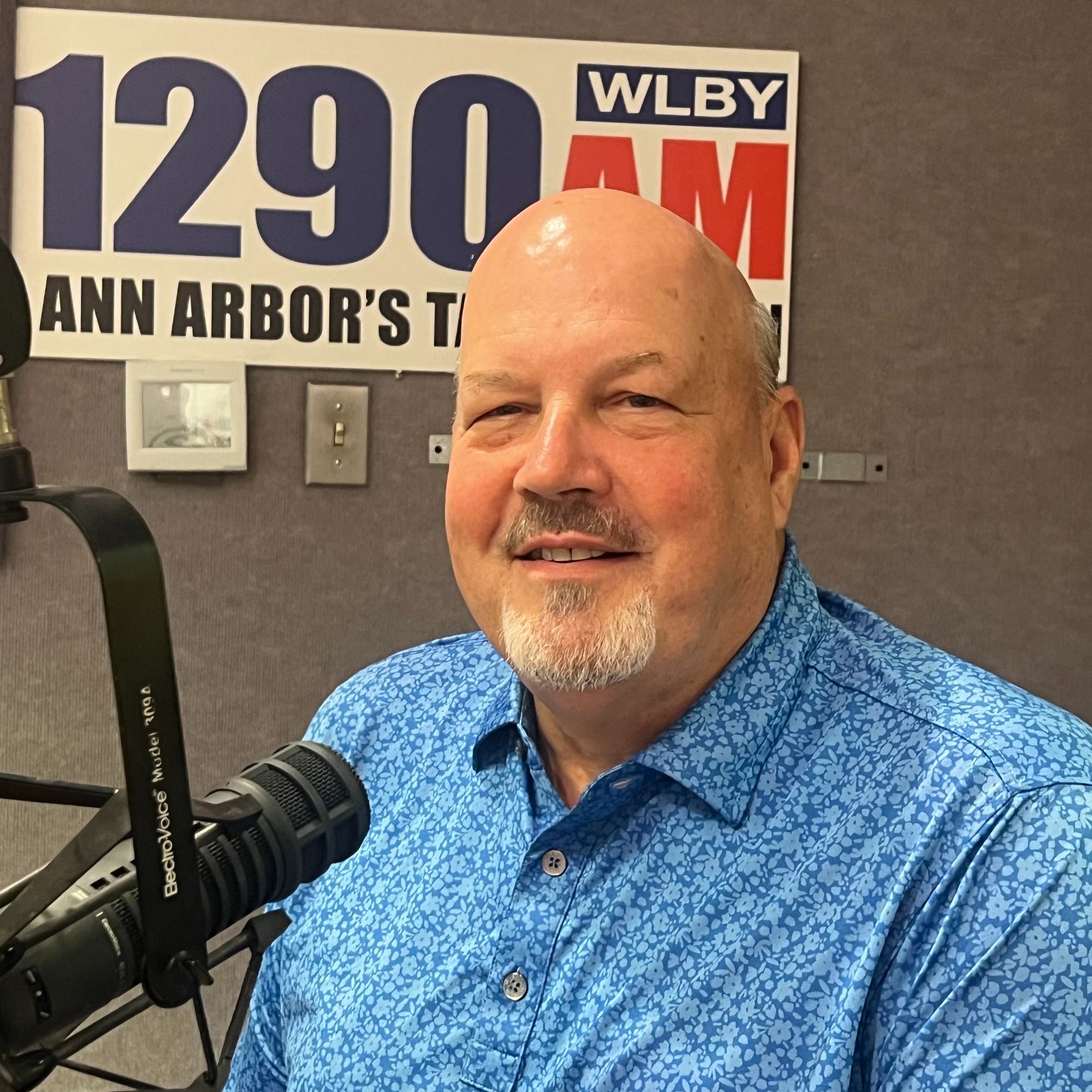
Scott Dotson has played the game of golf for the majority of his life. He grew up in Illinois, where his parents introduced him to the game. A game he played so well that he qualified for the high school golf team. But for what most of us think of as a game, a frustrating one at that, golf says Scott is more than a scorecard. Golf teaches us how to have a better and more meaningful life. Scott Dotson's new book is out called Power for the Soul Finding Meaning and Powerful Life Lessons Through the Game of Golf. We welcome you to 1290 WLBY. Thank you Lucy Ann. It is a treat and a real blessing to be with you. Thank you much. Thank you. Well Scott, your book is fantastic. I love it. Not everyone plays golf, but this book isn't just for golfers, is it? No, it's, I kind of have adopted the golf course as a sanctuary and is a place to practice, character development and it's essentially a classroom. But it's just a classroom. There are many classrooms. We have classrooms where we work, classrooms,
where we're at home, classrooms, when we're in our car and driving in traffic. So it's just a place to learn. And if you're a lifelong learner, the world is your classroom. Well, let's start with the title, Power for the Soul, especially for the non-golfers out there. What does par mean in golf? Par means doing what's expected. Par is the expected score, if you will. Par is, it is the target. Par is what you hope to achieve. And that is kind of a baseline for excellence. And if you can get beyond that, well, that's even better. So below par is better. Below par is better. The Tiger Woods is below par. Exactly. And that's interesting because in life, below par is worse. Yes, it is. That's right. I hadn't really thought that because you're dead right here. That's true. When did you first realize that golf was more than a game that it is what you call the pursuit of life's deeper understanding? I would say probably over the course of the last five or six years. It first occurred to me that
life was trying to teach us more when I went, read Bob Rhotella's book, Golf is not a game of perfect back in. It was about 2005. And then he wrote a follow-up to that. Life is not a game of perfect. And so he made that direct connection between golf and life. And so I started to just see more and more of that in my life. And I came to find that golf was about a lot more than the score. It was really about character. And as I was playing, I found that I was looking in a mirror for what my character is. Before we explore the lessons that you outline and the lessons that golf teaches us, I want to talk about something even more profound that happened to you because I do believe it shaped the course of your life. And you write about this in your book. You lost your mom when you were just 23 years old. And it was the first time that you say you realized you had the power to control your reaction to life's events. This is something we all struggle with controlling our response to what life throws at us. Tell me about your mom. And through her passing
the final lesson that she loved with you. Okay. So golf was my mom's sport. My father, he was a great father. He wasn't a big athlete. It was mom who was the athlete. She was a good golfer. Mom, it was mom who was a St. Louis Cardinal fan and introduced me to the St. Louis Cardinals. We started going to Bush Stadium when I was seven years old in 1966. So mom was really, the driver of several things. That's unusual. It is. And she was very supportive, very kind. My parents were the kind when I had a big game where if we were traveling as a little football team when I was I think I was 12 years old, my parents were the ones who were there even on the road. We were the ones who took other kids because their parents couldn't make it. So they were always tremendously supportive and whatever I did. So you and your family were with her when she was dying of ovarian cancer. Yes. Yeah. This was back in 1983 and at that point in time, when you did
hospice, it was much different than it is now. You would kind of care for at home until about the last week or so before death was imminent. And then you would do hospice in the hospital. And on March 6, 1983, I can still remember it very vividly. She died of ovarian cancer. Our family was gathered around her hospital bed and the rest of the family on the youngest, my father left, we walked out first and my older sister, my older brother. And I was the last one there. And so the first thing I did was you know, you did what they do in the movies. And her eyes were open. I thought, well, that's, you know, you close her eyes. That's what they did in the movies. So that's what I did. And I instead of following my family, I walked over to the window and it was about 715 in the morning. The sun was just coming up on the horizon. And two thoughts popped into my head. And the first one was that there has to be more to life than this empty shell of my mother that I could barely recognize after cancer. And then the second thing that popped into my mind and I just remember consciously thinking, I could either be sad that she was gone
or I could be grateful that I had almost 24 years with her. You had that choice. Yes, that was the first time that I realized, you know, I'm almost 24 years old and I'm two years out of college. I've got a career, a good career path ahead of me. I'm engaged to be married. But it was the first time I really recognized that I had the power to choose how to react to things I couldn't control. It was the first time that it occurred to me that those things, events could happen and I can decide how to interpret that. You write in par for the soul. So how does all of this play out in golf? How does this play out in life? Start by being aware of your thoughts. Be conscious of what is happening in your mind and what is going through your thoughts. Claim your power and take the wheel over unconscious and mindless action. Don't live in a zombie-like state. Don't be a slave to reaction. And that's a lot easier said than done. And I believe me, I'm not perfect at this. You know, I still react. I can react emotionally with the best of them. But I also do know that, you know, if we are
mindful and if we reflect, we can learn from that. We can choose, you know, how to react to things. Even today, I'm supposed to play golf and we've got a reign out. I'm terribly disappointed. But, you know, I can still get together with the six guys that we're going to play golf and we're going to, you know, we're going to make a good thing out of that. So our guest has got that's an author of par for the soul. Scott now lives in the Chicago area. But he spent much of his life right here in Washington County, raising his family in Mylin, Michigan and working as a successful state farm agent for 40 years. You retired a few years back and now have written this book. Yes. You've played a lot of the courses around here, of course, in Washington County. Is there a favorite? Well, my favorite courses, whichever one my feet are on. So there are lots of really good courses. So, you know, there's, yeah, it's, it's hard to choose one. par for the soul takes us through 18 holes of golf, a chapter for each. There's even a 19th hole. We'll get to it too. And it teaches us 18 life lessons through golf's challenges. What can we learn
from golf? Well, I think the main thing we can learn from golf is that it is about character and character development. Golf, and the reason golf, I think, is such a good classroom for character development. When I play golf, I'll shoot 80 to 85 these days. Let gives me 80 to 85 opportunities to have a result. I can control my attitude and my effort, but I can't always control the golf ball. I can't always control the bounce. It gives me 85 chances to control 85 opportunities to decide how do I want to behave in the face of that result. So you talk about mindset, resilience, courage, gratitude, gratitude is a big one. Yes. Let's play hole number three. Okay. Or chapter three in your book. Okay. Choice and intentionality. You write that life like golf is a series of choices. Each swing, each stance, each club selection reflects our intentions. And to be intentional, you have to know what you value in life. How can we live more intentionally
in our own lives? I think a lot of that starts again with that term mindfulness, but I think it's a matter of understanding that you're the captain of your own ship. All you can control is your attitude and your effort. And it's up to you to decide where you want to go and how you want to do it and how you want to react to the lessons along the way. Living intentionally is, well, think about it, you know, if you plan a vacation, you don't just get in your car and just start driving and end up somewhere. You usually set a destination and work backwards from that and say, okay, you know, I want to go to Chicago. Well, I need a hotel. What do I? Am I going to fly? Am I going to drive? Where are we going to stay? And where are we going to eat? It's kind of a similar thing. You just try to do it throughout the day with every event that happens. It seems natural that we make plans for life that way concrete plans, but sometimes we don't make plans for our own head to carry it through to where we want to go. Yeah. And maybe we should. And sometimes we don't want to because it's not always easy. Sometimes those choices are difficult and it takes
effort and energy. And sometimes we just kind of want to back off and chill and take the easy route. Hole number seven, learning from mistakes, forgiveness and grace. You write golf as a game of imperfection. Even the best players hit bad shots. Golf can be very humbling. It is a game where you try, you fail and you try again for four plus hours over 18 holes. And that brings us to the concept of the power of next. The power of next. What is that? The power of next. I think it is probably I'm getting chills talking about it. I think it's the most powerful thing that I've run across in my life. Now I have to admit I got this idea from Kevin Eastman in his book Why the Best or the Best. He's a basketball coach. And I'm one I'll take a lesson from any venue and apply it to my life. I don't care where it comes from if it helps me. It helps me. But the power of next says this no matter what happens to us good or bad. We're called first to accept the result and own our role in that result. That's the first thing we do. The second thing then is to learn
the lesson we need to learn from that. So we are learning from whatever happens. The third thing and this is hard to do too is to let go of that. Let go of that result even if it's a good one. We want to bask in those championships. We want to let go of those negative behaviors and negative results. We don't want them to compounds. We've got to learn to let them go and be present with the next opportunity right in front of us. And that's what next is about. Own it. Learn from it. Let it go and then focus on being the best you can be in the moment right in front of you. And in golf it's the next shot. Yeah. And if you are still thinking about that last shot you can't concentrate making this shot the best. That's correct. It's a matter of letting go of the things that can compound. And sometimes it's easy for us to hang on to a negative and to continue to carry it and carry it and carry it. And sometimes it gets bigger like a snowball. And normally those negative results will compound and take you down. And that's the power of next is to let go of that.
Scott it's so funny though that could because the mind can play tricks on us. The mind can take over your thoughts. And that kind of gets back to what you talked about at the very beginning. How we have the ability to control how we react to situations. Yes. There's a quote from David Foster Wallace that I love. It says the mind is a terrible leader but a great servant. I like that. Yeah. And I think again it's a function of you. Are you going to own your thoughts on your process or are you going to let your thoughts on your process own you. And when we're logical when we're logical, mine I was a big star Trek fan as a kid. I love Spock. When we're logical like Spock, you know, we're able to do things that are calculated and the smart and right logical thing to do. When we're emotional, sometimes those emotions will run us. Our body is built. We're instinctively built. You know, we're made as a machine if you will that's built for survival. And our body and our reactions will override that logic and any emotions are stronger than logic.
One of the themes in par for the soul, especially resonated with me. You write perhaps most importantly golf teaches to integrate the head and the heart. You alluded to that there. The head gives a strategy mechanics and reason. The heart gives us courage, presence and meaning. A great round requires both just as a great life does. When the heart becomes overwhelmed, the mind loses clarity. But when they work together, something beautiful happens. You play with wisdom, intention and freedom. So a question is how can people in their day-to-day lives focus on balancing both of those? Well, that's that's one of life's great mysteries. You know, and it's interesting you bring that up. You know, when I joined the Catholic Church a few years ago and when we had to choose a Catholic saint, I didn't want to choose just one. I wanted to choose Thomas Aquinas because he's a theologian and he speaks to my head. And I also wanted to choose Augustin who is a man of the heart. He said, you know, our hearts are restless until they rest in you, Lord.
So I said, I want my name to be Thomas Augustin. They said, well, you can't do that. You have to choose one. I said, well, you got Pope John Paul. Why can't I do that? So they let me do that. So in fact, you'll see the book is published by Thomas Augustin publishing. That's me. And that's head and the heart. And it's a constantly a matter of trying to integrate the head and the heart. And to find that balance and that's where you go to Aristotle. And you know, you find that in chapter one Aristotle and the Golden Means. It's it's all about finding balance. You know, that point between deficiency and excess where we find that balance. I wasn't as smart as you when I got my confirmation name. I remember I wanted to be Nicole because that was a popular name back in the 70s. And I had this old fashioned name of Lucy Ann. And so when the priest said to me, Nicole, there's no Saint Nicole. I said, excuse me, Saint Nicholas. That works. That works. He had nothing to say. He wasn't going to go for that. That's beautiful. I get a sense that writing this book has been cathartic for you, Scott. Very. How has your own mind
and soul developed through the journey of writing this book? You know, I think the big thing it's done is it's brought a lot of clarity. And when you sit down and you try to put on paper, I mean, some people used to diary or to journal, when you put down on paper, what you believe, what you think is most important, what you want to be about. This is aspirational. I wish I could tell you I live every every bit of this book. I try to, you know, I take a lot of solace from, you know, Paul who wrote the most books in the Bible writing in Romans 7. I do that which I hate. You know, I do what I don't want to do and I don't do what I want to do. If he can struggle with that, I think we can too. But it was very cathartic and to sit back and to and to think about what, and this is a legacy project. This isn't, I didn't just, you know, sit down last September and make this up. It's been building through what I've learned over my years and studies in studying excellence and achievement and sports psychology and spirituality. And so it's
really a mix of a lot of different things and it's a lifetime of lessons, if you will, that I wanted to leave for my son, for other people and kind of wrote it for my 20-year-old self that person that, you know, when mom died, what do you wish you would have known and to take that lesson of there has to be more of this than life? We could all talk to our kids. 20-something. Yeah. It's so it's intended for, you know, anybody who wants to grow, you can't, you can't, it's hard to teach wisdom. You have to experience it and it's not like I'm wise, but I can describe you what a cookie tastes like. You won't know that until you actually take a bite of that cookie. It's kind of the same thing. These are just some lessons that I hope will help other people. There are things that have helped me, tools that have helped me, skills that have helped me, and if they'll help somebody else, that's the whole idea. None of us is infallible, of course, but is it hard to write a book like this where you're giving a roadmap to all of us on how to be that better person? And then when you fail in something, you know, and you've got this book out and people have read it, are you held to a higher standard because of it? Well, yes and no.
I think one of the big things that has helped me and I've learned in life is perfectionism is something we can't let drive us because we're not going to be perfect because we are infallible. Once you know that you're not going to be perfect, it takes all the pressure off. I enjoy public speaking and one of the main things I do before I go out is it's okay to miss speak, it's okay to make a mistake, and it takes all the pressure off. So when you're not striving for perfection and having that be such an impossible target to hit, it takes the pressure off. It doesn't mean I'm not trying to improve and try to get closer to perfectionism, but I also know it's unrealistic. You do speak to a number of groups, don't you? And this book has been highlighted in your discussions and you'll tailor your talks to various audiences. Sure, yeah, there's a lot of different material in here. There are 19 holes, you know, several different concepts. So I'm happy to spend time and speak to people with whatever will be helpful for them. Scott Dotson, author of Par for the Soul,
finding meaning and powerful life lessons through the game of golf. You weave the importance of spirituality throughout this and in fact, you became, as you mentioned, a late life convert to Catholicism. And every Thursday you play with a forceome that includes a priest. That's true. Father Kevin. That'll keep you honest. Yes, it does. How does God show up in golf? Well, I think that's a great question. I think the thing that I've learned in golf is God is always there. It's just a matter of me recognizing. And it starts with just appreciating the opportunity, appreciating the beauty of the course, appreciating the nature. And I'm one, you know, if I see a, if I see a blue bird, I take a moment and I'm just in all of that. So it starts there. And it starts with understanding the connection with the people that are there. And particularly, the work that's being done on me, when I'm working on my game, my game and God are working on me. Like I said, I've got 85 opportunities to decide. And I try to connect to First Corinthians 13. Love is patient. Love is kind. Love is slow to anger. Love does not take down others. Love is not
arrogant. It's not pride. Pride and rude. So I try to compare myself to that. And after I hit a shot, it's like, okay, do I want to be angry? Or do I want to be grateful? That's beautiful. Golf is one of the oldest sports around some 600 years old. You write that golf cultivates virtues in a way few activities do. Is golf the only sport that comprehensively teaches us these values? I don't think so, not at all. I think any sport can teach us. And it doesn't have to be sport. Like I said, every place is a classroom. Every office is a classroom. Wherever you work is a classroom. When you're at home, when you're with your family, when you're at the grocery store, they're all classrooms. Life is trying to teach us and giving us opportunity after opportunity to make choices to be better. And I love my angelous statement. Be the best you can be. And when you can be better, then be better. It's beautiful. There is a forward in your book by the director of Maritus from DePaul University in Chicago, Dr. Ron. Ron Naser. Ron Naser. And he writes in the
forward, the promise of this remarkable and unique book is to examine more closely the movement of spirit and golf to satisfy the soul, which then teaches the intellect. And I would argue, when we look at other sports, golf gives you the landscape to appreciate that too. Whereas football, tennis, basketball, you're in a different environment and you're not necessarily there appreciating the world around you. Right. Yeah, it is different. And it's different because of the pace of it in some ways. Not only the arena you play in a golf course instead of a stadium or a basketball court, but also the pace of it. In football, basketball, baseball, you've got the oldest next place soccer. It's a continuous movement. With golf, you get a chance to you take a shot and then you got three or four minutes of a walk or a ride or whatever to process that, to use that power of next to be able to understand it, let go of it, then focus on the next shot. So it is. Ron would tell you and he and I talk about a lot. Golf is a spiritual practice. It is a
practice of working with the spirit within you and the spirit within and around us as well with what God's given us. It really is a great metaphor for life. I believe so. And I think it's certainly been true to my life that way. And I hope that others will be able to see the same thing as golfers. Hopefully they get a chance to experience this as well. What did you enjoy talking with you today? Thank you. Welcome back to Washington County and Arbor and it's nice to have you here. Thank you. It is just a treat. I wish we had another hour and a half. I live talking with you. You're one of the great people. Thank you, Scott. You too. Scott Dotson, par for the soul, finding meaning and powerful life lessons through the game of golf. Well, you become a better golfer reading this possibly. But more importantly, Scott shows us in par for the soul how to be a better human. Something we should all strive for. I'm Lucianne Lance. This is Ann Arbor's talk station, 1290 WLBY.
More episodes
More from The Lucy Ann Lance Show

090826 ~ Rotary Club of Ann Arbor + Mott Poll - Community Cares
The Lucy Ann Lance Show

090826 ~ The Perky Wallflower Speed Dating - Sara Clemm and Adia
The Lucy Ann Lance Show

090826 ~ The Fate of the Kline's Lot - Marianne James
The Lucy Ann Lance Show

090826 ~ The Struggle to Find and Retain Good Employees - Kristy Vanderpool
The Lucy Ann Lance Show