Loading...
About this Episode
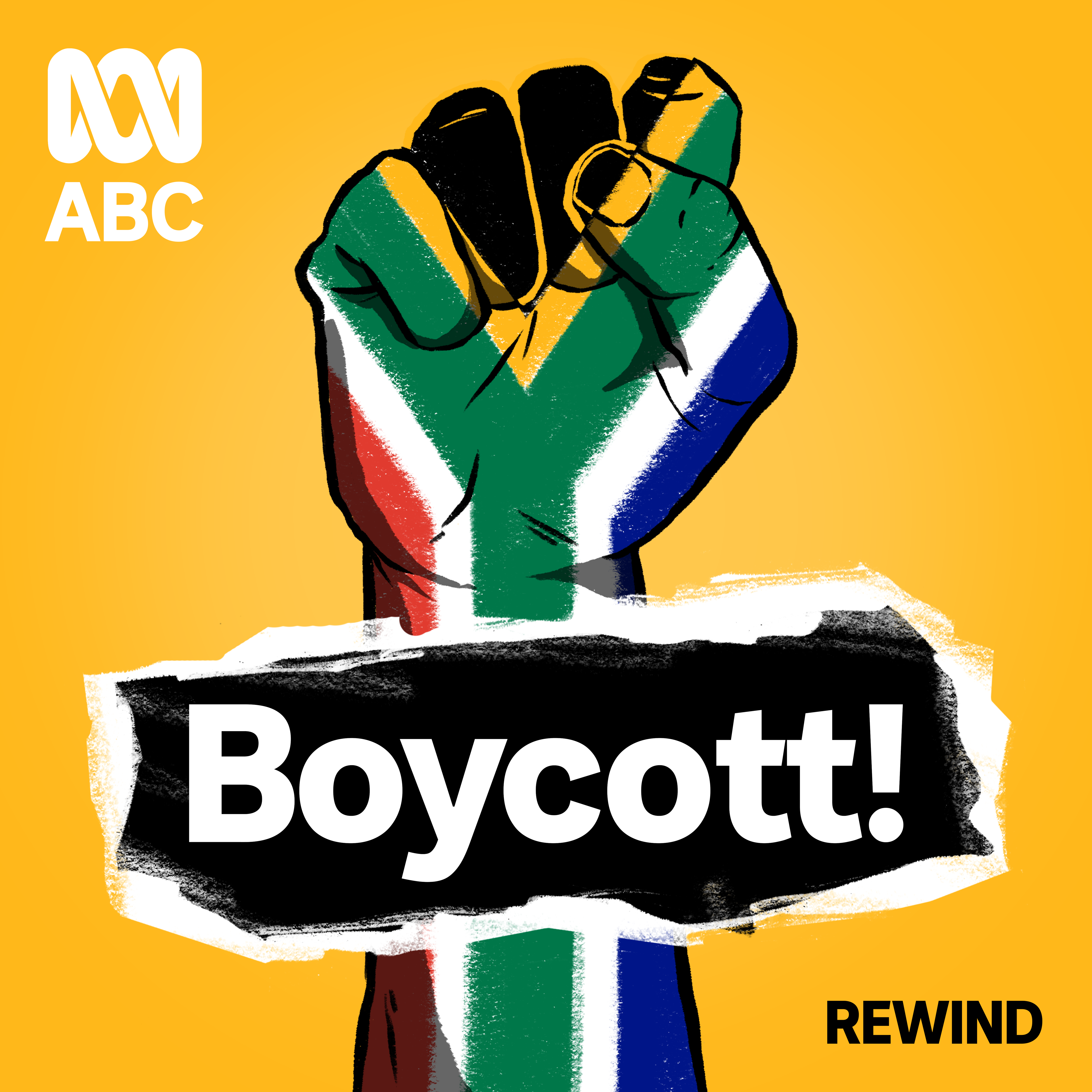
How South Africa won their freedom from the racist Apartheid regime and the Australians who helped them fight for it.
A new leader emerges in South Africa, a young man with radical ideas. Steve Biko’s ‘black consciousness’ movement inspires a generation. His murder at the hands of authorities is a moment of reckoning.
When the children of Soweto township are forced to study in Afrikaans, the language of their oppressor, they rebel and set the country on fire with their resistance. Hundreds of them are killed by the regime.
Steve Biko’s murder in a prison cell sparks a wave of militant activism, as the government doubles down with more violent raids and arrests. And an Australian diplomat gets swept up in the conflict.
Hosts & Guests
Transcript
A.B.C. Listen, podcasts, radio, news, music, and more.
It's 1976, South Africa.
And we are only just emerging from what's called the Lost Decade,
a decade of silence and oppression at the hands of the apartheid government.
The African National Congress, the ANC,
the main black opposition to the apartheid regime is still banned.
Its leaders are all still in jail, including Nelson Mandela.
But there's a slow-burning flame, a renewed rumbling of dissent.
The students had been taking part in a peaceful demonstration against the use of Afrikaans
as an official language in the classroom.
A new generation is rising, and South Africa is about to explode.
The bullets pierced the crown thousands of students scattered as police fired live ammunition.
It was Soweto during the 16th, 1976.
One of the student protesters is Valanga Koza.
That's his voice you hear singing.
Valanga is a young man, part of a new movement of black activism,
a movement that will change the course of our history.
But back before Valanga becomes a student leader,
before he marches onto the street in protest,
back when he's just a little boy,
Valanga's growing up in a small village in the rural north of South Africa,
shaped by poverty and loss and injustice.
Like so many black South African children,
he's living with his grandparents because his mother is a living domestic worker
in the home of a white family.
Valanga's grandparents are farm workers, and he's expected to do his share.
Just to look after cattle, goats and sheep.
That was my daily life.
And whenever we visited their relatives who lived far away,
there was no transportation except walking.
And it was great because it was always accompanied by song,
you know, from my grandmother, from my grandfather,
or whoever we're traveling with.
It's a wonderful gift, the gift of song,
and it's something Valanga will carry his whole life.
When he turns six,
Valanga moves back in with his mom and eight siblings,
in a township called Sanin,
so he can go to school.
They live in a tiny, tiny house,
in a very poor, segregated area.
One of the dumping grounds of black workers set up by the apartheid government.
My mother's waking very hard,
but the pay doesn't really go very far,
you know, paying for the rent, feeding us.
As he gets a bit older,
Valanga really wants to help his mom with those bills.
So, in the school holidays,
he travels four hundred kilometers
to the big city, Johannesburg, to work.
And while he's there,
he stays with a friend of the family in Alexandra Township.
But as a village boy, Alexandra is very scary,
but I had it in me to act like I was a local.
You know, like I watched how people walked,
how they dressed and all that,
you know, because I had to survive.
The apartheid regime controls the movements of black people
by forcing them to carry passes.
Valanga's not even old enough to have a pass,
but in Alexandra, far from home,
he's constantly worried about being caught by the police.
Like about four o'clock, three o'clock in the morning,
you know, they would come and kick the doors,
like, you know, to check people who did not have the right
to be in Alexandra, to be in Johannesburg.
And so, I had to hide,
because I didn't have that permission.
He finds a job in a metal factory,
making electric tubing and bicycle frames.
Very noisy, sounds of metal,
but you know what?
At the end of the school holidays,
I had enough money for my school fees,
school uniform, and also school textbooks
and also to help my sisters,
and also my mother.
So how old were you at the stage
when you went to work in the factory in Alexandra?
I think I would have been around nine,
since I was a kid.
I would have been around nine.
Valanga's too young to name this feeling he has in his gut,
but there's a fire sparking deep inside,
a simmering sense of injustice.
For himself and for all black children,
raised in poverty,
traveling impossible distances away from their families to work,
for his people who are tired of being harassed
and beaten and silenced.
Valanga's generation will harness that ember of outrage
and they will revolt.
On the 16th of June, 1976,
they will take to the streets and say,
enough.
I will not sit by and watch the apartheid regime strip my people
of the few rights they have.
I'm Sisson Gamsimang, and this is Boycott,
the fight to end apartheid.
Episode three, uprising.
To understand how South Africans ended apartheid,
to know what happened,
to create that magical day
when Nelson Mandela walked out of prison after 27 years,
you need to understand the youth of 1976
and the black consciousness movement that created them.
This new generation finds its inspiration
in a young black man from a poor family in the Eastern Cape.
His name is Steve Beekle.
Black people, they need to defeat the one main element
in politics, which are working against them,
the psychological feeling of inferiority,
which are deliberately cultivated by the system.
In the 1970s, no one will do more to rattle apartheid
than Steve Beekle.
But back in 1966, when he's 19 years old,
Steve moves from the Ginsburg Township to Durban
to study medicine at the University of Natal.
On the first day of semester, he's wandering around campus lost.
When he bumps into a young Indian guy, Yugen Mudleyar.
I was checking out the campus when walking down the street
who was a gentleman who said,
I'm Steve, where's the director's office?
And I said, well, let's go.
And we met Mr. Lucas who was in charge.
And he registered Steve Beekle and said,
well, given that you know each other already,
you might as well share the same dormitory which we did.
Yugen spent his whole life living in a segregated Indian community.
His dad's a lawyer and his family runs a small restaurant
at a busy bus terminal.
Yugen will go on to run the ICU at Sydney's biggest hospital.
And Steve Beekle, he will become the face of a movement.
But back then, they just fresh faced young men
with the whole world in front of them.
I actually went to school to an entirely an exclusive Indian school
so we had no opportunity to meet members of the other ethnic groups
in South Africa.
And was the first time that I was actually exposed
to the learning environment with African students called.
It's a huge achievement for both these young men
to earn a place at the University of Natal.
It's one of the oldest and most prestigious universities in South Africa.
But there's a catch.
Steve, Yugen, and the other non-white students
are kept completely apart from white students.
Their campus is in an awful part of town called Get This Happy Valley.
Despite this, Yugen stoked to be making a new friend,
especially one who's as cool as Steve.
Steve was a meticulous character, not only in dress,
but in appearance and style and mannerism talking.
In sporting, he was good.
Having fun, everybody wanted to be around him
because he would generate an argument with seriousness
and it would be funny in the end.
Yugen's pretty impressive in his own right.
And together, they're a force.
They both get super involved in student politics,
specifically with the National Union of South African students, Nusas.
But there's a slight problem.
We found out there were only white students in this organization.
And we were the only two black people there representing 243 students.
It became obvious that we got a battle up our sleeve here.
We got liberal white students who had a good heart for us,
but they were part of the system in keeping us where we were.
What Yugen means is that the white students have no idea
that they're part of the problem.
And it all comes to a head when they travel to a Nusas conference.
Only to find, they're not allowed to stay in the same accommodation
as the white students.
We were segregated not only physically from the rest of the students,
but to find our own accommodation and also food supply.
And it became obvious to us that we were secondary class students
within the main student body.
So, Steven Yugen start their own organization,
one for black students, and they call it Sasso,
the South African students organization.
They are more than aware that separation is their enemy.
Separation under a part aid has dictated their whole lives
where they live, who they can be friends with,
where they can sit, where they can eat,
because a part aid literally means a partners.
Steve Biko and his comrades decide they're going to do it differently.
And so, the black consciousness movement,
capital B, capital C, is born.
We must change the way people viewed us.
He made it quite clear that we were not anti-white,
but that we had to fight for our own freedom.
Before black consciousness, resistance to a part aid
was organized along racial lines, Indian, coloured, and African.
Biko and his comrades reject that.
They say black consciousness is all about an inclusive definition of blackness.
That anyone who isn't white is black.
And he calls this idea of political blackness.
To call yourself black is to celebrate.
It's to claim blackness rather than to try to run away from it.
But it's also controversial.
Because it explicitly says to white people back off,
you have to stay in your own lane.
The last time we heard from Baba, my dad, was back in episode one.
When the African National Congress was banned and went underground,
so did he.
Baba joined the A&C's revolutionary army, Mkonto with Csue,
and he escaped South Africa to study armed guerrilla warfare in Russia.
But when Baba and his comrades returned to a training camp in Tanzania,
all fired up.
It doesn't take long for their revolutionary bubble to burst.
We had been given to understand with the A&C
that within a year we would go now away home to South Africa.
And there was really excitement about that.
I think it was naivety.
But it proved to be quite costly because people kept on wanting
to know when they would be going to the frontline.
We were trained, we were going to go to South Africa and fight there,
and prepare the ground for the revolution.
But the ground isn't ready for revolution.
South Africa's apartheid government is killing and kidnapping revolutionaries
based in neighboring countries.
And it became clear at a certain time that our inability
to go to South Africa is making people like myself
and others quite dressless, quite frustrating.
Still, Baba manages to carry out missions.
In 1967, he's part of the leadership that sends a group of 80 men
into what is then Rudija.
It's a joint operation of liberation forces from Zimbabwe and South Africa.
They fight three battles, but they are numbered and out-powered.
They make a heroic effort, but after losing a few men,
they realize they're not going to make it and the group retreats.
By the early 1970s, Baba's living in the capital city of Zambia,
Lusaka, where the headquarters of the A&C in exile is based.
And it's here that something very exciting happens.
So when I met your mother and we,
and she came from Switzerland,
one of the things that happened,
I mean, we're really excited to meet girls from home.
Oh, you were excited to meet girls who had the South African touch.
Of course, in the 1970s, the most crucial thing happens,
which is my birth.
My two sisters are born not long after,
and Baba decides it's probably time to put his responsible hat on,
find a career, and keep freedom fighting as a side hustle.
He goes back to uni to study of all things, entomology, the study of bugs.
The A&C really looks after its freedom fighters.
It supplies groceries, it helps them study, and every now and then,
Baba carries out a mission.
But most of the time, he's just Baba, the most fun dad ever,
taking us along with him to look for insects, carrying us on his shoulders
as we walk through the markets, looking for joy in the small things.
Because Baba's never lost sight of the fact that fighting for freedom means just that,
being free to tickle your kids and kiss your wife and tease your mates.
Back in South Africa, in the absence of the two older activist groups,
the PAC and the A&C, this new black consciousness movement,
the BCM, keeps gaining steam.
In 1975, it organizes a bunch of university campus rallies,
celebrating the independence of neighboring Mozambique from its colonizer, Portugal.
And the apartheid government does not like this, not one little bit.
Police crack down hard on the students.
There are raids, arrests, and detentions.
By now, Steve Biko has spent so much time detained by police
that he's been kicked out of university, so he's not arrested.
But he is banned.
It's kind of a bizarre term. I mean, banned? Banned from what?
Banning is one of the favored tactics of the regime,
and journalist Benjamin Pogrant sees plenty of it.
The Minister of Justice would simply issue a piece of paper served on you,
which would have varying degrees of severity.
You couldn't write anything for publication.
It was an offense for anyone to publish you.
You couldn't be with more than one person at a time.
You were not allowed to enter a factory, a university, a school.
You had to remain within a certain geographical area.
At a twist, you were house arrested 24 hours of the day.
You had a report to the police once or twice a day.
Go and sign the book. Steve did not obey the orders.
These banning orders only make Steve Biko more popular,
and they certainly don't stop him from his activism.
He becomes even more popular when the state prosecutes the organizers
of the rallies on terrorism charges.
And Biko appears as the defense's secret weapon, its star witness.
Sean Jacobs grew up in South Africa and is now a professor of international affairs
at the New School in New York City.
And the genius thing that Steve Biko did was over a bunch of days,
while he went there, he used the opportunity to basically expound
on what this black consciousness means.
What is its critique of apartheid?
It really is genius.
Because as a banned person, he can't speak or publish his views.
But his words in court, they can be widely reported, and they are.
Like Mandela, a decade earlier, Biko uses this platform to educate.
He speaks to the white judge about racism.
He explains why black is beautiful,
and he outlines why foreign firms should cut economic ties with South Africa.
It's a masterclass.
But to have this opportunity to just stand there in court
and basically speak, make it very clear that it's a non-violent movement
of black people having to rely on themselves to free themselves,
and that they are not merely just sort of waiting for when the white minority,
or members of the white minority, with good intentions,
are trying to tell them how to conduct this struggle.
His eloquent rage carries across the country,
and young black people are electrified.
Biko articulates their pain, and he spells out how the lives of black people
are only getting worse and worse.
Nowhere more so than in Soweto.
Soweto, the sprawling black township outside Johannesburg,
the bleak dormitory town for the black workforce.
Soweto is the largest and oldest black settlement in South Africa,
and it's described this way by whites.
It's almost totally lacking in amenities such as tarmac roads,
public buildings, parks, and even cinemas.
What it does have is row upon row of small box-like houses,
most of them without baths, hot water, or electric power.
For us, Soweto is the heart of urban black South Africa,
a place of intellectual, cultural, and political sophistication.
But when it comes to education, the situation is dire.
Journalist Benjamin Pogrand is writing lots of stories about Soweto.
Teaching was inadequate.
Teachers were very poorly trained.
Facilities were hardly existent.
I'd get to schools in Soweto, a primary school,
and I'd walk in, and the building had an earth floor.
There were no benches. There were the full benches,
just open benches, which were used as desks.
The kids were kneeling on the floor, and using this as desks.
In 1974, the government made a diabolical announcement.
Every single thing black students will learn
will be taught in Africans.
A language most don't understand.
Sean Jacobs.
People were, of course, not happy with this,
because for a lot of students who spoke, like, say,
Karsal Zulu, Betty, Africans is like your third or your fourth language.
How can you learn a subject like math or science in a language you don't speak at home?
So the result of that was going to be more people would fail beyond that.
It's a language of the state.
It's the language in which people are given orders,
in which the police give you orders.
Then on top of it, there is a way in which you are saying that the language is just that they speak,
but that these people are speaking, it's not worth it.
And then finally, they did not consult. They didn't consult anybody.
And so in that context, what happened was this kind of blew up.
By June 16th, 1976, it's clear that the state is going to implement this new language policy.
So just a month after Steve Beagle steps off the witness stand,
Soweto explodes.
A small group of high school students, inspired by Beagle,
and led by a young man called Zietzi Maschanini,
decides it's going to protest.
They wanted to plan a peaceful march through the township.
And then they started the march. They were singing songs.
The songs were very explicit about, you know, we don't want Africans.
They were linking it to bunch of education.
And then they encountered the police.
There was like a standoff, the police fired tear gas at them.
They released dogs.
And at some point, the police used live ammunition.
Bongim Kabelah is another one of the student leaders in Soweto.
And she's there that day too.
We must have been 30 minutes or so into the march
when we had the first canister of tear gas thrown at us.
And for the first time, we saw army vehicles.
Now these were really terrifying contraptions.
And at that point, it was just live ammunition.
We all had to run and hide and get into houses and families.
Absolutely worst moment for me personally,
was when the news came,
that a little boy of 13 had been killed.
One of the first people shot that day is 13-year-old Hector Peterson.
The defining image of the Soweto uprising
is a photo-hector in a school uniform.
His lifeless body carried in the arms
of a strapping 17-year-old boy, Khoden Buyesa.
A little girl runs alongside them,
also in her school uniform.
She's Hector's sister and Twanet.
Like Sharpville, it's a defining moment.
The moment the day changes from a student protest
and becomes a massacre.
Hector Peterson is not the only child who dies that day.
A riots of June 1976,
where the worst South Africa had seen
since the Sharpville shootings 16 years before.
It began as a protest against using Afrikaans in black schools,
but it soon developed into a much wider expression of black anger.
Hundreds died in the violence.
Ah, the passive voice of the media.
Hundreds died in the violence.
Let me just rewrite that for you.
Hundreds of black students murdered by police.
That's better.
The official figure is 176 dead.
But we all know an apartheid regime can't be trusted
to count the number of people it's killed.
The real number is far, far higher.
The journalist's estimation was probably at least 1,000.
There were stories of bodies being carried away in trucks at night.
The country became ungovernable for a while.
And it doesn't end there.
It takes the government a year to contain the unrest.
By 1976,
Valanga Koza is no longer a little boy working in a metal factory,
singing his way through the streets.
He's all grown up in his first year at university
and with that fire in his belly that's been stoked since childhood,
he joins the protests.
Valanga's feeling lucky to have survived them.
But then, come the raids.
Of course, the investigation was raided by the army
and the police with dogs as well.
And R1 rifles moving from room to room
and beating up their students.
And somehow, my name was known that I had taken a stand.
And the great thing, and I think you would have come across
this song, is that there's local black police people.
Some followed the apartheid regime,
but others were committed to their community.
So, one of the policemen went and warned my mother that,
hey, your son, we are going to come on such and such a day looking for him.
Tell him not to stay here.
We are coming to raid your house.
Oh, that's great.
And that's how I knew what was happening.
Valanga disappears from campus,
and he hides at his friend, Sis Ellen's place,
an Alexander Township, half a day's drive away.
And he keeps organizing.
Many black students are completely boycotting school.
And now, student leaders are trying to convince parents
to join the protests.
If they stay away from work,
South Africa's economy will grind to a halt.
And we're all talking to say,
what are we going to do?
How do we close off them,
the outlets from the townships
to encourage the parents not to go to work,
to take a stand as well,
to boycott work so that the government would get the message.
And of course, Sis Ellen's house was raided.
And that's when I got arrested.
And at this time, thousands of young people
across South Africa were being arrested.
The streets really were quite, things were very, very tense.
Yeah.
I would be lying if I said I wasn't terrified for my life.
It was my first arrest.
Three policemen come to arrest Valanga.
Two were white, and then one was black.
And for some reason, the white policemen did not want
the black policemen sitting with them at the front.
So they threw him in the back with us, you know.
And the absurdity of a party.
Oh, yeah.
Yeah.
And we tried to talk to him as well as when
he was being driven to the police station.
But he tried to ignore us, basically.
Valanga and his comrades are taken to John Foster Square,
the notorious police headquarters in Johannesburg.
The security branch is located on the 9th and 10th floors
of that building.
Activists are regularly tortured, killed, and thrown out of its windows.
And we arrived at the police station.
So the black policemen jumped out of the back of our youth.
And then the two white policemen run to the office.
And Sissonke.
Yeah.
This is where I say, I'm a rosy icon.
I insist that's working miracles.
As they run towards the, towards the office and there,
black policemen is running to go help.
They haven't shot the back of our DVVN.
Wow.
Yeah.
They're petty wagon.
They've left it open.
Yeah.
I'm a rosy.
We're watching you guys.
Yeah.
And then we stepped out and walked towards the gate,
which was close.
That's crazy.
Yeah.
And we walked towards the gate.
There's a guard.
He opens and shots the gate.
I think he'd never come across anything like this.
So we are coming.
Well, these young people, they must have permission to walk,
you know, because they're not arriving.
How else would they be?
Yeah.
They're not accompanied by any police officer.
Yeah.
And they're not running.
So we walk and then he opens the gate.
And he lets you out.
And he lets us out.
When we started to run, I ran so fast that I,
I find it out to believe that them,
Usain Bolt would have beaten me.
It's a small miracle.
Falanga's been lucky.
But he knows the police will keep looking for him.
So like my dad, 15 years earlier,
he has no choice but to go underground and leave South Africa.
He buys some forged documents.
And with the help of Bob Marley,
he escapes across the border into Swaziland.
There was meant to be a very big festival in Swaziland.
Our old male villain, the blue notes,
were coming there.
Wow.
Bob Marley in the way, last piratoche,
someone knew someone who was selling very dodgy documents,
but these documents worked.
You know?
So I managed to buy one through some connections.
And I joined those people going to see Bob Marley.
For some reason, Bob Marley never makes it to that concert.
But the spirit of his music gifts Falanga
and excused to cross the border.
So I ended up in that refugee camp.
I thought I was young at the time.
But season gave away young people.
Shame.
Very, very young people.
And they had all left after June 16th.
Yeah.
And some of them had been arrested and tortured.
In the month after June 16th, 1976,
thousands of students stream out of the country just like Falanga.
It's the second wave of black activists seeking refuge
from the brutality of their home country.
And this one is much, much larger.
Steve Biko stays in South Africa,
continuing the struggle on the home front,
still banned by the apartheid government.
For the last few years, he's been in and out of detention
for organizing events and protests
and for writing articles the government doesn't like.
But now, he doubles down.
He keeps talking.
He keeps going to meetings.
This is the moment of mass defiance he's been pushing for for years.
Biko's name has come to represent the struggle.
Journalists, academics, even foreign diplomats
listen to what he has to say.
One man who's tuning into Biko is a young Australian diplomat, Bruce Hague.
He arrives in South Africa just weeks after the Soweto uprising,
which I cannot begin to imagine.
And he works out very quickly just how volatile this situation is.
Bruce is young and earnest and I'm not going to lie, he's kind of intrepid.
So he decides to find out for himself what is really going on in this country.
He drives 10 hours south to King Williamstown, where Steve Biko lives.
Biko's house is bugged, of course, so he can't talk freely at home.
So we drive out in the countryside and set out under a tree.
And he asked me in detail about Australia, about Wittlums to dismissal.
I love this.
Here's Steve Biko, banned and fighting against apartheid
and he's right across Gough Wittlums to dismissal.
They have a long conversation.
Bruce Hague is the first foreign diplomat to meet with Steve Biko.
And over the next year, he keeps talking to Biko whenever he can, until one morning.
I was on my way back to Patura and I decided to call in and see a friend of mine
and went to his house and rang the doorbell and he came and he was ashen
and he looked like, well, he looked like something had happened in his own family.
And I said, what's wrong?
And he said, Steve Biko's dead.
This is South African journalist Max Duprea.
And a warning, what you're about to hear may be distressing.
On the 18th of August, Biko ignored his banning orders and drove to a political meeting.
He was arrested at a roadblock and taken to the Sunlam building in Port Elizabeth.
He was kept naked and in chains in room 619.
Biko sustained serious head injuries during interrogation.
In that state and still naked, probably to humiliate him.
He was taken by police van to Paturia.
Steve Biko died naked and on the metal grow on September 14, 1977.
When his university roommate, Yogan Mudleyar, hears the news of Biko's death.
He's devastated.
I was in the city of Durban, already working as a doctor in the major teaching hospital there.
And when the news came through that he was dead, I just froze.
My wife and I understood the context of all of this.
And I remember telling her if they can do this to this man.
There is no point in trying to reason with this white population here.
It is impossible to convince them of their utter ignorance and stupidity to kill a man of an insect.
On the basis that he was a terrorist, there was not a ounce of terrorism in the man.
So, I tell Abbey Mawa of us and we'll make an application to leave.
The Minister of Police announces that Biko has died of a hunger strike.
But no one believes that.
A person more than later confirmed Biko had died of extensive brain damage.
For millions of blacks he'd been a hero.
And they saw his death as murder.
When his death was announced as a result of being in the custody,
the then forced to say, oh, his death leaves me cold in Africans.
20,000 people attend Biko's funeral and the casket is left open.
His family wants the world to see how he really died.
It's utterly heart-wrenching.
A son, a brother, a friend, this funny, loved, beautiful man has died.
And along with him, the hopes of so many black South Africans.
Throughout the 1970s, South Africans of conscience keep spilling out across the border.
One of them is Biko's friend and biographer, the journalist Donald Woods.
He was banned, he couldn't work as an editor.
As a journalist, he was generally being harassed consistently by the security place.
His daughter had been sent a t-shirt with acid in it, which had caused her burns.
It shots had been fired into his house.
When Biko is murdered, Woods knows he also needs to leave.
He finds an unlikely ally.
Bruce Hague, the junior diplomat, helps him devise an escape plan,
without the knowledge or permission of the Australian embassy.
Clutching his unpublished manuscript of Steve Biko's biography,
Donald Woods disguises himself as a Catholic priest,
and hitchhikes across the border into Lesotho.
I picked him up at the border.
He was worried about the South African police chasing whatever vehicle he was in
and picking him up and so on, because they had done that before.
So he thought in a diplomatic vehicle it might give him some cover, some protection.
I had diplomatic immunity.
And in a situation like that, if you can't use it to positive effect,
then your mask will pack up and go home.
Bruce's actions are a powerful reminder that if the official line doesn't recognize the truth,
you should follow your own moral compass.
While Bruce is fairing Woods across one border,
Valanga is still in Swaziland, but he's also doing lots of border hopping.
According to his official papers, Valanga is a refugee who's studying,
but he's actually working closely with ANC freedom fighters, like Baba,
smuggling South African political refugees to freedom.
I guess with my big mouth, I speak to different people and all that.
So I would organize transportation to either ferry somebody to the border of Swaziland
and Mozambique or the other way, go to Oshuk.
It's dangerous work.
They are parted police and military are everywhere.
One day, Valanga finds himself in a car with two other comrades,
an older man and a young woman called Zenzile.
They're both highly skilled guerrilla fighters, so Valanga's feeling safe.
Suddenly, they come under fire from the South African defense forces.
And as we got ambushed, then we jumped out of the car,
and we're all running in different directions.
And I found myself, I didn't realize that I was running towards where the fire was coming from.
Zenzile pushes Valanga away from the gunfire, but then...
She's the one who got shot, basically.
There's no time to stop.
Valanga has to keep moving or he'll be killed too.
So he keeps going and he makes it across the border.
But he never forgets Zenzile.
In honor of the life given to me by Zenzile,
you know that in Zulu, the name Zenzile gets given to a daughter.
That's right.
Beautiful name.
Yeah, when my son was born, I said he's going to be Zenzile.
Oh, that's beautiful.
So my son is named Zenzile.
In the years to come, the young people of 76 continue to pour out of South Africa.
And the ex-out community our family is part of in Lusaka is there to welcome them.
They infuse the liberation movement with energy and militancy.
Here was a bunch of young people having tackled the monster in South Africa.
Just defied them and faced bullets.
There was no doubting their commitments to the revolution.
And these are the people who gave the new arm to this struggle.
The new exiles are younger than my parents and the others who left in the 1960s.
They're mostly teenagers.
They're cool and they're fun with big afros and larger than life stories.
We start having these weekend camps and I love them.
Learning all the freedom songs and how to gumbo dance.
The gumbo dance is an incredible story on its own.
You know, mine workers wear gumboots.
And the dance plays with the sound. It's worth looking up.
These young freedom fighters are amazing.
But they're also traumatized by the violence they've survived.
And by the pain of leaving their friends and families.
They imprint on my heart and they teach me that in the face of cruelty, joy itself is a revolution.
Next time on Boycott, activists around the world dig in.
A young shop worker in Ireland refuses to sell a South African grapefruit with epic consequences.
And once I said that I was going to continue to boycott the goods, I was told I was suspended indefinitely.
And that was the day that the strike started.
And the black bishop in purple robes galvanizes a global community
as he literally puts his body on the line to fight apartheid.
The day anybody can show me that the Bible supports apartheid.
That day I will take my Bible and tear it into little strips.
This has been a rewind production for ABC Radio National.
I'm Sussan Kem Simon. Catch you next time.
You've been listening to an ABC podcast. Discover more great ABC podcasts, live radio and exclusives on the ABC Listen app.


